



‘Weak’ competition, ‘dysfunctional’ labour market holding back SA growth, jobs


The interaction of weak competition in product markets and dysfunctional labour markets is holding back growth and aggravating unemployment, the latest Organisation for Economic Cooperation and Development (OECD) report on South Africa cautions.
Delivering the ‘Economic Survey of South Africa 2013’ to Finance Minister Pravin Gordhan in Johannesburg last week, secretary-general Angel Gurria stressed that the overarching policy objective should be to boost the country’s “dismally low” employment in both the short and the long term.
Only about 40% of the working-age population was employed in South Africa, compared with an OECD country average of 65%.
The report, thus, suggests a number of macroeconomic and educational policy interventions, including reducing interest rates to support economic activity and increasing school infrastructure and teacher accountability.
The report also urges South Africa to reduce its structural Budget deficit faster than currently planned.
In his 2013 Budget, Gordhan confirmed that the 2012/13 deficit would be 5.2%, which was materially worse than the 4.8% forecast in October’s Medium-Term Budget Policy Statement (MTBPS).
The deficit was projected to fall to 4.6% in 2014/15, to 3.9% in 2014/15 and to 3.1% at the end of the medium-term period in 2015/16.
The MTBPS, which preceded a slew of downgrades from credit rating agencies, partly on concerns over so-called ‘fiscal slippage’, forecast deficits of 4.5%, 3.7% and 3.1% for 2013/14, 2014/15 and 2015/15 respectively.
The OECD proposed a move towards the intro- duction of rules to cap expenditure, or an expen- diture rule, to “better resist pressures for more spending when revenues are cyclically strong”.
Even more controversially, the report argues that the key to improving the functioning of the labour market is to “find ways to ensure that collective bargaining reflects the interests of a wider range of workers than at present”.
“One way of doing that would be to reduce the extent to which bargaining is determined at the sectoral level,” the report states, while urging a more coordinated process, with a role for government, to ensure that the interests of the unemployed are also represented.
Evidence, the OECD authors add, suggests that labour market performance tends to be better where the gap between union membership and the number of workers covered by collective bargaining is small. “The most obvious way of reducing this gap in South Africa is to narrow the scope for administrative extension of collective bargains in sectors covered by bargaining councils.”
Also recommended is simplifying regulations and easing compliance by making product market regulation less restrictive, particularly regarding barriers to entrepreneurship.
To help address “catastrophically high” unemployment among the youth, which stood at 51% in the fourth quarter of 2012, the survey finds education to be a “critical problem”.
The OECD says South Africa’s educational outcomes are “poor on average and extremely uneven”, which is aggravating the excess supply of unskilled labour and income inequality.
Gurria said the problem needed addressing if South Africa was to achieve full employment.
“Skill mismatches represent one aspect of the persistently high unemployment rate, especially for youth: the education system is not producing the skills needed in the labour market,” the report notes.
Returns on a high school certificate, both for finding a job and the earnings premium when employed, are “mediocre”, while the shortage of skilled workers is reflected in the high premium for university graduates.
“Shortages of learning materials, teachers, support staff and well-trained principals across most of the school system are among the causes of poor outcomes,” the OECD argues.
The report calls for the ‘Accelerated Schools Infrastructure Development Initiative’ – a school-building initiative that has been identified as a key strategic intervention for the newly established Presidential Infrastructure Coordination Commission – to be expanded to address infrastructure backlogs and improve the delivery of textbooks, desks, libraries and computers.
It also recommends that the ‘Funza Lushaka’ bursary programme for teaching studies be expanded to allow more immigration of English teachers.
Stricter accountability of teachers, which was also stressed in President Jacob Zuma’s February State of the Nation address, is also emphasised and should also be supported by additional school leadership training and support staff.
The OECD also recommends that education authorities be allowed to flexibly appoint and dismiss school principals based on progress in school performance in Annual National Assessments and external reviews.
School principals should also be responsible for yearly teacher evaluations and monitoring teachers’ daily attendance.
The report also argues in favour of on-the-job training and urges the introduction of tax credits for employers hiring trainees from further education and training colleges.
It also sees a role for a widening of the scope of apprenticeship programmes organised through public–private partnerships.
Article Enquiry
Email Article
Save Article
Feedback
To advertise email advertising@creamermedia.co.za or click here
Research Reports

Projects


Latest Multimedia

Latest News
Showroom
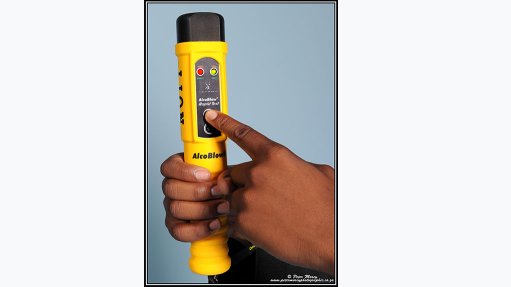
Developed to exceed the latest EN 15964 standards for police breathalysers proving that it will remain accurate and reliable for many years to come.
VISIT SHOWROOM
Rentech provides renewable energy products and services to the local and selected African markets. Supplying inverters, lithium and lead-acid...
VISIT SHOWROOM

Announcements
What's On
Subscribe to improve your user experience...
Option 1 (equivalent of R125 a month):
Receive a weekly copy of Creamer Media's Engineering News & Mining Weekly magazine
(print copy for those in South Africa and e-magazine for those outside of South Africa)
Receive daily email newsletters
Access to full search results
Access archive of magazine back copies
Access to Projects in Progress
Access to ONE Research Report of your choice in PDF format
Option 2 (equivalent of R375 a month):
All benefits from Option 1
PLUS
Access to Creamer Media's Research Channel Africa for ALL Research Reports, in PDF format, on various industrial and mining sectors
including Electricity; Water; Energy Transition; Hydrogen; Roads, Rail and Ports; Coal; Gold; Platinum; Battery Metals; etc.
Already a subscriber?
Forgotten your password?
Receive weekly copy of Creamer Media's Engineering News & Mining Weekly magazine (print copy for those in South Africa and e-magazine for those outside of South Africa)
➕
Recieve daily email newsletters
➕
Access to full search results
➕
Access archive of magazine back copies
➕
Access to Projects in Progress
➕
Access to ONE Research Report of your choice in PDF format
RESEARCH CHANNEL AFRICA
R4500 (equivalent of R375 a month)
SUBSCRIBEAll benefits from Option 1
➕
Access to Creamer Media's Research Channel Africa for ALL Research Reports on various industrial and mining sectors, in PDF format, including on:
Electricity
➕
Water
➕
Energy Transition
➕
Hydrogen
➕
Roads, Rail and Ports
➕
Coal
➕
Gold
➕
Platinum
➕
Battery Metals
➕
etc.
Receive all benefits from Option 1 or Option 2 delivered to numerous people at your company
➕
Multiple User names and Passwords for simultaneous log-ins
➕
Intranet integration access to all in your organisation

