



WA fracking decisions win praise from industry

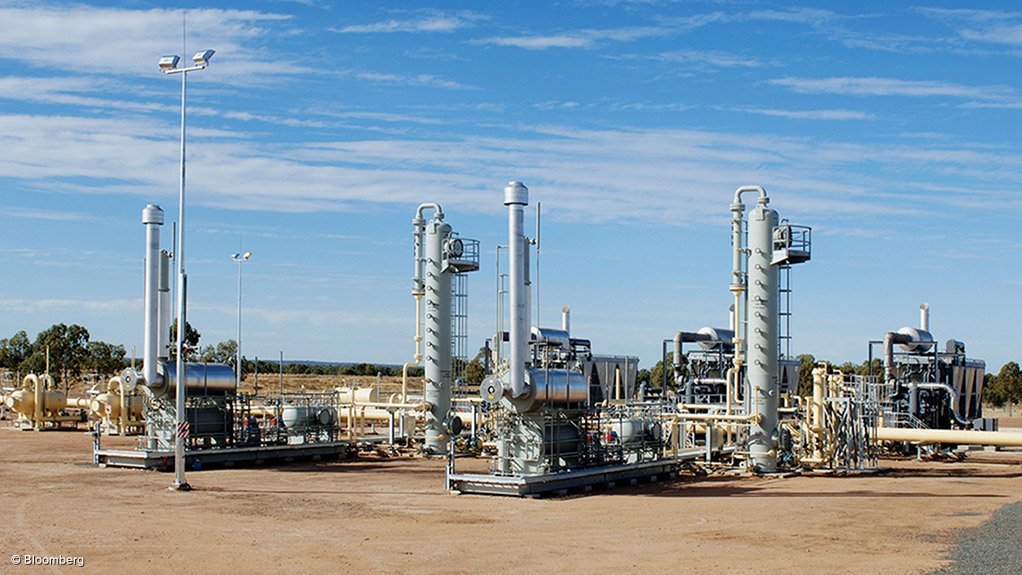


PERTH (miningweekly.com) – The Australian Petroleum Production and Exploration Association (Appea) on Friday welcomed the Western Australian government’s formal response to recommendations made by a Parliamentary inquiry in November last year.
The state government adopted 10 of the 12 recommendations made by the Environment and Public Affairs Committee, in November, which included amendments to the Petroleum and Geothermal Energy Resources Act, as well as greater consultation between the Department of Mines and Petroleum, the Environmental Protection Agency (EPA) and the Water Corporation.
However, the Western Australian government did not adopt the recommendation that oil and gas companies carrying out hydraulic fracturing, or fracking, in the state would need to negotiate with landowners. Instead, the government stated that a voluntary land access agreement agreed upon in 2015 between the petroleum industry and agricultural groups would be sufficient, and as a result would negate compulsory negotiations.
The government also did not support a recommendation requiring the Department of Mines and Petroleum to refer all fracking proposals to the EPA.
Appea CEO for the western region, Stedman Ellis, said a regulatory regime based on established facts and underpinned by science was vital if Western Australia’s onshore gas industry were to reach its full potential.
“Numerous scientific studies and decades of practical experience have shown that any risks associated with hydraulic fracturing can be safely managed with proper regulation,” Ellis said.
“In committing to a fact-based approach, the government is providing the regulatory certainty required if Western Australia’s considerable supplies of shale and tight gas are to be converted into jobs and royalties for the state.”
Ellis said the government’s decision to establish a working party to consider any changes to Western Australia’s current land access arrangements was a sensible approach.
“The voluntary land access agreement negotiated over several years by Appea and peak farming organisations is providing a strong framework for coexistence and should be given more time before any changes are contemplated,” he said.
“We also note that the working party will consider the inquiry’s recommendation for a statutory body similar to the Queensland GasFields Commission to act as an independent arbiter in land access negotiations.”
Ellis added that regulation of fracking in Western Australia would be further strengthened by the government’s support for many of the inquiry’s other recommendations.
However, the environmental groups are unhappy about the state government’s adoption of the recommendations, with the Australian Greens party saying that the government had further watered down already inadequate recommendations around fracking.
“Western Australia is in a unique position where we can take advantage of other experiences in regulating the hydraulic fracturing industry, and learn from the plethora of mistakes that have been made in other parts of Australia and indeed, around the world,” said Western Australian Greens mines and petroleum spokesperson Robin Chapple.
“It is disappointing, and in fact terrifying, to learn that this government is then willing to bat for this industry without any kind of willingness to ensure we do not make the same mistakes.”
The Lock the Gate Alliance had also slammed the state government’s response to the Parliamentary inquiry.
“While we welcome some of the inquiry recommendations and the government’s decision to support these, including increasing the maximum penalties for fracking companies who breach existing regulations, and moves to increase openness and transparency in the industry, in general we are disappointed that after an inquiry lasting more than two years the best the government can do is water down weak recommendations,” said spokesperson Boudicca Cerese.
“Overall the government’s response to the fracking inquiry’s recommendations confirms the public belief that this industry is being forced on rural communities without a comprehensive, enforceable regulatory framework to manage and mitigate the likely impacts.”
Article Enquiry
Email Article
Save Article
Feedback
To advertise email advertising@creamermedia.co.za or click here
Research Reports

Projects
Latest Multimedia
Latest News
Showroom

Sika South Africa is a trusted partner for the nation’s infrastructure, commercial, residential, and industrial sectors.
VISIT SHOWROOM
ECG provides specialised electrical engineering services to the Mining, Utilities, Materials Handling and Industrial industries, with extensive and...
VISIT SHOWROOM
Announcements
What's On
Subscribe to improve your user experience...
Option 1 (equivalent of R125 a month):
Receive a weekly copy of Creamer Media's Engineering News & Mining Weekly magazine
(print copy for those in South Africa and e-magazine for those outside of South Africa)
Receive daily email newsletters
Access to full search results
Access archive of magazine back copies
Access to Projects in Progress
Access to ONE Research Report of your choice in PDF format
Option 2 (equivalent of R375 a month):
All benefits from Option 1
PLUS
Access to Creamer Media's Research Channel Africa for ALL Research Reports, in PDF format, on various industrial and mining sectors
including Electricity; Water; Energy Transition; Hydrogen; Roads, Rail and Ports; Coal; Gold; Platinum; Battery Metals; etc.
Already a subscriber?
Forgotten your password?
Receive weekly copy of Creamer Media's Engineering News & Mining Weekly magazine (print copy for those in South Africa and e-magazine for those outside of South Africa)
➕
Recieve daily email newsletters
➕
Access to full search results
➕
Access archive of magazine back copies
➕
Access to Projects in Progress
➕
Access to ONE Research Report of your choice in PDF format
RESEARCH CHANNEL AFRICA
R4500 (equivalent of R375 a month)
SUBSCRIBEAll benefits from Option 1
➕
Access to Creamer Media's Research Channel Africa for ALL Research Reports on various industrial and mining sectors, in PDF format, including on:
Electricity
➕
Water
➕
Energy Transition
➕
Hydrogen
➕
Roads, Rail and Ports
➕
Coal
➕
Gold
➕
Platinum
➕
Battery Metals
➕
etc.
Receive all benefits from Option 1 or Option 2 delivered to numerous people at your company
➕
Multiple User names and Passwords for simultaneous log-ins
➕
Intranet integration access to all in your organisation

