



Tweefontein optimisation project, South Africa



Name and Location
Tweefontein optimisation project (TOP), Mpumalanga, South Africa.
Client
Glencore.
Project Description
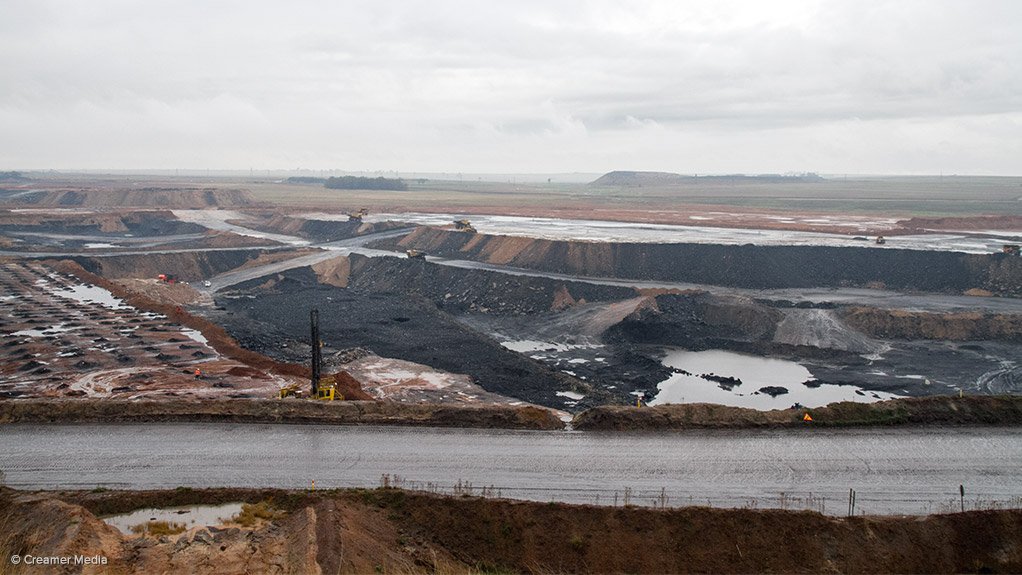
The TOP involves the optimisation of existing coal operations and reserves within the Tweefontein complex, which consists of three mines – the Boschmans, Waterpan and Witcons collieries – that have been structured into openpit, underground and surface operations.
The project will increase the capacity and extend the life of the complex. It encompasses the establishment of a large opencut mine with seven pits and an owner-operated fleet, as well as the construction of a new coal handling and preparation plant, a new rapid rail load-out terminal and all associated infrastructure.
The TOP is intended to process seven-million tonnes a year of saleable thermal coal for the local and export market over a life span of about 24 years.
Net Present Value/Internal rate of Return
Not stated.
Value
The project will cost an estimated R8.213-billion to develop.
Duration
The plant is expected to be operational in the fourth quarter of 2014, with project completion expected in the second quarter of 2015.
Latest Developments
The new coal emerging from Glencore’s on-time, 85%-complete, R8.213-billion TOP is coming in under budget.
The project has delivered a low-cost, long-life brownfield expansion that has elevated Tweefontein into a modern, predominantly opencast operation that mines the rich pillar reserves that were left behind in discontinued underground workings.
TOP’s mining segment is already close to steady state and by August 2015 the project’s new high-capacity washing plant will have fully ramped up to 12.5-million tons of run-of-mine (RoM) coal a year, TOP GM Allen Butcher told Mining Weekly Online during a site visit.
The first two of a total of seven openpit operations are already producing at the operation, which is on the way to becoming Glencore’s second-largest coal operation after Optimum Coal.
Mining, which began at Tweefontein at the turn of the last century, will continue for the next 24 years on a mine authorisation area covering 113 km2.
Seventy five per cent of the more than seven-million tons of saleable coal that will be produced is destined for the export market and the remainder for the domestic market, with most of the domestic coal going to State electricity utility Eskom, which the London-, Hong Kong- and now also Johannesburg-listed Glencore group goes all out to assist.
On completion of the project in May/June 2015, Tweefontein will be employing 750 full-time employees, many of them redeployed from Tweefontein’s closing underground operations.
Most of the employees live in surrounding areas and there is no hostel environment.
Glencore has a policy of recruiting in local communities.
The group has a centralised training facility 10 km from Tweefontein, where mining operators and plant operators are trained.
Mining equipment, bought for R1.5-billion, includes a large 1570 Bucyrus dragline, which will move huge volumes of material at optimal efficiency in the large pits.
The truck-and-shovel mining method, which has already been deployed in the first two pits, is earmarked for use in the smaller pits.
The productivity of mining equipment is measured across the Glencore group monthly, taking in the company's coal operations in Australia, Colombia and South Africa.
Output is measured in bank cubic metres (bcm) against the nameplate capacity of the equipment used.
The target for the dragline is to achieve 2 000 bcm an hour, while the target for the bigger shovels is 1 100 bcm an hour and 750 bcm an hour for the smaller shovels.
Caterpillar has supplied most of the rubber-tyred mobile equipment and dozers and Hitachi the excavators and backhoes.
Topsoil fleets comprise 85 t excavators and 40 t articulated dump trucks and the primary loading fleet comprises 260 t backactors, 350 t face shovels and a 200 t class front-end loader.
Although in-house crews do most of the maintenance, upkeep of large haul trucks has been contracted out to Barloworld and the upkeep of the large excavators to Hitachi – contracts that will be exited once the company is in steady state and has completed the building of its own large workshop facilities.
A big eight-bay workshop, which is still under construction, includes a tyre-handling facility, a million-litre fuel and lubrication service station, offices and a dragline section.
The R2-billion worth of operating infrastructure, which includes a high-volume tip that feeds a RoM facility designed to handle pillared coal, has been built along a dyke to avoid the sterilisation of coal reserves.
Project house DRA designed and built the R3.5-billion double-stage cyclone coal plant, which is similar to four others in the Glencore group, two in Australia and two in South Africa.
A rapid load-out facility feeds the rail siding that connects the mine to the Richards Bay Coal Terminal, the coal-export port in KwaZulu-Natal where Glencore is the largest shareholder.
Once the coal is extracted, the pits are backfilled as part of a rehabilitation process.
During the visit of Mining Weekly Online, rehabilitation was already under way in the two fully developed pits, where the first cuts have been filled, levelled, top soiled and seeded.
Key Contracts and Suppliers
Caterpillar (rubber-tyred mobile equipment and dozers); Hitachi (excavators and backhoes); Barloworld (upkeep of large haul trucks); and DRA (design and construction of double-stage cyclone coal plant).
On Budget and on Time?
The project is on schedule and below budget.
Contact Details for Project Information
Glencore, tel +41 41 709 2000, fax +41 41 709 3000 or email info@glencorexstrata.com.
Hitachi, tel +27 11 260 4302.
Barloworld Group Communication and marketing manager Thirona Maharaj, tel +27 11 445 1000 or GroupMarComms@barloworld.com.
DRA, tel +27 11 202 8600 or email info@DRAglobal.com.
Article Enquiry
Email Article
Save Article
To advertise email advertising@creamermedia.co.za or click here
Research Reports

Projects

Latest Multimedia
Latest News
Showroom

Sika South Africa is a trusted partner for the nation’s infrastructure, commercial, residential, and industrial sectors.
VISIT SHOWROOM
ECG provides specialised electrical engineering services to the Mining, Utilities, Materials Handling and Industrial industries, with extensive and...
VISIT SHOWROOM

Announcements
What's On
Subscribe to improve your user experience...
Option 1 (equivalent of R125 a month):
Receive a weekly copy of Creamer Media's Engineering News & Mining Weekly magazine
(print copy for those in South Africa and e-magazine for those outside of South Africa)
Receive daily email newsletters
Access to full search results
Access archive of magazine back copies
Access to Projects in Progress
Access to ONE Research Report of your choice in PDF format
Option 2 (equivalent of R375 a month):
All benefits from Option 1
PLUS
Access to Creamer Media's Research Channel Africa for ALL Research Reports, in PDF format, on various industrial and mining sectors
including Electricity; Water; Energy Transition; Hydrogen; Roads, Rail and Ports; Coal; Gold; Platinum; Battery Metals; etc.
Already a subscriber?
Forgotten your password?
Receive weekly copy of Creamer Media's Engineering News & Mining Weekly magazine (print copy for those in South Africa and e-magazine for those outside of South Africa)
➕
Recieve daily email newsletters
➕
Access to full search results
➕
Access archive of magazine back copies
➕
Access to Projects in Progress
➕
Access to ONE Research Report of your choice in PDF format
RESEARCH CHANNEL AFRICA
R4500 (equivalent of R375 a month)
SUBSCRIBEAll benefits from Option 1
➕
Access to Creamer Media's Research Channel Africa for ALL Research Reports on various industrial and mining sectors, in PDF format, including on:
Electricity
➕
Water
➕
Energy Transition
➕
Hydrogen
➕
Roads, Rail and Ports
➕
Coal
➕
Gold
➕
Platinum
➕
Battery Metals
➕
etc.
Receive all benefits from Option 1 or Option 2 delivered to numerous people at your company
➕
Multiple User names and Passwords for simultaneous log-ins
➕
Intranet integration access to all in your organisation

