



Turning Sea Water Into Drinking Water Using Recycled Energy



This article has been supplied.
There are a number of valid reasons for South Africa’s growing water crisis such as climate change, lower rainfall, crumbling water-pipe infrastructure, multiple minor and major leaks across urban and rural communities, theft of water and more.
One solution to the seriously diminishing fresh water supplies in South Africa is to tap into the largest water resources available: the ocean, and the desalination of such water.
Desalination is a well-established method of removing salt from water in order to produce process water, ultrapure or potable water. This is accomplished through using membranes (reverse osmosis and nano-filtration) or thermal processes (multi-effect distillation, evaporation and crystallisation). The reason desalination hasn’t yet become more popular is cost limitations. Desalination is an expensive process. Salt dissolves very easily in water, forming strong chemical bonds, and those bonds are difficult to break, requiring large amounts of energy.
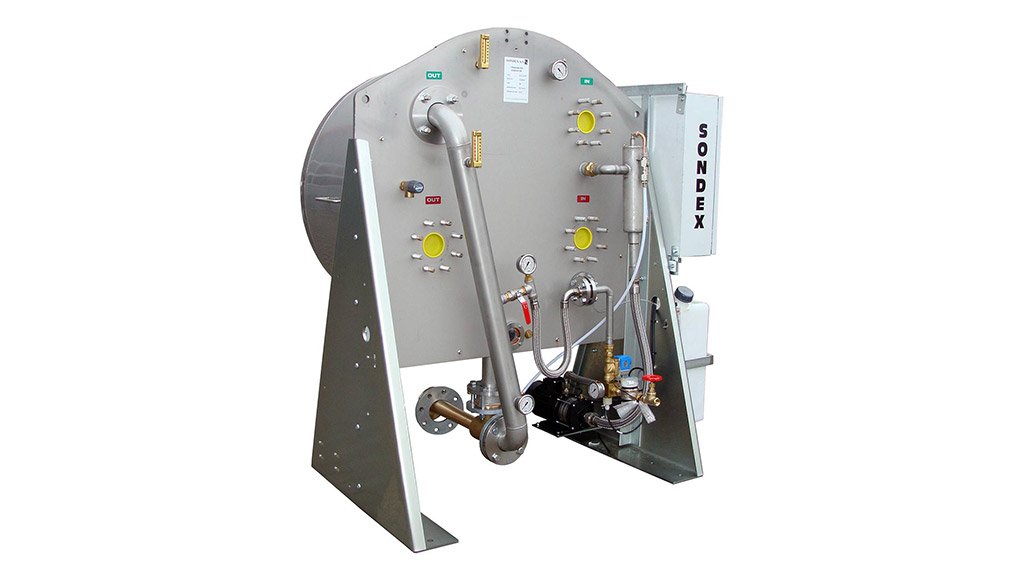
One global company at the forefront of developing next-generation, fresh water distillation technology is Danish-based SONDEX. To bypass the considerable expense, SONDEX developed a process that uses heat exchangers to recycle excess or waste energy generated in an industrial process and then redirect this energy to power a separate thermal distillation plant.
In thermal distillation, boiling water is turned into vapour, which leaves the salt behind. The vapour is then condensed back into drinkable water when it cools down. This process requires more energy when compared to the other common method of desalination: reverse osmosis, where seawater is forced through a semipermeable membrane that separates the salt from water.
Comments Roger Rusch, CEO of IWC, an official supplier of SONDEX heat exchangers in Africa, “SONDEX’s Fresh Water Distiller utilises the waste heat from diesel engine jacket cooling water or other heat sources to produce pure drinkable water by evaporating sea water under a high vacuum, thereby enabling the feed water to evaporate at temperatures below 48°C. Steam can also be used as the heat source instead of the hot jacket water. This technology eliminates the need for an additional, costly energy source.” The Fresh Water Distiller is based on a two-stage design in a vertical configuration. It is made up of two custom-designed titanium plate heat exchanger packs acting as evaporators and one titanium plate heat exchanger pack acting as a condenser. These plate packs are located in two separate chambers with different vacuums.
In stage one, the first evaporator plate pack, located in chamber one at 70% vacuum, turns the seawater into vapour, thereby separating the salt. This vapour is then directed through a large diameter pipe down into stage two, which is located in the second chamber working at 90% vacuum. The hot brine obtained from stage one is redirected to the second plate pack, which is also located in chamber two. When the vapour reaches chamber two, it is condensed and its heat released into the second plate pack with the hot brine inside. Acting as an evaporator, the second plate pack turns the hot brine into vapour, leading to more salt separation. The third heat exchanger pack, acting as a condenser and located in chamber two, is cooled with cold seawater and powers the custom-designed SONDEX twin-ejector, which removes the non-condensable gasses and brine from the flooded evaporation process in both stages.
The pure drinking water obtained from both stages is then directed through a flash tank, which removes any steam bubbles, and then sent to a freshwater pump, pumping the water into storage tanks. Adds Rusch, “Each chamber is equipped with a demister that removes water drops and salt from the steam produced in stage one as well as stage two. This results in high quality freshwater from both condensers. This system produces up to 150 tons of drinkable water per day. Typical applications are off-shore rigs, passenger ships, land-based industries located near the ocean and other places where heat is expensive to create.”
Article Enquiry
Email Article
Save Article
Feedback
To advertise email advertising@creamermedia.co.za or click here
Research Reports

Projects
Latest Multimedia

Latest News
Showroom
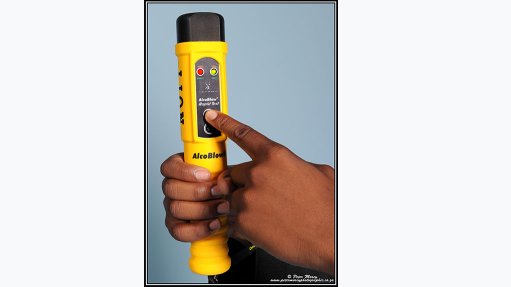
Developed to exceed the latest EN 15964 standards for police breathalysers proving that it will remain accurate and reliable for many years to come.
VISIT SHOWROOM
Rentech provides renewable energy products and services to the local and selected African markets. Supplying inverters, lithium and lead-acid...
VISIT SHOWROOM

Announcements
What's On
Subscribe to improve your user experience...
Option 1 (equivalent of R125 a month):
Receive a weekly copy of Creamer Media's Engineering News & Mining Weekly magazine
(print copy for those in South Africa and e-magazine for those outside of South Africa)
Receive daily email newsletters
Access to full search results
Access archive of magazine back copies
Access to Projects in Progress
Access to ONE Research Report of your choice in PDF format
Option 2 (equivalent of R375 a month):
All benefits from Option 1
PLUS
Access to Creamer Media's Research Channel Africa for ALL Research Reports, in PDF format, on various industrial and mining sectors
including Electricity; Water; Energy Transition; Hydrogen; Roads, Rail and Ports; Coal; Gold; Platinum; Battery Metals; etc.
Already a subscriber?
Forgotten your password?
Receive weekly copy of Creamer Media's Engineering News & Mining Weekly magazine (print copy for those in South Africa and e-magazine for those outside of South Africa)
➕
Recieve daily email newsletters
➕
Access to full search results
➕
Access archive of magazine back copies
➕
Access to Projects in Progress
➕
Access to ONE Research Report of your choice in PDF format
RESEARCH CHANNEL AFRICA
R4500 (equivalent of R375 a month)
SUBSCRIBEAll benefits from Option 1
➕
Access to Creamer Media's Research Channel Africa for ALL Research Reports on various industrial and mining sectors, in PDF format, including on:
Electricity
➕
Water
➕
Energy Transition
➕
Hydrogen
➕
Roads, Rail and Ports
➕
Coal
➕
Gold
➕
Platinum
➕
Battery Metals
➕
etc.
Receive all benefits from Option 1 or Option 2 delivered to numerous people at your company
➕
Multiple User names and Passwords for simultaneous log-ins
➕
Intranet integration access to all in your organisation

