The Paradox of Progress


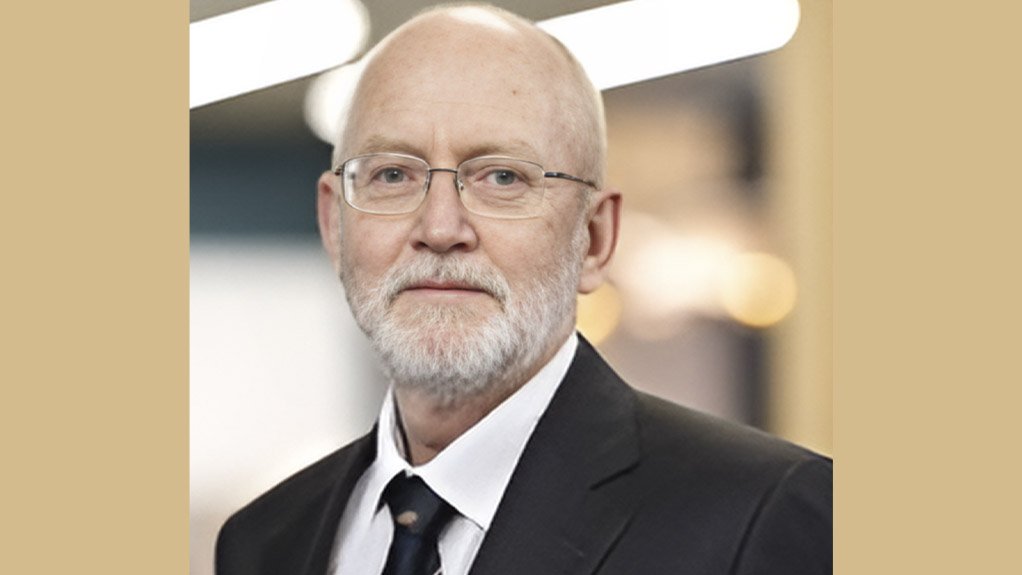



This article has been supplied.
(Virtual Showroom) Mining exists as a profound paradox at the heart of modern progress. While the products of the minerals industry power global economies, build cities, and fuel innovation, they simultaneously leave an indelible footprint on landscapes, communities, and the climate. Our sector is tasked with supplying the critical minerals, such as copper, lithium, cobalt, and rare earth elements essential for the green energy transition, yet it is highly vulnerable to the physical impacts of climate change and must rapidly adapt to the transitional requirements of a low-carbon economy.
Navigating this future requires a holistic view. We must balance immediate operational climate risks against evolving global policies, strict regulatory frameworks, and shifting finance requirements. Our industry's sustainability will depend on technology and innovation, environmental stewardship, and meaningful commitment to social impact and the dynamics of a just transition.
Physical Realities and Transitional Risks
Climate change is no longer a future projection; it is an immediate operational reality. Our operations increasingly face acute climate risks such as floods, droughts, and extreme weather events that are concurrent with the transitional risks of a global economy pivoting toward low-carbon futures. In this shifting landscape, the competitive divide is widening. Those of us who proactively embrace renewable energy, fleet electrification, and energy efficiency will lead the industry and secure long-term commercial viability. Those who resist will find themselves outpaced, over-regulated, and economically disadvantaged.
Capital, Governance, and Social License
As lenders demand more rigorous Environmental, Social, and Governance (ESG) transparency and investors mandate climate risk disclosures, capital will inevitably flow to where governance is strongest. To attract investment, we must de-risk through accountability and structural governance that is transformative rather than simply performative. Similarly, a social license to operate cannot merely be secured at a project's inception. It requires a continuous acknowledgment that mining communities encompass families, livelihoods, infrastructure, and futures. A just transition dictates that when mining activity eventually declines, local economies must not collapse. Our responsibility as an industry thus means investing early in retraining, economic diversification, and reimagining post-mining livelihoods.
From Compliance to Stewardship
Our environmental stewardship must mature beyond the basic mandate of minimising harm. True stewardship requires restoring post-mining ecosystems, actively protecting biodiversity, and embedding circularity into daily operations. Mine rehabilitation is a fundamental accountability and ultimately, our legitimacy will be judged not by the volume of ore we extract, but by the health of the ecosystems we leave behind. Owing to the interrelated complexities of water scarcity, biodiversity loss, and waste management across corporate boundaries, regional collaboration is crucial. Connecting mines, local governments, and host communities is the only viable way to manage shared water catchments and infrastructure.
The Way Forward
The challenge is to ensure that mineral extraction can coexist with ecological balance, social justice, and economic resilience. We must shift from defensive compliance to proactive, systems-level stewardship. By balancing the urgent global need for resources with the preservation of natural capital and driving the adoption of clean technologies, we can successfully redefine our role in a resource-constrained world.
Article Enquiry
Email Article
Save Article
Feedback
To advertise email advertising@creamermedia.co.za or click here
Research Reports
Projects
Latest Multimedia

Latest News

Showroom
Rio Carb is an OEM (Original Equipment Manufacturer) of R-C700 Chromium Carbide (CrC) alloy clad wear plates and pipes used for heavy materials...
VISIT SHOWROOM
We at Hawk High Pressure Pumps specialise in industrial pumps and pumping systems. Our high pressure washing equipment is locally manufactured and...
VISIT SHOWROOM
Press Office
Announcements
What's On
Subscribe to improve your user experience...
Option 1 (equivalent of R125 a month):
Receive a weekly copy of Creamer Media's Engineering News & Mining Weekly magazine
(print copy for those in South Africa and e-magazine for those outside of South Africa)
Receive daily email newsletters
Access to full search results
Access archive of magazine back copies
Access to Projects in Progress
Access to ONE Research Report of your choice in PDF format
Option 2 (equivalent of R375 a month):
All benefits from Option 1
PLUS
Access to Creamer Media's Research Channel Africa for ALL Research Reports, in PDF format, on various industrial and mining sectors
including Electricity; Water; Energy Transition; Hydrogen; Roads, Rail and Ports; Coal; Gold; Platinum; Battery Metals; etc.
Already a subscriber?
Forgotten your password?
Receive weekly copy of Creamer Media's Engineering News & Mining Weekly magazine (print copy for those in South Africa and e-magazine for those outside of South Africa)
➕
Recieve daily email newsletters
➕
Access to full search results
➕
Access archive of magazine back copies
➕
Access to Projects in Progress
➕
Access to ONE Research Report of your choice in PDF format
RESEARCH CHANNEL AFRICA
R4500 (equivalent of R375 a month)
SUBSCRIBEAll benefits from Option 1
➕
Access to Creamer Media's Research Channel Africa for ALL Research Reports on various industrial and mining sectors, in PDF format, including on:
Electricity
➕
Water
➕
Energy Transition
➕
Hydrogen
➕
Roads, Rail and Ports
➕
Coal
➕
Gold
➕
Platinum
➕
Battery Metals
➕
etc.
Receive all benefits from Option 1 or Option 2 delivered to numerous people at your company
➕
Multiple User names and Passwords for simultaneous log-ins
➕
Intranet integration access to all in your organisation