



Strong action and consultation needed to restore SA’s manufacturing competitiveness, says Deloitte.


The stresses on the South African manufacturing sector could see South Africa becoming less competitive in the years to come, with its contribution to the national GDP - presently only second to mining - sliding from a historical high of 22% to below 12%, says Deloitte.
These and other findings form part of a local ‘Manufacturing Competitiveness Survey carried out by Deloitte, following a larger Deloitte ‘Global Manufacturing Competitiveness Survey’ in which South Africa was ranked in 24th place (down from 22nd place in 2010), says Karthi Pillay, Manufacturing Industry leader, at Deloitte.
“The local survey was undertaken by Deloitte in conjunction with the Manufacturing Circle, an organisation representing SA manufacturers, to ascertain what the major issues were impacting on South African manufacturing competitiveness. The industry is important as it is a major contributor to the SA economy employing about 7.1 million people in its heyday,” says Pillay.
The South African survey used the globally identified manufacturing competitiveness drivers in which 76 respondents were required to rate the drivers from a South African perspective. Respondents were drawn from companies representing manufacturers from across the spectrum and with turnovers ranging from below R300 million p.a. to greater than R10 billion.
They were drawn from seven sectors ranging from aerospace and defense to automotive, through to forestry, paper and packaging to chemicals and industrial products and services. Employee numbers ranged from less than 100 to more than 5 000.
The most important competitiveness drivers identified by South African manufacturers were:
• Cost and availability of labour and materials
• Local market attractiveness
• Energy cost and policies
• Economic, trade, financial and tax systems, and
• Physical infrastructure
“The global survey found that the top three concerns were considered to be talent-driven innovation, economic and tax considerations, and cost and availability of labour” says Mike Vincent, Director Advisory, Deloitte.
“Key insights from the local survey were that the scarcity of skilled labour and the rising employment costs are placing huge constraints on the competitiveness of South African manufacturing companies. As labour costs rise, so companies have to also compete to fill their demand for engineers, artisans and other skilled tradesmen.
“Adding to labour pressures is the fact that local labour laws and regulations could be improved to help the South African industry. This contrasts totally with the international survey in which cooperation in labour/employer relations, flexibility in wage determination policies, hiring and firing practices and pay and productivity are regarded as key factors contributing to labour market efficiency.
“Wages have increased in South Africa at a faster rate than in most other countries yet there has not been a commensurate improvement in the productivity rate. This makes South Africa unattractive to foreign investors. Locally, manufacturers are being left to cope with the pressures of competing with cheaper imports and maintaining margins in a competitive global market place,” says Vincent.
The other challenge facing the beleaguered manufacturing sector is the escalating cost of electricity which, besides driving up costs, substantially impacts on the final costs of products when they are compared to imports.
Turning to ways of supporting the sector, Pillay said that several solutions had been mooted. These ranged from tariff protection to the need for innovation in the local market.
“Innovation remains a key consideration. South African manufacturing needs to become better at ‘doing better things.’ This means looking at creating new products and processes, re-energising supply chains, using new materials for traditional applications and even considering clustering businesses with similar focuses in defined areas so that they can benefit from reduced logistics and other costs.
“Although South African manufacturers have undoubtedly been impacted by the economic conditions prevailing internationally, there is no doubt that with the correct interventions manufacturing in South Africa has a good future. We have to look no further than the export-driven automotive sector to see what can be achieved.
“Much is made of the role of government. There is no doubt that although government has come to the table in many respects, there is still a gap between policy and practical implementation of initiatives.
According to the 2013 Budget, the MCEP has received a total of 215 applications with requests for grants totalling R2.3 billion mainly from the chemicals, metals and agro-processing sectors. “Although this may seem positive,” explains Newton Cockcroft, Deloitte Director, Tax, Research & Development and Government Grants, “the uptake on grants from industry is slower than one would have expected. The allocation towards this programme was R5,8b and, although the number of applications must be seen as positive the programme's success can only be measured once the benefits flow through after the approval of grants and the claiming of the benefits. There also seem to be focus from certain industry subsectors towards grant applications for the MCEP . One would hope that success in these sub sectors would ultimately lead to more companies and industry sub sectors applying for MCEP as, ultimately, increased allocation will help improve competiveness.”
It is time that manufacturers, labour and government begin working together to ensure that South Africa remains competitive.
“This would be a positive step in ensuring that we take our rightful place in the international manufacturing arena and avoid seeing our ranking slipping further from number 24 to a projected 25th place within the next five years,” concludes Pillay.
Article Enquiry
Email Article
Save Article
Feedback
To advertise email advertising@creamermedia.co.za or click here
Research Reports

Projects

Latest Multimedia


Latest News
Showroom
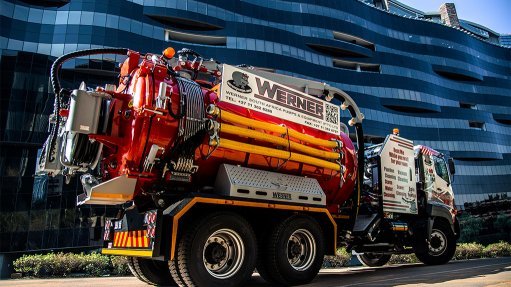
For over 30 years, Werner South Africa Pumps & Equipment (PTY) LTD has been designing, manufacturing, supplying and maintaining specialist...
VISIT SHOWROOM
Your global lifecycle technology & service partner for materials & minerals processing equipment for coal, iron ore, copper, manganese & other...
VISIT SHOWROOM

Announcements
What's On
Subscribe to improve your user experience...
Option 1 (equivalent of R125 a month):
Receive a weekly copy of Creamer Media's Engineering News & Mining Weekly magazine
(print copy for those in South Africa and e-magazine for those outside of South Africa)
Receive daily email newsletters
Access to full search results
Access archive of magazine back copies
Access to Projects in Progress
Access to ONE Research Report of your choice in PDF format
Option 2 (equivalent of R375 a month):
All benefits from Option 1
PLUS
Access to Creamer Media's Research Channel Africa for ALL Research Reports, in PDF format, on various industrial and mining sectors
including Electricity; Water; Energy Transition; Hydrogen; Roads, Rail and Ports; Coal; Gold; Platinum; Battery Metals; etc.
Already a subscriber?
Forgotten your password?
Receive weekly copy of Creamer Media's Engineering News & Mining Weekly magazine (print copy for those in South Africa and e-magazine for those outside of South Africa)
➕
Recieve daily email newsletters
➕
Access to full search results
➕
Access archive of magazine back copies
➕
Access to Projects in Progress
➕
Access to ONE Research Report of your choice in PDF format
RESEARCH CHANNEL AFRICA
R4500 (equivalent of R375 a month)
SUBSCRIBEAll benefits from Option 1
➕
Access to Creamer Media's Research Channel Africa for ALL Research Reports on various industrial and mining sectors, in PDF format, including on:
Electricity
➕
Water
➕
Energy Transition
➕
Hydrogen
➕
Roads, Rail and Ports
➕
Coal
➕
Gold
➕
Platinum
➕
Battery Metals
➕
etc.
Receive all benefits from Option 1 or Option 2 delivered to numerous people at your company
➕
Multiple User names and Passwords for simultaneous log-ins
➕
Intranet integration access to all in your organisation

