



State of South African mining law to be major talking point at indaba

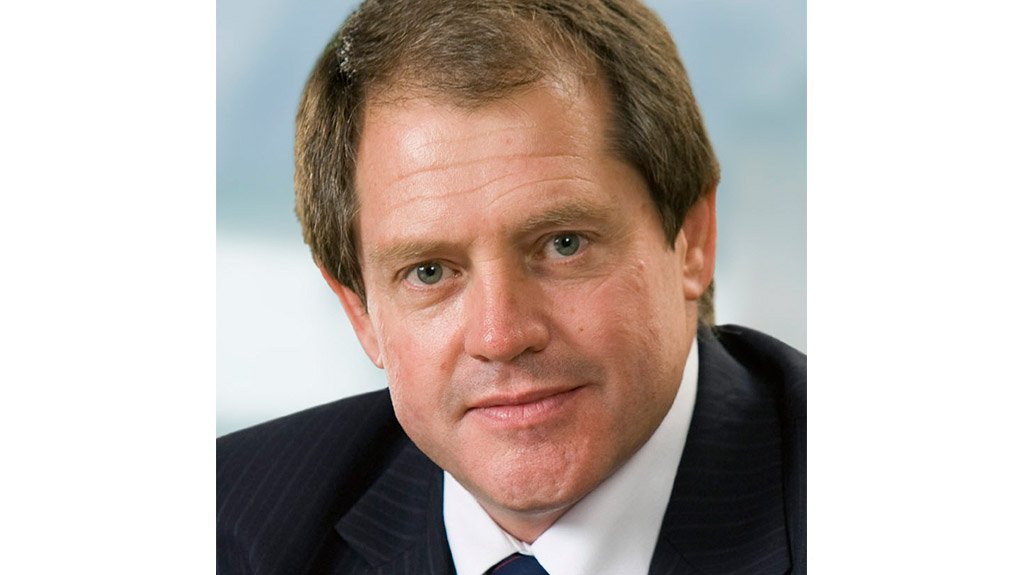
ALLAN REID Cliffe Dekker Hofmeyr is looking forward to the networking, discussions, various presentations and client and colleague interaction
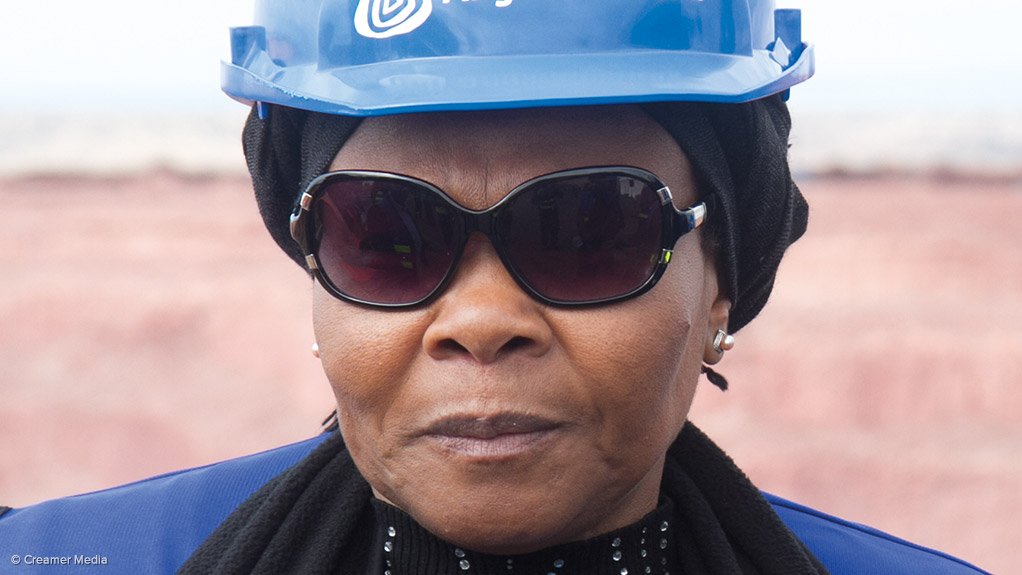
SUSAN SHABANGU If the MPRDA Amendment Bill 2013 is signed into law there are concerns that it will give Mineral Resources Minister Susan Shabangu the power to cancel a mining right in the event of noncompliance with the Mining Charter
Photo by Duane Daws




Law firm Cliffe Dekker Hofmeyr (CDH) will have a stand at the Investing in African Mining Indaba, taking place at the Cape Town International Convention Centre from February 3 to 6, to serve as a focal point for client interaction and member firms of the DLA Piper Africa Group, CDH director and mining law head Allan Reid tells Mining Weekly.
“We believe that the Mining Indaba provides us with great networking opportunities, which cement good relationships in the sector. It also provides a forum for discussing issues and opportunities, which often leads to possible new business developments,” he says.
Reid highlights that the indaba is the premier mining event in South Africa, which draws industry stakeholders from many international jurisdictions.
“It is, therefore, an important platform for CDH to showcase its expertise and experience in the mining sector.
“CDH is looking forward to all aspects of the indaba, which include networking, client and colleague interaction, the various presentations and discussions, and the exposure to new opportunities,” he states.
Investor Concerns
Reid believes that the “growing tendency” to administer the local mining industry through regulation rather than primary legislation is “regrettable”.
“Thus, the South African mining industry continues to face uncertainty with regard to the market, labour, the regulatory framework and policy, as well as political uncertainty.”
Moreover, Reid says that these legislative uncertainties are battering the reputation of South Africa as a resource investment destination of choice.
“Mining is highly capital inten- sive and it requires long-term investment. “What the sector needs is a stable, experienced workforce, a sound regulatory framework and clear policy direction for the future. “The competition for direct foreign investment is fierce. Even South African companies are seeking alternative investment markets, with South Africa currently the second-largest pro- vider of foreign direct investment into the rest of Africa, after Malaysia,” Reid notes.
Reid tells Mining Weekly that, according to the United Nations Conference on Trade and Devel-opment ‘World Investment Report 2013’, South Africa’s attractiveness ranking, as an investment destination, dropped to fourteenth in the world, which is well behind several other developing economies, such as India, Indonesia, Thailand and Mexico.
“With the ongoing termination of bilateral investment treaties and the general downturn of investment in greenfield mining projects, South Africa’s need for a sound mining legislative framework is greater than ever before,” he stresses.
Reid believes that South Africa requires extensive, ongoing consultation and dialogue among all the role-players, such as the mining companies, the unions, the communities and, particularly, the State.
He points out that 2014 is an election year in South Africa and government must balance the requirements of mining com- panies and investors with the aspirations of its electorate within a clear framework, which is fairly and uniformly applied.
Further, Reid stresses that there can be no doubt that the future of mining in South Africa will be challenging, as the State will play a much more active role in mining in South Africa.
“The State is becoming more proactive within the regulatory framework and in enforcing that framework; it is also more actively involved in actual mining in South Africa through measures such as establishing State-owned mines and beneficiation policies, and through excising greater control over the sale and disposal of strategic minerals,” Reid notes.
However, he adds that South Africa has been blessed with significant and varied mineral resources.
“Notwithstanding the challenges facing the mining indus- try, South Africa’s mineral resources cannot be ignored. Once the dust has settled on the final Mineral and Petroleum Resources Development Act (MPRDA) Amendment Bill 2013 and the plethora of subsequent regulations, and the industry knows exactly what the future holds, we will hopefully see South Africa’s attractiveness as an investment destination rise in the rankings once more,” he asserts.
SA Mining Law Conundrum
Reid points out that the Depart-ment of Mineral Resources (DMR) has lofty objectives for the long-awaited MPRDA Amendment Bill 2013.
“These objectives include improving the ease of doing business, creating investment, growth and employment, and entrenching security of tenure for mining companies. “Whether these objectives will be achieved remains to be seen,” he says.
He highlights that in early November, at the time of making these comments, the Amendment Bill was still no closer to delivering clarity.
While Reid hopes that there will be some clarity shortly, he suspects that the Amendment Bill will still be a topic for debate during the Mining Indaba.
The Parliamentary Portfolio Committee on Mineral Resources noted during its deliberations on the Amendment Bill in October that 600 pages of comment from private- sector stakeholders were received, with most of the participants saying that greater clarity for investment purposes was needed on several issues related to the Amendment Bill.
Reid notes that objections to the potential application of the Mining Charter to the liquid fuels industry also received substantial comment, as has the issue of beneficiation.
“To place the Amendment Bill in perspective, the MPRDA Amendment Act came into being in 2008, containing extensive amendments to the original MRPDA. “The mining industry was under the impression at that time that the MPRDA Amendment Act and the Amendment Bill would come into operation at the same time.”
However, he notes that President Jacob Zuma proclaimed in May that the MPRDA Amendment Act would come into operation on June 7, 2013, about five years after being signed into law.
Two weeks later, the President amended Proclamation 14, suspending the coming into operation of, among other sections, sections 11(1), 11(5), 38B, 47(1)(e) and 102(2) of the MPRDA Amendment Act.
“The entire amendment process has exacerbated the indus- try’s sense of disquiet and uncertainty,” he says.
Reid says the new Amendment Bill seeks to amend the MPRDA, as amended by the 2008 MPRDA Amendment Act, simultaneously. The fate of the suspended sections is unclear and may complicate the final drafting of the Amendment Bill.
“In my opinion, many sections of the Amendment Bill are vague, do not promote investment and are, in some instances, unconstitutional. “There are also aspects of the Amendment Bill that are welcomed by the industry, specifically with regard to the subdivision and transfer of portions of rights, the mining of associated minerals and the streamlining of the administrative appeal procedure,” he notes.
Moreover, Reid believes there is a dire need to streamline the MPRDA with environmental legislation.
He highlights that the Amend-ment Bill has created additional confusion, as it contains transitional environmental provisions that are misaligned with the transitional arrangements under the MPRDA Amendment Act and it requires further revision to clarify existing ambiguities between the MPRDA and the National Environmental Management Act of 1998.
“The draft MRPDA Amend-ment Bill also introduces, for the first time, the possibility of the State taking a share of profits derived from petroleum rights, despite it not having to contribute towards capital expenditure. “The State will, therefore, have a free carried interest in pet- roleum developments,” he notes.
Reid adds that there is also a concern that mining companies will be compelled to expend further financial resources, not only in local community development but also in labour-sending areas, which will result in greater costs being incurred by mining companies.
He says the Amendment Bill aims to amend the definition of the MPRDA to include the codes of good practice, the housing and living conditions standards and the amendment of the broad-based socioeconomic empowerment charter for the South African mining and minerals industry.
“Although these documents address the same issues, their provisions are not identical in all respects,” he emphasises.
“As a result, we will have conflicting pieces of legislation, all of which are given the force of law. “This gives delegated legislation and quasi-legislation the power to usurp the functions of Parliament,” says Reid.
“With regard to the Mining Charter and its precursors, compliance with the Mining Charter has been and remains a material concern for mining companies in South Africa. This is especially so with regard to its black economic empowerment provisions,” states Reid.
However, he points out that, currently, a breach of the Mining Charter alone cannot result in the cancellation of a properly granted mining right and that the question that arises is whether the Amendment Bill, if enacted, will give Mineral Resources Minister Susan Shabangu the power to cancel a mining right in the event of noncompliance with the Mining Charter.
“The Mining Charter, the codes and the standards are, first and foremost, documents of policy and were not intended to be drafted as instruments of legislation,” explains Reid.
He says that, consequently, giving these documents the force of primary legislation would be “unconstitutional, owing to their vagueness”.
Therefore, he believes it is regrettable that the DMR has ignored the criticism of the Supreme Court of Appeal and aims to give policy the force of legislation, which “opens up a whole new area of uncertainty in South African mining law”.
Article Enquiry
Email Article
Save Article
Feedback
To advertise email advertising@creamermedia.co.za or click here
Research Reports

Projects

Latest Multimedia
Latest News
Showroom

Rooted in the hearts of South Africans, combining technology and a quest for perfection to bring you a battery of peerless standing. Willard...
VISIT SHOWROOM
SafeQuip is a leading distributor and manufacturer of fire safety solutions, offering a comprehensive range of products designed to meet all...
VISIT SHOWROOM

Announcements
What's On
Subscribe to improve your user experience...
Option 1 (equivalent of R125 a month):
Receive a weekly copy of Creamer Media's Engineering News & Mining Weekly magazine
(print copy for those in South Africa and e-magazine for those outside of South Africa)
Receive daily email newsletters
Access to full search results
Access archive of magazine back copies
Access to Projects in Progress
Access to ONE Research Report of your choice in PDF format
Option 2 (equivalent of R375 a month):
All benefits from Option 1
PLUS
Access to Creamer Media's Research Channel Africa for ALL Research Reports, in PDF format, on various industrial and mining sectors
including Electricity; Water; Energy Transition; Hydrogen; Roads, Rail and Ports; Coal; Gold; Platinum; Battery Metals; etc.
Already a subscriber?
Forgotten your password?
Receive weekly copy of Creamer Media's Engineering News & Mining Weekly magazine (print copy for those in South Africa and e-magazine for those outside of South Africa)
➕
Recieve daily email newsletters
➕
Access to full search results
➕
Access archive of magazine back copies
➕
Access to Projects in Progress
➕
Access to ONE Research Report of your choice in PDF format
RESEARCH CHANNEL AFRICA
R4500 (equivalent of R375 a month)
SUBSCRIBEAll benefits from Option 1
➕
Access to Creamer Media's Research Channel Africa for ALL Research Reports on various industrial and mining sectors, in PDF format, including on:
Electricity
➕
Water
➕
Energy Transition
➕
Hydrogen
➕
Roads, Rail and Ports
➕
Coal
➕
Gold
➕
Platinum
➕
Battery Metals
➕
etc.
Receive all benefits from Option 1 or Option 2 delivered to numerous people at your company
➕
Multiple User names and Passwords for simultaneous log-ins
➕
Intranet integration access to all in your organisation

