



S&P’s sees high capex as key structural risk for energy firms


High-levels of capital expenditure (capex) in the oil and gas sector and the potential for a sustained softening of prices are the two main areas of risk confronting companies in the sector in 2014, Standard & Poor’s (S&P’s) corporate ratings director for oil, gas and fertilisers Simon Redmond says.
Redmond, who was in South Africa this week to communicate changes to the group’s corporate ratings criteria framework, told Engineering News that most capital projects had also been afflicted by “massive” cost inflation, which was already depressing returns.
“There has been cost inflation across the oil and gas development and production sector and it is now costing a lot more to bring up a barrel of oil to the wellhead.”
He described the high levels of capex as a “structural trend”, given that much of the investment was being directed towards sustaining rather than growing production. Rising costs associated with projects had, thus, become a major threat factor, with a number of profit warnings having already been issued for 2014.
But Redmond is also concerned about the potential for a price correction, as the “free cash-flow profile of many oil and gas companies is relatively weak, after capex and dividends – and that’s at a time of pretty much all-time-high oil prices over the past three years”.
Should there be a price correction that lops between $15 and $20 off a barrel of oil over a sustained period, the pressure on returns will increase. “I don’t see an immediate liquidity risk for most companies, however.”
The two dynamics, together with material changes to the energy landscape as a consequence of the US’s emerging self-sufficiency, would also have to be taken into account by companies hoping to exploit Africa’s newly discovered gas and oil resources.
The International Energy Agency forecasts that, by 2015, the US will overtake Russia and Saudi Arabia to lead the world in oil production, while BP’s Statistical Review of World Energy 2013 shows that US output rose by one-million barrels a day, while the country’s gas production rose by 4.7%.
BP calculates that, by 2030, about 9% of global oil supply will be from tight oil, while 16% of global gas supply will be from shale resources and that North America will continue to be the dominant shale energy market participant.
In a January report, S&P’s argued that surging shale energy output in the US was already leading to a marked decline in its imports of light crude oil and liquefied natural gas (LNG), which, in turn, was forcing producers to find alternative markets.
Redmond says that many of the prospective gas projects in Africa, including those that could be developed on the large-scale discoveries in Mozambique, need to take account of the “shifting dynamics” in the LNG market.
“These would be long-term, multibillion-dollar projects and, by the time they come on stream, the market dynamics may have shifted again – the first exports from the US might even be a real factor.”
To mitigate that market risk, projects need to lock themselves into long-term contracts and developers might attempt to secure a pricing link to an oil-price index. “Some consumers might be willing to tolerate a higher price for the certainty of supply.”
But he warned that there was a serious risk of a decoupling of LNG contracts away from being oil index-based to gas index-based in the longer term. All future African projects would also remain vulnerable to the current trend of capex overruns.
“But I think high capex and the potential for oil price softening are the two key risks we have front of mind at the moment.”
Article Enquiry
Email Article
Save Article
Feedback
To advertise email advertising@creamermedia.co.za or click here
Research Reports

Projects

Latest Multimedia


Latest News
Showroom
Established in 1983, the ASTPM is an industry association and representative body of the welded carbon steel tube and pipe manufacturers of South...
VISIT SHOWROOM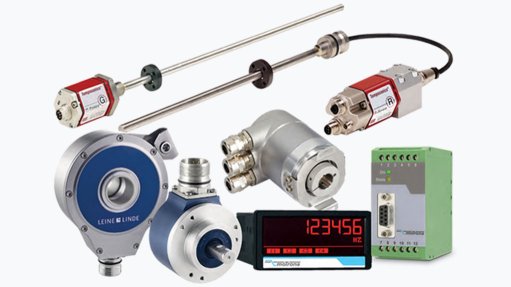
ATI systems comprises five divisions: electrical assemblies, drives and controls, feedback sensors, enclosures, and strip guiding.
VISIT SHOWROOM

Announcements
What's On
Subscribe to improve your user experience...
Option 1 (equivalent of R125 a month):
Receive a weekly copy of Creamer Media's Engineering News & Mining Weekly magazine
(print copy for those in South Africa and e-magazine for those outside of South Africa)
Receive daily email newsletters
Access to full search results
Access archive of magazine back copies
Access to Projects in Progress
Access to ONE Research Report of your choice in PDF format
Option 2 (equivalent of R375 a month):
All benefits from Option 1
PLUS
Access to Creamer Media's Research Channel Africa for ALL Research Reports, in PDF format, on various industrial and mining sectors
including Electricity; Water; Energy Transition; Hydrogen; Roads, Rail and Ports; Coal; Gold; Platinum; Battery Metals; etc.
Already a subscriber?
Forgotten your password?
Receive weekly copy of Creamer Media's Engineering News & Mining Weekly magazine (print copy for those in South Africa and e-magazine for those outside of South Africa)
➕
Recieve daily email newsletters
➕
Access to full search results
➕
Access archive of magazine back copies
➕
Access to Projects in Progress
➕
Access to ONE Research Report of your choice in PDF format
RESEARCH CHANNEL AFRICA
R4500 (equivalent of R375 a month)
SUBSCRIBEAll benefits from Option 1
➕
Access to Creamer Media's Research Channel Africa for ALL Research Reports on various industrial and mining sectors, in PDF format, including on:
Electricity
➕
Water
➕
Energy Transition
➕
Hydrogen
➕
Roads, Rail and Ports
➕
Coal
➕
Gold
➕
Platinum
➕
Battery Metals
➕
etc.
Receive all benefits from Option 1 or Option 2 delivered to numerous people at your company
➕
Multiple User names and Passwords for simultaneous log-ins
➕
Intranet integration access to all in your organisation

