



South African, African space industries set for large-scale growth

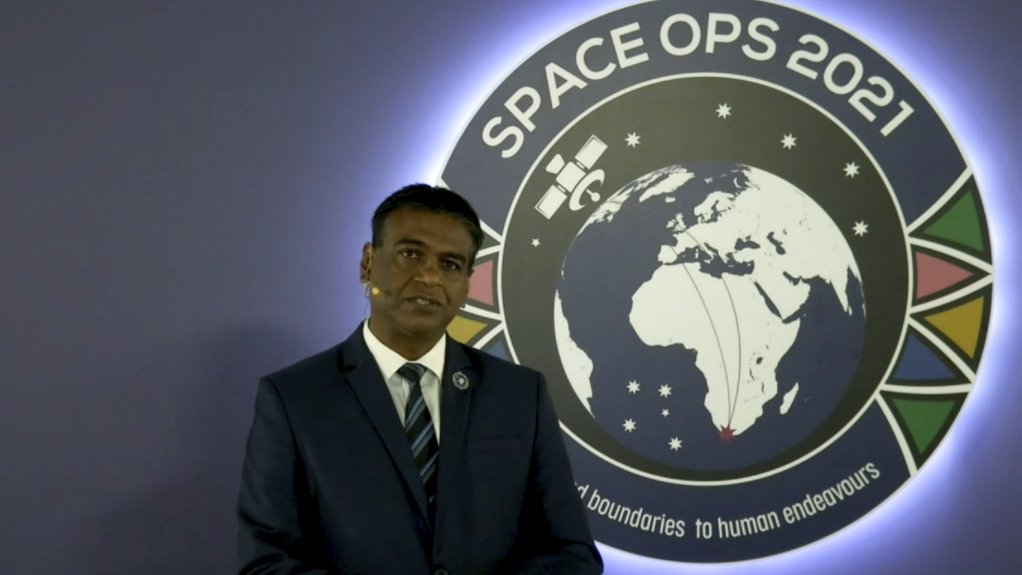
Sansa CEO Dr Val Munsami
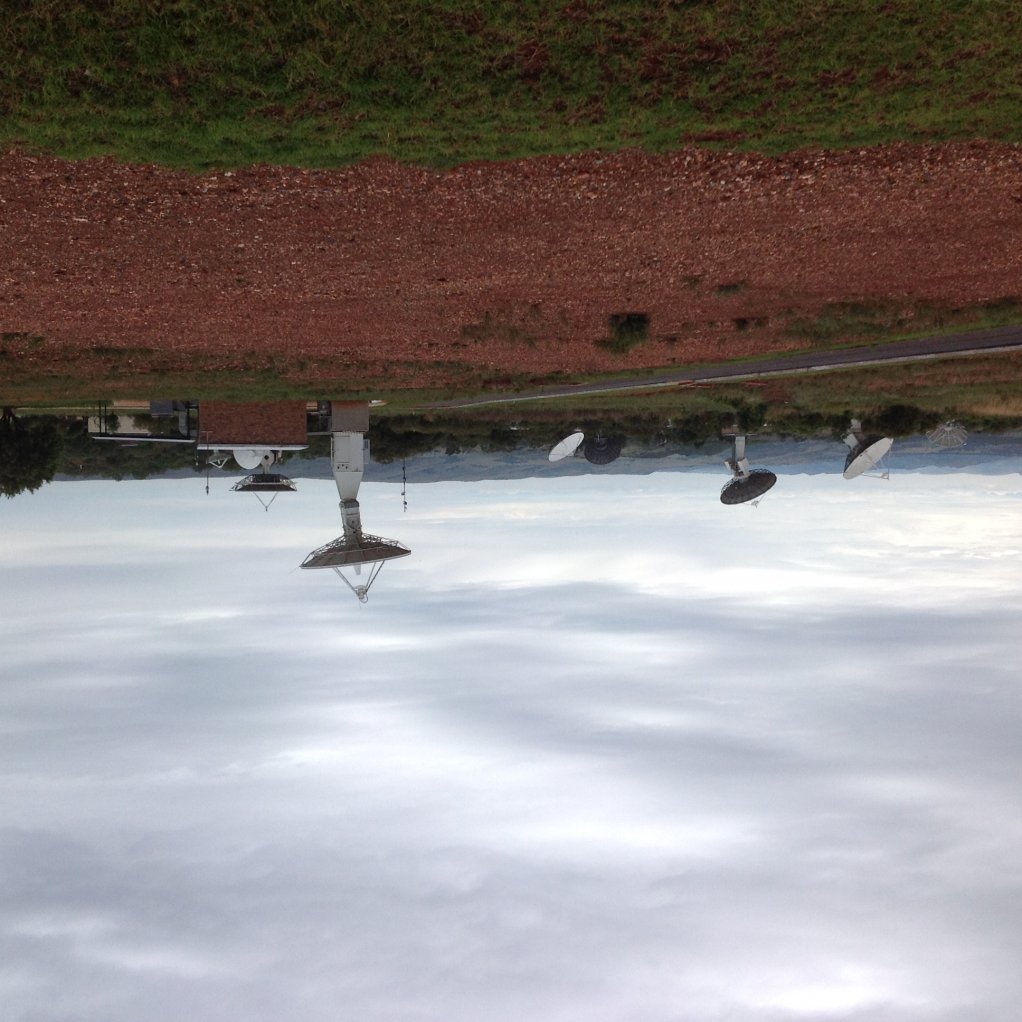
EXPANDING OPERATIONS: Sansa is looking to expand its operations into a second ground station in South Africa, which will be specifically earmarked for deep-space missions


The South African National Space Agency (Sansa) is set to grow by 100 times over what it is normally used to over the next two years as Africa expands its “space agenda” and space ambitions, Sansa CEO Dr Val Munsami has said.
He gave the keynote address at the 2021 SpaceOps Conference, which Sansa was supposed to host in Cape Town during 2020, but which was postponed as a result of the Covid-19 pandemic.
The event is hosted in a different country biennially, and this year is the first time an African country has hosted it.
Of particular interest, Munsami says, is that Sansa is looking to expand its operations into a second ground station in South Africa, which will be earmarked for deep-space missions that are “imminent in the near future”.
He also notes that South Africa’s focus is shifting towards the national space sector in search of growth and opportunities, adding that, in terms of opportunities, there are about 12 new and different initiatives coming through, ranging from telecommunications satellites, teleports and a new space weather centre that Sansa will be hosting for the African continent.
“There is also the space infrastructure hub which will see the strengthening of the space value chain in South Africa.”
Midstream Focus
Munsami explains that discussions on space operations or activities tend to focus on the upstream or downstream sectors, with the upstream sector involving the design, development and manufacturing of space platforms. The downstream sector involves the products and services offerings, and “very often”, he says, it is to the downstream sector that many role-players attribute the most value.
Space operations sits in what Munsami says is the midstream of the space value chain. “It is the glue that brings the upstream and downstream activities together, and in a sense it is also a means to a bigger end – which is the products and services offerings.”
According to a 2016 study, he says, the global space sector was estimated to be worth $340-billion, of which $127-billion was earmarked for satellite services, and $18-billion for satellite manufacture and launch. The ground support segment accounted for $113-billion. All this is about 30% of the global value chain, with the remainder coming from the nonspace sector.
“This underscores the value of space operations in the space value chain, and with a number of satellite missions and space exploration initiatives coming on line, the critical link of space operations in the space value is only set to significantly increase in the coming years,” he states.
Concerning space activities in Africa, Munsami says both investment and interest are gaining momentum, with various African heads of State having approved the African Space Policy and African Space Strategy in 2016. “These instruments essentially set up the African space agenda going forward.”
He adds that Sansa is also aware of intentions to establish an African Space Agency, which will bring into sharp focus the various space activities taking place on the African continent.
“Already, since 2016, we have seen a number of space agencies being established across the continent – at last count it was about 20 different space agencies, five or six being in operation for the past decade or so, but a significant proportion nonetheless being fairly new, essentially coming on line in the past three to four years.”
Further, Munsami says Africa has spent as much as $4-billion on satellite development to date. But he notes that for the past two years, space budgets have undergone a transformation in Africa, with the continent having spent about $250-million on space programmes in 2019. This figure nearly doubled to $490-million in 2020.
In addition, by 2024, he says, as many as 110 new satellites are due to come on line for African countries, compared with 24 satellites that have been launched to date.
Article Enquiry
Email Article
Save Article
Feedback
To advertise email advertising@creamermedia.co.za or click here
Research Reports

Projects

Latest Multimedia
Latest News

Showroom

Your global lifecycle technology & service partner for materials & minerals processing equipment for coal, iron ore, copper, manganese & other...
VISIT SHOWROOM
For over 30 years, Werner South Africa Pumps & Equipment (PTY) LTD has been designing, manufacturing, supplying and maintaining specialist...
VISIT SHOWROOM
Announcements
What's On
Subscribe to improve your user experience...
Option 1 (equivalent of R125 a month):
Receive a weekly copy of Creamer Media's Engineering News & Mining Weekly magazine
(print copy for those in South Africa and e-magazine for those outside of South Africa)
Receive daily email newsletters
Access to full search results
Access archive of magazine back copies
Access to Projects in Progress
Access to ONE Research Report of your choice in PDF format
Option 2 (equivalent of R375 a month):
All benefits from Option 1
PLUS
Access to Creamer Media's Research Channel Africa for ALL Research Reports, in PDF format, on various industrial and mining sectors
including Electricity; Water; Energy Transition; Hydrogen; Roads, Rail and Ports; Coal; Gold; Platinum; Battery Metals; etc.
Already a subscriber?
Forgotten your password?
Receive weekly copy of Creamer Media's Engineering News & Mining Weekly magazine (print copy for those in South Africa and e-magazine for those outside of South Africa)
➕
Recieve daily email newsletters
➕
Access to full search results
➕
Access archive of magazine back copies
➕
Access to Projects in Progress
➕
Access to ONE Research Report of your choice in PDF format
RESEARCH CHANNEL AFRICA
R4500 (equivalent of R375 a month)
SUBSCRIBEAll benefits from Option 1
➕
Access to Creamer Media's Research Channel Africa for ALL Research Reports on various industrial and mining sectors, in PDF format, including on:
Electricity
➕
Water
➕
Energy Transition
➕
Hydrogen
➕
Roads, Rail and Ports
➕
Coal
➕
Gold
➕
Platinum
➕
Battery Metals
➕
etc.
Receive all benefits from Option 1 or Option 2 delivered to numerous people at your company
➕
Multiple User names and Passwords for simultaneous log-ins
➕
Intranet integration access to all in your organisation

