



Schneider Electric publishes white paper on the drivers and benefits of edge computing




This article has been supplied.
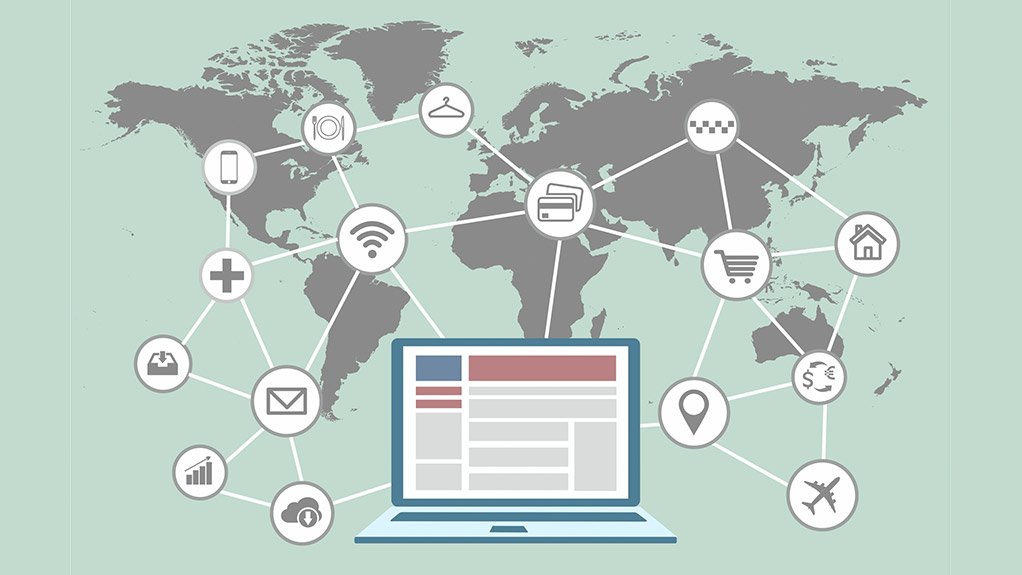
As Internet usage becomes more bandwidth intensive and more devices become connected, processing power and data storage are moving from central locations to the edge of the network to shorten transport times and boost efficiency.The Internet is one of the vital foundations of today’s online digital world, but the way it is used now and into the future is at odds with some of the design premises to which it was first constructed.
Traditional data networks (the Internet) and mobile device networks are merging, leading to a transformational period. Originally intended to be resilient to failures and outages, and to route traffic around problems, speed of response was considered a secondary priority to reliability. Now, as traffic accumulates on international networks in greater volume and from an increasing variety of sources making response latency a more important issue, new strategies such as edge computing have to be considered to maximise the Internet’s potential.
A new White Paper from Schneider Electric, a global specialist in energy management and automation, called The Drivers and Benefits of Edge Computing, describes in detail how today’s Internet usage trends, including high-bandwidth applications such as video on demand, and the proliferation of network-ready devices spurred on by the Internet of Things (IoT), impact upon the technical limitations of key elements such as Internet Protocol (IP) and Border Gateway Protocol (BGP).
Authored by Steve Carlini, senior director for Data Centre Global Solutions at Schneider Electric, the paper shows that BGP, although proven as a guarantor of reliability and resilience, is sub-optimal from a latency performance standpoint.
It also describes how the number of hops or transfers across switches that a stream of data can be made to negotiate can slow down data transmission.
A solution for many such problems is edge computing, which moves key data and network services away from centralised hubs and closer both to the transmitters and consumers of data. Streamers of high-bandwidth content, for example, can make use of data centres at the edge of the network to duplicate their content on multiple servers, thereby allowing it to be cached closer to their users.
The IoT is the phenomenon in which sensors on any sort of physical asset –including machines, equipment, premises or vehicles – gather data to monitor their status or behaviour and transmit it to interested parties. With the number of such Internet-connected items expected to reach 50 billion by 2020, the amount of information flowing across networks will require careful traffic management to ease congestion and maintain response times. Routing such information through local network switches is an obvious solution.
The white paper also describes the different varieties of edge computing installations including localised micro data centres, usually comprising pre-fabricated and pre-tested racks, which can be configured to order and deployed quickly.
Regional data centres are larger installations, which can be used to service local communities, reducing bandwidth latencies and allowing for delivery of greater quantities of information at greater speeds while maintaining the reliability and resilience for which the Internet was originally designed.
The Drivers and Benefits of Edge Computing white paper is available for free download from www.apcmedia.com
Article Enquiry
Email Article
Save Article
Feedback
To advertise email advertising@creamermedia.co.za or click here
Research Reports

Projects


Latest Multimedia


Latest News


Showroom

ISO-certified Condra manufactures overhead cranes, portal cranes, cantilever cranes and crane components: hoists, drives, end-carriages, brakes and...
VISIT SHOWROOM
For over 60 years, VEGA has provided industry-leading products for the measurement of level, density, weight and pressure. As the inventor of the...
VISIT SHOWROOM


Press Office
Announcements
What's On
Subscribe to improve your user experience...
Option 1 (equivalent of R125 a month):
Receive a weekly copy of Creamer Media's Engineering News & Mining Weekly magazine
(print copy for those in South Africa and e-magazine for those outside of South Africa)
Receive daily email newsletters
Access to full search results
Access archive of magazine back copies
Access to Projects in Progress
Access to ONE Research Report of your choice in PDF format
Option 2 (equivalent of R375 a month):
All benefits from Option 1
PLUS
Access to Creamer Media's Research Channel Africa for ALL Research Reports, in PDF format, on various industrial and mining sectors
including Electricity; Water; Energy Transition; Hydrogen; Roads, Rail and Ports; Coal; Gold; Platinum; Battery Metals; etc.
Already a subscriber?
Forgotten your password?
Receive weekly copy of Creamer Media's Engineering News & Mining Weekly magazine (print copy for those in South Africa and e-magazine for those outside of South Africa)
➕
Recieve daily email newsletters
➕
Access to full search results
➕
Access archive of magazine back copies
➕
Access to Projects in Progress
➕
Access to ONE Research Report of your choice in PDF format
RESEARCH CHANNEL AFRICA
R4500 (equivalent of R375 a month)
SUBSCRIBEAll benefits from Option 1
➕
Access to Creamer Media's Research Channel Africa for ALL Research Reports on various industrial and mining sectors, in PDF format, including on:
Electricity
➕
Water
➕
Energy Transition
➕
Hydrogen
➕
Roads, Rail and Ports
➕
Coal
➕
Gold
➕
Platinum
➕
Battery Metals
➕
etc.
Receive all benefits from Option 1 or Option 2 delivered to numerous people at your company
➕
Multiple User names and Passwords for simultaneous log-ins
➕
Intranet integration access to all in your organisation

