



SA must prevent an Eskom-type decline in chicken industry


By Izaak Breitenbach
A hard lesson learnt from the Eskom crisis is that a disaster of such magnitude can only be averted with timeous action by government and industry collaborating to address and fix the problems before it is too late.
South Africa is facing an electricity crisis now, but, according to a new report by the World Wide Fund for Nature (WWF), a food crisis looms in 2050. If we are to raise food production sufficiently to feed the nation in the future, a turnaround plan is needed now to halt the decline of the chicken industry.
The WWF has warned that South Africa will need to increase food production by 50% by 2050 to feed a population expected to swell to 73-million from the current 58-million. That means we will need a hugely expanded chicken industry, because chicken is our people’s most popular protein source. It also means that steps must be taken now to encourage that industry’s expansion.
The WWF’s report, published on February 19, is a complex one, arguing for sustainability and resilience in the agrifood system to build food security, including the development of emerging farmers. It contains worrying statistics about poverty and malnutrition levels in South Africa – half the population lives below the poverty line, 26% are considered food insecure, 27% of children under five are stunted and food accounts for 35% of the budget of lower-income households.
But the message is clear: South Africa will have millions of extra mouths to feed by 2050 and will need vast amounts of extra food to do so. Government planners should be concerned about these statistics and should be looking to the chicken industry, the largest component of the agriculture sector, to provide enough protein for a burgeoning population.
Chicken is not only our most popular meat protein source – it is the highest meat/fish protein source for every rand spent, delivering almost double the protein per rand spent, compared with beef. The chicken industry is key to our food security and must be central to plans to feed the nation from now to 2050 as the demand for food increases steadily.
Unfortunately, the chicken industry has been under constant pressure for the past few years. Because of inadequate protection against dumped, subsidised and predatory imports, local chicken production has not grown. It is a sad state of affairs that the demand for chicken is growing and the local industry is globally competitive, yet it is forced to remain static as imports gobble up that market.
Statistics compiled by the South African Poultry Association show that, while our population has grown by 9% since 2013 and chicken consumption has risen by 11%, local chicken production has grown by only 4%. This missed opportunity for local growth costs South Africa in terms of job creation and increased revenue for the fiscus.
So, how do we get from today’s static chicken industry to a rapidly expanding one that can help feed the nation in 2050?
This should be the central issue in the formulation of an industry masterplan – a proposal currently on the table, and aimed at ending the current crisis and putting the industry on a path to growth, transformation and job creation. Nothing formal has yet emerged from the first tentative discussions between government and the industry, but the masterplan development should be prioritised, because so much is at stake for government, the industry, workers and a hungry population.
The chicken industry believes that a component of that plan must be protection against the steady creep of predatory imports, which prevent industry investment and expansion. South Africa has a world-class, competitive chicken industry, but it is impossible to compete against portions dumped here below the cost of production from countries with a history of agricultural subsidies and State support.
Government action to ensure a level playing field would set the industry on a growth path, allowing investment in expansion and job creation. The industry has estimated that 30 000 jobs could be created if local farmers were to produce the hundreds of thousands of tons of chicken that are currently imported. That would only be a start, given the expansion required to help feed 73-million people by 2050.
The alternative is to watch the industry decline further, allowing foreign chicken to claim an ever larger portion of our market until, eventually, it dominates. When that happens, importers could charge whatever they liked as food demand rises in the decades ahead. The local industry would wither and thousands of workers would lose their jobs, which would be a disaster for consumers, workers and national food security.
The high road is to plan now for rapidly increasing local expansion, with developing and small-scale farmers playing a key role in the industry’s growth.
Sustainability and land use are important considerations highlighted in the WWF report. Global research shows that chicken farming is the most environmentally sustainable way to produce high-quality animal protein and the most efficient converter of feed into meat. And chicken farming does not require productive agricultural land – the primary requirements are feed, water and electricity.
Planners looking ahead to the food demands of 2050 must focus now on the chicken industry, as chicken farming will be one of the key answers to the question of how to feed 73-million people.
The Eskom crisis happened despite repeated warnings that action needed to be taken. Planning now can help us to avert a food crisis in 2050.
Breitenbach is GM of the South African Poultry Association's broiler organisation
Article Enquiry
Email Article
Save Article
Feedback
To advertise email advertising@creamermedia.co.za or click here
Research Reports

Projects

Latest Multimedia

Latest News
Showroom
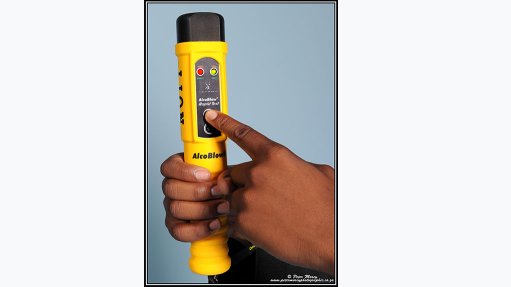
Developed to exceed the latest EN 15964 standards for police breathalysers proving that it will remain accurate and reliable for many years to come.
VISIT SHOWROOM
Rentech provides renewable energy products and services to the local and selected African markets. Supplying inverters, lithium and lead-acid...
VISIT SHOWROOM

Announcements
What's On
Subscribe to improve your user experience...
Option 1 (equivalent of R125 a month):
Receive a weekly copy of Creamer Media's Engineering News & Mining Weekly magazine
(print copy for those in South Africa and e-magazine for those outside of South Africa)
Receive daily email newsletters
Access to full search results
Access archive of magazine back copies
Access to Projects in Progress
Access to ONE Research Report of your choice in PDF format
Option 2 (equivalent of R375 a month):
All benefits from Option 1
PLUS
Access to Creamer Media's Research Channel Africa for ALL Research Reports, in PDF format, on various industrial and mining sectors
including Electricity; Water; Energy Transition; Hydrogen; Roads, Rail and Ports; Coal; Gold; Platinum; Battery Metals; etc.
Already a subscriber?
Forgotten your password?
Receive weekly copy of Creamer Media's Engineering News & Mining Weekly magazine (print copy for those in South Africa and e-magazine for those outside of South Africa)
➕
Recieve daily email newsletters
➕
Access to full search results
➕
Access archive of magazine back copies
➕
Access to Projects in Progress
➕
Access to ONE Research Report of your choice in PDF format
RESEARCH CHANNEL AFRICA
R4500 (equivalent of R375 a month)
SUBSCRIBEAll benefits from Option 1
➕
Access to Creamer Media's Research Channel Africa for ALL Research Reports on various industrial and mining sectors, in PDF format, including on:
Electricity
➕
Water
➕
Energy Transition
➕
Hydrogen
➕
Roads, Rail and Ports
➕
Coal
➕
Gold
➕
Platinum
➕
Battery Metals
➕
etc.
Receive all benefits from Option 1 or Option 2 delivered to numerous people at your company
➕
Multiple User names and Passwords for simultaneous log-ins
➕
Intranet integration access to all in your organisation

