



Gas from Free State resource to fuel brewer’s truck fleet


Natural gas development company Renergen has signed an offtake agreement with Anheuser-Busch InBev (AB InBev) subsidiary South African Breweries (SAB) for the supply of liquefied natural gas (LNG) to power its delivery trucks.
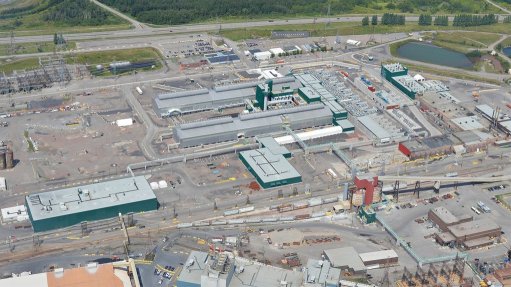
The agreement sees the initial roll-out of compressed natural gas to a small fleet of SAB trucks in the Gauteng area, using gas from Renergen’s Tetra4 operations, in Virginia, in the Free State.
This will be expanded to a significantly larger fleet to run on LNG once Tetra4’s plant reaches operational status in 2019.
“This agreement with SAB marks another large-scale South African logistics operation to use new age fuels. “The use of LNG not only drastically reduces carbon emissions, but has the added advantage of improving the vehicle’s lifecycle maintenance and reduces the operator’s cost significantly.
“Renergen wants to remain a pioneer in alternative energy sources and is proud to be associated with SAB in such a landmark agreement,” said Renergen CEO Stefano Marani.
He pointed out to Engineering News that there was a global move away from diesel-powered trucks to LNG-powered trucks and that the company continued to discuss the benefits of LNG with some of the bigger fleet owners in the country.
In addition, Marani highlighted that AB InBev had announced aspirations to reduce its carbon footprint substantially, eradicating it almost entirely by 2025.
Marani said the transaction was “a move in the right direction” for AB InBev in this regard.
“It’s a landmark transaction in South Africa in the sense that this paves the way for other corporates to see that it’s time to look into the environmental and financial benefits of this move from diesel to LNG,” he added, noting that it was “a disruptive technology in the trucking space”.
The move, he elaborated, was the best of both worlds – not only did companies get to go green by reducing their carbon footprint, but companies were also saving money while doing it.
Under the right conditions, he advised, a carbon footprint could be reduced by up to 90% by running a truck on LNG, as opposed to diesel.
Further, owing to a “massive supply squeeze in the helium market”, Marani explained that Renergen’s Tetra4 plant would not completely saturate global demand, which was currently at about seven-billion cubic feet a year.
Global supply currently stood at about six-billion cubic feet a year.
“Our Tetra4 plant’s reserve review estimates contingent helium reserves in the area to be up to 25-billion cubic feet, with the updated reserve review showing that the latest well drilled in the Virginia project contains a concentration of almost 11%, compared with the global average of 0.5%,” Marani added, noting that this put Tetra4 in a “different league in the helium space”.
The production at this plant, he noted, would mean that South Africa was able to locally procure LNG and helium, instead of importing these gases.
All excess amounts of helium would predominantly be exported, owing to the anticipated depletion, in about 2020, of the US Bureau of Land Management’s (BLM’s) helium reserve, currently the largest supplier of helium globally.
Marani highlighted that, in an attempt to slow consumption, a US scientist had been pushing to have helium banned from being sold to the balloon market, as this would slow down consumption by about 5%.
“It would make a small difference, but it would help.”
He further warned that helium is nonrenewable and irreplaceable, owing to its unique properties, which were unlike hydrocarbon fuels (natural gas or oil) in that there were no biosynthetic ways to make an alternative to helium.
The depleting resource, he lamented, would impede technological advance, unless an alternative metal, which could be turned into a super conductor without having to reach the same temperatures as helium, could be found.
Marani added that, as it stood, demand outstripped supply. One of the key uses for helium was in the medical industry and China’s growing middle class now demanded further access to western healthcare, placing further pressure on demand.
This made the helium discovery at Tetra4 in South Africa a globally significant one for the helium market.
Helium plays a role in nuclear magnetic resonance, mass spectroscopy, welding, fibre optics and computer microchip production, among other technological applications.
Additionally, the US-based National Aeronautics and Space Administration, or NASA, uses large amounts yearly to pressurise space shuttle fuel tanks.
With space agencies in China renewing their vigour to land on the moon, and space agencies in India and Australia now coming on line, Marani warned that this would further affect the depleting global helium supply.
Article Enquiry
Email Article
Save Article
Feedback
To advertise email advertising@creamermedia.co.za or click here
Research Reports

Projects
Latest Multimedia
Latest News
Showroom
ISO-certified Condra manufactures overhead cranes, portal cranes, cantilever cranes and crane components: hoists, drives, end-carriages, brakes and...
VISIT SHOWROOM
For over 60 years, VEGA has provided industry-leading products for the measurement of level, density, weight and pressure. As the inventor of the...
VISIT SHOWROOM

Press Office
Announcements
What's On
Subscribe to improve your user experience...
Option 1 (equivalent of R125 a month):
Receive a weekly copy of Creamer Media's Engineering News & Mining Weekly magazine
(print copy for those in South Africa and e-magazine for those outside of South Africa)
Receive daily email newsletters
Access to full search results
Access archive of magazine back copies
Access to Projects in Progress
Access to ONE Research Report of your choice in PDF format
Option 2 (equivalent of R375 a month):
All benefits from Option 1
PLUS
Access to Creamer Media's Research Channel Africa for ALL Research Reports, in PDF format, on various industrial and mining sectors
including Electricity; Water; Energy Transition; Hydrogen; Roads, Rail and Ports; Coal; Gold; Platinum; Battery Metals; etc.
Already a subscriber?
Forgotten your password?
Receive weekly copy of Creamer Media's Engineering News & Mining Weekly magazine (print copy for those in South Africa and e-magazine for those outside of South Africa)
➕
Recieve daily email newsletters
➕
Access to full search results
➕
Access archive of magazine back copies
➕
Access to Projects in Progress
➕
Access to ONE Research Report of your choice in PDF format
RESEARCH CHANNEL AFRICA
R4500 (equivalent of R375 a month)
SUBSCRIBEAll benefits from Option 1
➕
Access to Creamer Media's Research Channel Africa for ALL Research Reports on various industrial and mining sectors, in PDF format, including on:
Electricity
➕
Water
➕
Energy Transition
➕
Hydrogen
➕
Roads, Rail and Ports
➕
Coal
➕
Gold
➕
Platinum
➕
Battery Metals
➕
etc.
Receive all benefits from Option 1 or Option 2 delivered to numerous people at your company
➕
Multiple User names and Passwords for simultaneous log-ins
➕
Intranet integration access to all in your organisation

