



Seismic events in greater Johannesburg linked to historical mining

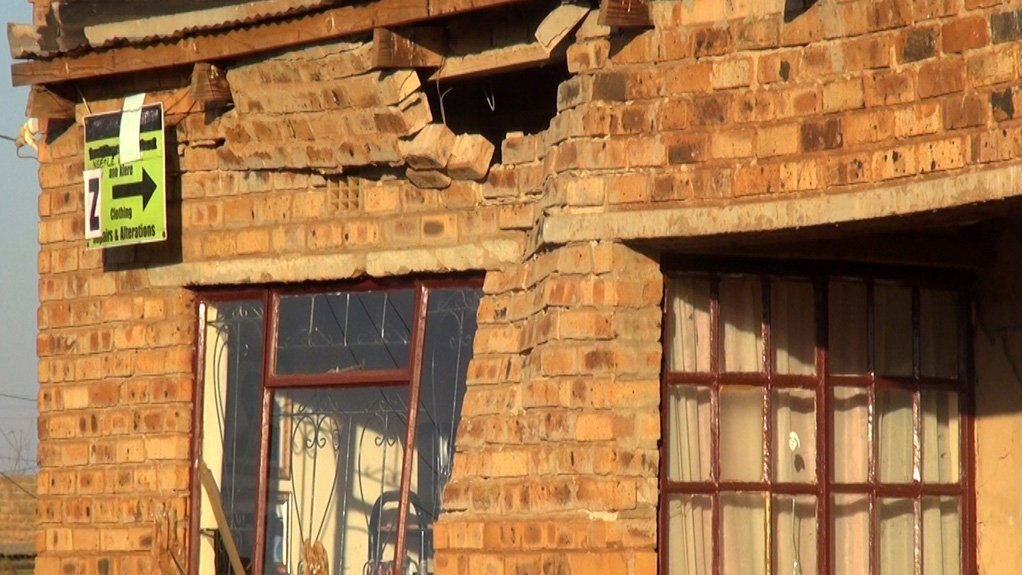
MINING LINKED SEIMICITY The largest earthquakes associated with mining was a 5.3 event at Stilfontein mine in 2005 and a magnitude 5.5 event near Orkney in 2014
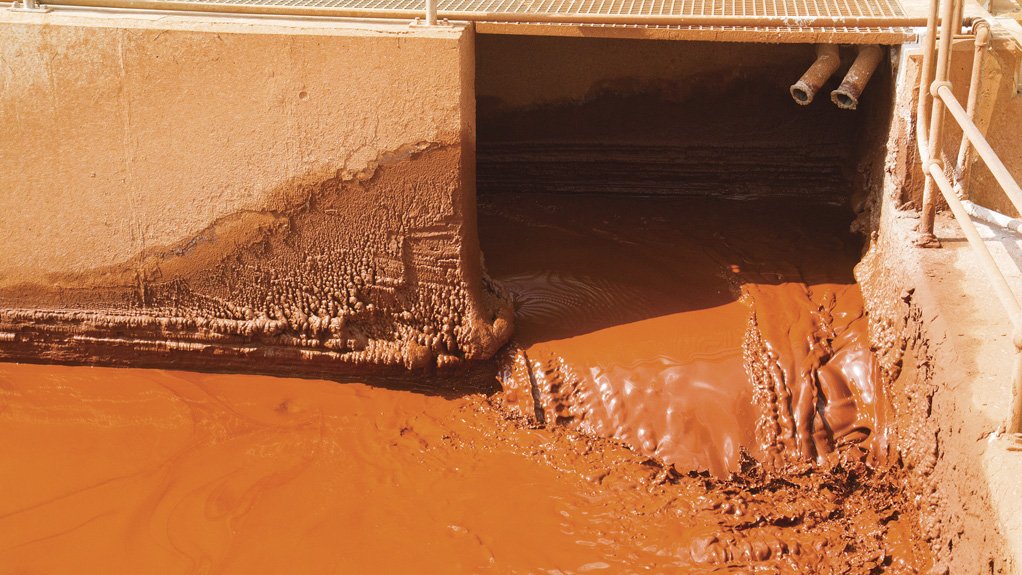
SEISMICITY CONCERN The level of seismicity in the Central Rand Basin is not showing signs of decreasing with time, as a number of strong events with magnitudes of above 1.4 are still high
Photo by Duane Daws


In 2009, the South African National Seismograph Network (SANSN), operated by the Council for Geoscience (CGS), observed a dramatic increase in seismicity coinciding with the closure of the pumping stations at the East Rand Proprietary mines, in Gauteng.
CGS mining seismologist Denver Birch notes that the water flooding the mine void creates “a significant and costly environmental impact”, as large voids are interconnected and are located close to major urban centres in Johannesburg. He says that, based on a theoretical analysis, the flooding-induced seismic events that could occur are expected to fall within the range of magnitudes previously observed during mining.
The largest earthquakes associated with mining were a magnitude 5.3 event at the Stilfontein gold mine, in the North West, in 2005, and more recently, in 2014, a magnitude 5.5 event located near the Orkney gold mine, in the North West, caused serious structural damage.
“If such an earthquake were to occur in the densely populated urban area of Johannesburg, it could present major safety risks to properties on the surface in the vicinity of the old mines,” Birch warns.
He states that the occurrence of a flooding-induced event of a similar magnitude cannot be excluded and therefore should be regarded as one of the possible scenarios of the strong ground motion prediction. The nature of seismic events triggered by mine flooding, as well as the damage potential of surface ground motions associated with such events, needs to be monitored and investigated.
It is for these reasons that the SANSN is running a project that addresses the risks posed by fluid-induced seismicity in the greater Johannesburg area by focusing on accurate quantification of the most important factors that contribute to this hazard.
Birch elaborates that the related tasks were spread over a period of three years to improve the monitoring capacity around the Central Rand basin (CRB) of Johannesburg. The seismological unit of the CGS installed a dense seismic network, which has been in operation since the first quarter of 2010. “This high-accuracy network enables meaningful interpretation of the seismicity pattern.”
Tasks undertaken in this project include, but are not limited to, an evaluation of the ground motion and response spectra, including path and site effects, estimation of seismic source parameters and studies of the spatial and temporal evolution of the seismicity.
Birch reveals that the level of seismicity in the CRB does not show signs of decreasing with time, since the number of strong events with moment magnitudes above 1.4 are still as high as when monitoring began over five years ago.
He highlights that most events are located within historical mine boundaries. The seismicity pattern shows a strong relationship between the presence of the mining void and high levels of seismicity. Moreover, Birch points out that no seismicity migration patterns were observed outside the historical mining areas.
He comments that three-dimensional (3D) modelling showed that residual mining-induced stresses are being exploited by the water and also confirmed that the mined-out reef is controlling seismicity.
Birch says that strong lineaments in the seismicity pattern were observed that supported the results of the modelling. Over the past five years, the total cumulative seismic moment released in the CRB was 9 Nm × 1 014 Nm.
Fluid-Induced Seismicity
“This is equivalent to a single earthquake of magnitude 3.9, which is significantly less than the largest earthquake experienced during active mining. The temporal evolution of the inter-event time confirms that the fluid-induced seismicity follows a clustering pattern and is not random.
“Static stress drop heavily influences ground motion characteristics which, in urban areas, affects the risk assessment. “The observed static stress drop varied from 0.05 MPa to 10 MPa. It was found that large static stress drops could be associated with both small and large events,” he concludes.
Article Enquiry
Email Article
Save Article
Feedback
To advertise email advertising@creamermedia.co.za or click here
Research Reports

Projects

Latest Multimedia
Latest News
Showroom

Established in 1983, the ASTPM is an industry association and representative body of the welded carbon steel tube and pipe manufacturers of South...
VISIT SHOWROOM
CSIR International Convention Centre (CSIR ICC) - the leading conference and events venue in Pretoria/Tshwane.
VISIT SHOWROOM
Announcements
What's On
Subscribe to improve your user experience...
Option 1 (equivalent of R125 a month):
Receive a weekly copy of Creamer Media's Engineering News & Mining Weekly magazine
(print copy for those in South Africa and e-magazine for those outside of South Africa)
Receive daily email newsletters
Access to full search results
Access archive of magazine back copies
Access to Projects in Progress
Access to ONE Research Report of your choice in PDF format
Option 2 (equivalent of R375 a month):
All benefits from Option 1
PLUS
Access to Creamer Media's Research Channel Africa for ALL Research Reports, in PDF format, on various industrial and mining sectors
including Electricity; Water; Energy Transition; Hydrogen; Roads, Rail and Ports; Coal; Gold; Platinum; Battery Metals; etc.
Already a subscriber?
Forgotten your password?
Receive weekly copy of Creamer Media's Engineering News & Mining Weekly magazine (print copy for those in South Africa and e-magazine for those outside of South Africa)
➕
Recieve daily email newsletters
➕
Access to full search results
➕
Access archive of magazine back copies
➕
Access to Projects in Progress
➕
Access to ONE Research Report of your choice in PDF format
RESEARCH CHANNEL AFRICA
R4500 (equivalent of R375 a month)
SUBSCRIBEAll benefits from Option 1
➕
Access to Creamer Media's Research Channel Africa for ALL Research Reports on various industrial and mining sectors, in PDF format, including on:
Electricity
➕
Water
➕
Energy Transition
➕
Hydrogen
➕
Roads, Rail and Ports
➕
Coal
➕
Gold
➕
Platinum
➕
Battery Metals
➕
etc.
Receive all benefits from Option 1 or Option 2 delivered to numerous people at your company
➕
Multiple User names and Passwords for simultaneous log-ins
➕
Intranet integration access to all in your organisation

