



Platinum supply cliff in sight – Implats


Underinvestment in platinum mining locally is poised to result in serious constraints in platinum supply from South Africa in the future.
The early 2020s are foreseen as the years when the current scant investment in growth projects will be severely felt and prices will surprise on the upside after what has been nearly six years of low prices.
“There is just an absolute lack of investment in the platinum industry. We’re not too far from 2020, 2021 and 2022, when supply from this country is going to drop off a cliff,” outgoing Impala Platinum (Implats) CEO Terence Goodlace said during his swansong presentation of results, which saw the company’s platinum production rise 12% but its earnings per share plummet by 67% to 12c a share on low metal prices.
“Ultimately, we’re going to be in a situation where we believe that the ongoing supply deficits that we see now are just going to get worse,” Goodlace said, adding that were it not for the depreciation of the rand:dollar exchange rate, the South African platinum mining industry would be in even more trouble, given the $570/oz year-on-year fall in the dollar price of platinum.
That big reduction has hit Implats’ Zimplats and Mimosa platinum mines, in Zimbabwe, which have both had to perform exceptionally diligently to increase production by more than a million tonnes, while simultaneously cutting R300-million out of capital expenditure (capex) and costs.
In the 12 months to June 30, Implats refined a 14%-higher 1 438 300 oz, made up of 626 900 oz from Impala Rustenburg, 251 000 oz from Zimplats, 77 100 oz from Marula, 117 000 oz from Mimosa, 183 400 oz from Two Rivers and 182 900 oz from the toll treatment of third-party concentrate by Impala Refining Services.
Implats is commencing its third iteration of ensuring its survival during the lower-for-longer price period, while, at the same time, continuing to invest capital to ensure that there is no delay in the completion of the 16 Shaft and 20 Shaft replacement projects at Impala Rustenburg, as well as in the expansion of Zimplats.
Capex in the 12 months to June 30 was cut to R3.6-billion, but capex of R4.4-billion is planned for the 2017 financial year, of which R2.4-billion is earmarked for 16 Shaft and 20 Shaft to get them completely up and running, and $122-million for Zimplats, which is operating at a unit cost of $1 300/oz.
The 17 Shaft replacement project has been placed on low-cost care and maintenance until platinum prices improve and two other shafts – 8 Shaft and the 12 Shaft mechanised section – were closed, resulting in the loss of 3 360 jobs.
Contractor employment reduced from 11 302 in the prior year to 9 531 at year-end and own employees from 43 838 to 40 477.
Further job losses were mitigated through transfers to 16 and 20 shafts, which are in build-up mode, and the reclassification of some employees to other occupations.
Group executive for refining and marketing Paul Finney reported ongoing healthy demand for platinum-group metals (PGMs), but with primary supply at risk owing to poor capital investment in mining.
Demand growth, combined with faltering supply, would drive higher rand PGM basket prices in the longer term, he said.
Implats is forecasting production of 1.5-million ounces of platinum in its current 2017 financial year at a cost of R21 300/oz.
In response to Mining Weekly for an update on the platinum industry wage talks, Implats group executive: people Mathias Sithole said that it was still “early days” as the wage talks had been deliberately delayed so as not to coincide with last month’s local government elections and the commemoration of the Marikana killings.
“The real engagement has only just begun and it is difficult at this moment to judge how things are going to be.
“The engagement is happening in quite a cordial manner and I don’t see us going into the problems like in the last set of wage negotiations.”
On whether or not jurisdictional pressures were worsening or easing in Zimbabwe, Goodlace singled out currency challenges.
On indigenisation, he said that one pleasing thing for Implats was the policy statement the Zimbabwe government put out on indigenisation in April, which said that, as long as existing operations had 75% of the cash going back into the country, those operations were effectively indigenised.
“We have continued with some of the processes that we set in place two years ago – one is the employee share ownership trust. “We’re hoping to get that finalised in the next few weeks," said Goodlace.
The community share ownership trust will result in the community ultimately owning 20% of the operations.
“It’s going quite well. Obviously, there are stresses and strains, but we’ve really upped our engagement with stakeholders just to make sure that we’re not offside with anything," he said.
On progress with the development of platinum-using fuel cells at the company’s refinery in Springs, Finney said in response to Mining Weekly that a special economic zone (SEZ) to focus on fuel cell development and the manufacture and use of fuel cells to self-generate electricity for the refinery were in the process of implementation.
In April, Implats unveiled a fuel-cell-powered forklift and announced that detailed design had been completed on an 8 MW Doosan fuel cell power plant that uses natural gas as a fuel source, as well as a 1.2 MW Fuji fuel cell power plant that uses hydrogen.
Finney said a consolidated database was being built up on the forklift, which was performing very well.
Administrative progress was also being made on the finalisation of a special-purpose vehicle for the stationary power plants, for which gas supply agreements were being passed through the National Energy Regulator of South Africa and the land lease finalised.
French utility company EDF had come on board, the grant from the Department of Trade of Industry was likely to be approved in the coming months and the Industrial Development Corporation was showing an interest.
“The SEZ is relatively unchartered waters for us but we’re progressing the necessary admin,” Finney added.
The primary original manufacturing equipment suppliers were all finalising their business case studies.
“We’re using that time to bring on board potential partners as well. We’ve brought out the likes of the Gauteng Department of Transport to Ekuhuleni to look at things such as fuel cell buses and to augment those business cases,” Finney said, adding that Implats was in talks with three local load haul dumper (LHD) manufacturers to potentially integrate local fuel cells into locally produced LHDs.
“Things are progressing but there are many doors to go through in order to move the project along,” Finney told Mining Weekly.
The development includes taking the entire site off the electricity grid and using only fuel cell technologies to power the company’s platinum and base metals refineries complex in Springs.
Implats remains cash generative, ending the period under review with R6.8-billion in cash, a
performance assisted by significant financial contributions from Impala Refining Services.
The Impala Rustenburg lease area strategy aims to transform the operation into a more concentrated mining operation with access to new, modern shaft complexes making better use of the invested fixed-cost base, with higher mining efficiencies and lower unit costs.
Article Enquiry
Email Article
Save Article
Feedback
To advertise email advertising@creamermedia.co.za or click here
Research Reports

Projects
Latest Multimedia

Latest News
Showroom
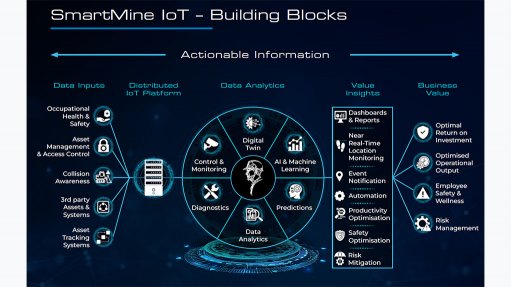
SmartMine IoT has been developed with the mining industry in mind, to provides our customers with powerful business intelligence and data modelling...
VISIT SHOWROOM
Developed to exceed the latest EN 15964 standards for police breathalysers proving that it will remain accurate and reliable for many years to come.
VISIT SHOWROOM

Press Office
Announcements
What's On
Subscribe to improve your user experience...
Option 1 (equivalent of R125 a month):
Receive a weekly copy of Creamer Media's Engineering News & Mining Weekly magazine
(print copy for those in South Africa and e-magazine for those outside of South Africa)
Receive daily email newsletters
Access to full search results
Access archive of magazine back copies
Access to Projects in Progress
Access to ONE Research Report of your choice in PDF format
Option 2 (equivalent of R375 a month):
All benefits from Option 1
PLUS
Access to Creamer Media's Research Channel Africa for ALL Research Reports, in PDF format, on various industrial and mining sectors
including Electricity; Water; Energy Transition; Hydrogen; Roads, Rail and Ports; Coal; Gold; Platinum; Battery Metals; etc.
Already a subscriber?
Forgotten your password?
Receive weekly copy of Creamer Media's Engineering News & Mining Weekly magazine (print copy for those in South Africa and e-magazine for those outside of South Africa)
➕
Recieve daily email newsletters
➕
Access to full search results
➕
Access archive of magazine back copies
➕
Access to Projects in Progress
➕
Access to ONE Research Report of your choice in PDF format
RESEARCH CHANNEL AFRICA
R4500 (equivalent of R375 a month)
SUBSCRIBEAll benefits from Option 1
➕
Access to Creamer Media's Research Channel Africa for ALL Research Reports on various industrial and mining sectors, in PDF format, including on:
Electricity
➕
Water
➕
Energy Transition
➕
Hydrogen
➕
Roads, Rail and Ports
➕
Coal
➕
Gold
➕
Platinum
➕
Battery Metals
➕
etc.
Receive all benefits from Option 1 or Option 2 delivered to numerous people at your company
➕
Multiple User names and Passwords for simultaneous log-ins
➕
Intranet integration access to all in your organisation

