



PEA confirms Macusani Yellowcake’s low-cost potential

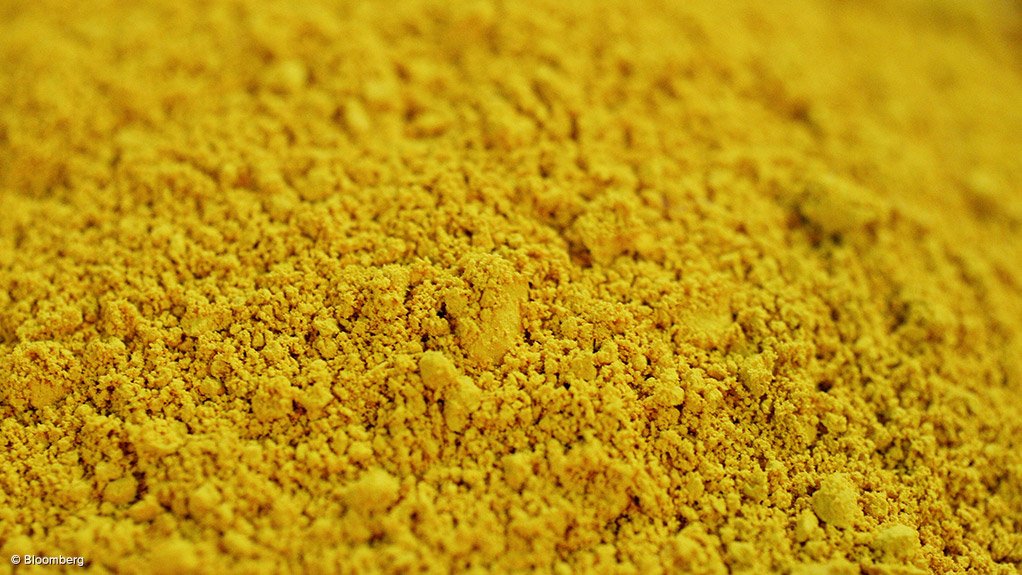


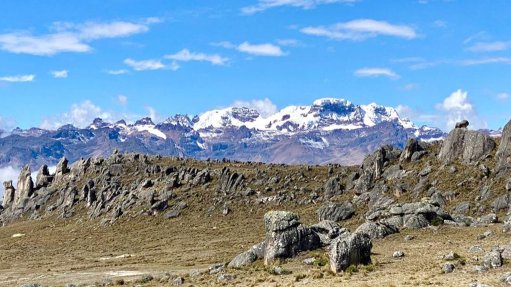
TORONTO (miningweekly.com) – A new preliminary economic assessment (PEA) by Canadian uranium exploration and development firm Macusani Yellowcake on Thursday confirmed that its uranium properties located on the Macusani Plateau in the Puno district, of south-eastern Peru, have the potential to become a large, low-cost uranium mining operation.
Speaking to Mining Weekly Online from Johannesburg, where he lives, CEO Dr Laurence Stefan said the PEA treatment delivered robust financials, which potentially placed the project firmly on the map and made it a target for prospective uranium majors.
The operation’s cash operating costs during the first five years was calculated at $19.45/lb of uranium oxide (U3O8) placing it in the lowest quartile in the world when using 2012 production figures. Cash operating costs over the entire ten-year mine life were estimated to average $20.57/lb of U3O8.
“If I was one of the major uranium players in Russia, China or Kazakhstan, I would not think twice about partnering with us on this project. When they are producing at price around $50/lb, why would they not consider adding such a low-cost operation to their portfolios?” he asked.
The results from the PEA demonstrated that at an 8% discount rate, the project had a pre-tax net present value (NPV) of $708-million, and an after-tax NPV of $417-million. It also has an internal rate of return of 47.5% before tax, and after taxes had been paid, the internal rate of return stood at 32.4% when using a uranium price of $65/lb of U3O8, which the company said was considered as the long-term price by many industry analysts.
The PEA, prepared by GBM Minerals Engineering Consultants in conjunction with The Mineral Corporation and Wardell Armstrong International, estimated that the $331-million capital expenditure could be paid back in about 3.5 years on an after-tax basis.
The yearly output during the first five years of operations was expected to average 5.17-million pounds of yellowcake, which would have ranked the mine as the sixth-largest uranium mine in 2013. The life-of-mine U3O8 output was estimated to average 4.3-million pounds a year.
The PEA provided the operation with an 8.5-million-tonne-a-year process plant and the operation would require total life-of-mine sustaining capital costs estimated at $228-million.
“The completion of the PEA is a significant milestone for the company on a number of levels. Firstly, the estimated production cost of $20.57/lb demonstrates that we have a project that has the potential to be one of the lowest-cost uranium producers in the world due to a low stripping ratio in the openpit operations, anticipated low acid consumption, and high process plant recoveries expected to be achieved in a short period of time.
“Secondly, the PEA demonstrates that the Macusani plateau has significant potential to become a major uranium producing district considering that only small areas have been explored to date. And finally, the PEA paves the way for further development of our project and the completion of a prefeasibility study, which we expect to initiate in 2014,” Stefan said.
Potentially economic ore for the project would at first come from multiple target deposits including Colibri 2 & 3/Tupuramani, Chilcuno Chico, Quebrada Blanca, Corachapi and Triunfador 1. Conventional openpit and underground mining methods were proposed, and the PEA contemplated building a mine and centralised processing facility operating over a ten-year mine life at a throughput of about 23 400 t/d.
A simple heap leach would be used to extract uranium into an acidic aqueous leach solution and recovery would be achieved through ion exchange (IX) with a solvent extraction acid recovery circuit. Stefan explained that IX technology was preferred as the simplest and most cost-effective option considering the almost pure uranium mineralisation available within the Macusani rhyolites and the absence of any contaminants such as thorium, molybdenum and vanadium.
The project currently has a National Instrument 43-101-compliant measured and indicated resource of 47.9-million tonnes grading 253 ppm uranium, containing 14.3 t of U3O8. The inferred resource stood at 40.5-million tonnes grading 286 ppm uranium, containing 13.6 t of U3O8.
Together with a joint venture between Vena Resources and uranium major Cameco, the Macusani Plateau currently hosts about 110-million pounds of uranium, of which YEL owns between 60-million to 70-million pounds. This does not compare with Canada’s Athabasca basin in northern Saskatchewan and Alberta, which is the world’s top source of high-grade uranium, but would more likely be comparable with the resources of Namibia, Niger or Kazakhstan.
He added that the proposed operations had significant “blue sky” potential and would play a significant part in the economic development of the region.
“I believe mining is the first step toward the industrial revolution. With Peru’s significant emerging uranium resources, the country is potentially well positioned to play an increasingly important role of supplying uranium, and even possibly enriched uranium in the future, to its neighbours on the South American continent,” Stefan said.
Article Enquiry
Email Article
Save Article
Feedback
To advertise email advertising@creamermedia.co.za or click here
Research Reports

Projects

Latest Multimedia
Latest News
Showroom

Developed to exceed the latest EN 15964 standards for police breathalysers proving that it will remain accurate and reliable for many years to come.
VISIT SHOWROOM
Rentech provides renewable energy products and services to the local and selected African markets. Supplying inverters, lithium and lead-acid...
VISIT SHOWROOM

Announcements
What's On
Subscribe to improve your user experience...
Option 1 (equivalent of R125 a month):
Receive a weekly copy of Creamer Media's Engineering News & Mining Weekly magazine
(print copy for those in South Africa and e-magazine for those outside of South Africa)
Receive daily email newsletters
Access to full search results
Access archive of magazine back copies
Access to Projects in Progress
Access to ONE Research Report of your choice in PDF format
Option 2 (equivalent of R375 a month):
All benefits from Option 1
PLUS
Access to Creamer Media's Research Channel Africa for ALL Research Reports, in PDF format, on various industrial and mining sectors
including Electricity; Water; Energy Transition; Hydrogen; Roads, Rail and Ports; Coal; Gold; Platinum; Battery Metals; etc.
Already a subscriber?
Forgotten your password?
Receive weekly copy of Creamer Media's Engineering News & Mining Weekly magazine (print copy for those in South Africa and e-magazine for those outside of South Africa)
➕
Recieve daily email newsletters
➕
Access to full search results
➕
Access archive of magazine back copies
➕
Access to Projects in Progress
➕
Access to ONE Research Report of your choice in PDF format
RESEARCH CHANNEL AFRICA
R4500 (equivalent of R375 a month)
SUBSCRIBEAll benefits from Option 1
➕
Access to Creamer Media's Research Channel Africa for ALL Research Reports on various industrial and mining sectors, in PDF format, including on:
Electricity
➕
Water
➕
Energy Transition
➕
Hydrogen
➕
Roads, Rail and Ports
➕
Coal
➕
Gold
➕
Platinum
➕
Battery Metals
➕
etc.
Receive all benefits from Option 1 or Option 2 delivered to numerous people at your company
➕
Multiple User names and Passwords for simultaneous log-ins
➕
Intranet integration access to all in your organisation

