New framework could boost pipe standards

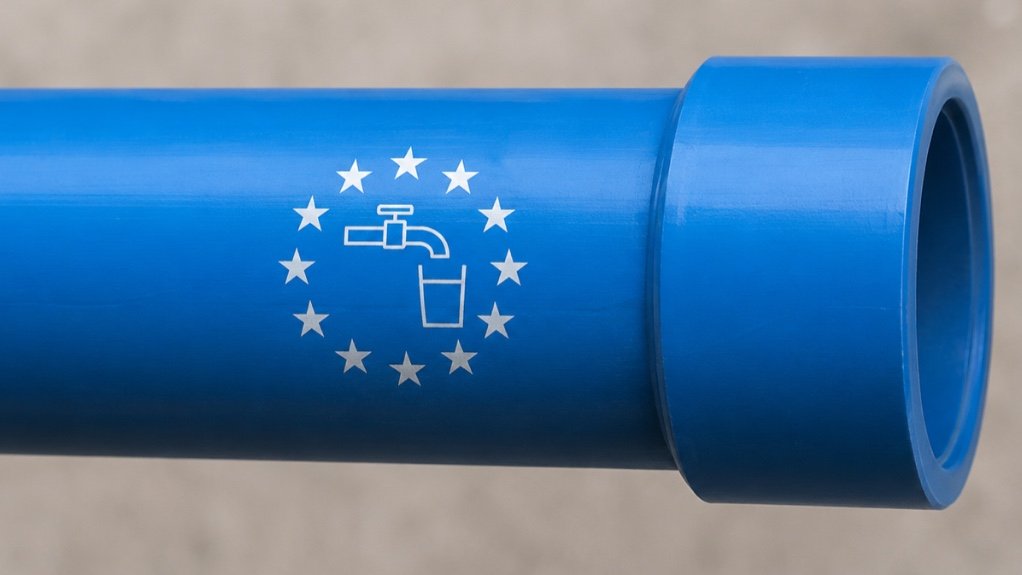
CREDIBLE PIPES The Europe Water Tap symbol is a sign of trustworthiness and quality assurance


The EU Drinking Water Directive introduces harmonised rules for materials and products that come into contact with drinking water, and is set to come into effect on December 31, 2026, plastic pipe expert Peter Sejersen noted during the Southern African Plastic Pipe Manufacturers Association’s (SAPPMA’s) third industry webinar, held last month.
The webinar was themed: Preparing the Industry for the Upcoming Harmonised Rules for Products in Contact with Drinking Water. This change will represent “one of the most significant shifts in the European plastic pipe industry in decades” with South African plastic pipe engineers, manufacturers and industry stakeholders receiving valuable insights on the adoption and implementation of the Drinking Water Directive.
“The intention is positive, namely, to protect public health, ensure access to clean drinking water and create a harmonised system across Europe. However, there are still several practical challenges and unanswered questions facing industry,” he added.
Meanwhile, SAPPMA CEO Jan Venter highlighted the importance of the South African industry being cognisant of this development, despite its being years behind the EU from a regulatory and readiness perspective. Local manufacturers should attempt to prepare for adopting the new framework in future if they have export aspirations as this may become mandatory, and the directive may signal a global shift that could eventually influence South African regulations.
However, he asserted that South Africa should first focus on improving the supply of treated water to consumers before it considered the implementation of innovations such as multilayer plastic pipes for industrial purposes.
“Anything related to the improvement of water for consumers is good news . . . If it eventually becomes a reality, the multilayer pipes’ primary use will be for conveyance of hot water in buildings,” Venter noted.
Key Changes
There are several key changes to the new Drinking Water Directive – including new testing and certification elements – which will replace the existing national regulations with a unified European system that is based on Germany’s Kuntstoff-Trinkwasser, or KTW certification – a hygiene certification for plastics in contact with drinking water.
It also includes a European-wide certification process managed by notified bodies and accredited laboratories, expanded migration testing requirements for the identification of expected and unexpected substances using gas chromatography-mass spectrometry analysis, and new testing protocols involving chlorinated water.
The framework further introduces a European “positive list”, which highlights substances that are approved and permitted in products that come into contact with drinking water, as well as an official European “drinking-water mark” for all approved products, symbolised by a water tap logo.
Despite uncertainty regarding the readiness of notified bodies, certification delays, laboratory capacity shortages and the complexity of assessing unexpected substances at low-detection thresholds, Sejersen noted that collaborative efforts were under way to test whether the introduction of the new framework would be viable and whether it could be realised globally.
The directive highlighted several benefits of using plastic pipes for various industrial purposes, owing to their energy efficiency, corrosion resistance and recyclability.
Venter elaborated that plastic pipes in South Africa were manufactured according to stringent South African National Standards requirements, as well as additional International Organisation for Standardisation standards, making these products safe for potable water applications.
“Water is life, and what is happening in Europe today may well shape future requirements elsewhere in the world,” Venter concluded.
Article Enquiry
Email Article
Save Article
Feedback
To advertise email advertising@creamermedia.co.za or click here


Projects

Latest Multimedia

Latest News

Showroom

TEBA is a trusted workforce solutions partner to the mining and industrial sectors, providing end-to-end SLP compliant recruitment, candidate...
VISIT SHOWROOM


Announcements
What's On
Subscribe to improve your user experience...
Option 1 (equivalent of R125 a month):
Receive a weekly copy of Creamer Media's Engineering News & Mining Weekly magazine
(print copy for those in South Africa and e-magazine for those outside of South Africa)
Receive daily email newsletters
Access to full search results
Access archive of magazine back copies
Access to Projects in Progress
Access to ONE Research Report of your choice in PDF format
Option 2 (equivalent of R375 a month):
All benefits from Option 1
PLUS
Access to Creamer Media's Research Channel Africa for ALL Research Reports, in PDF format, on various industrial and mining sectors
including Electricity; Water; Energy Transition; Hydrogen; Roads, Rail and Ports; Coal; Gold; Platinum; Battery Metals; etc.
Already a subscriber?
Forgotten your password?
Receive weekly copy of Creamer Media's Engineering News & Mining Weekly magazine (print copy for those in South Africa and e-magazine for those outside of South Africa)
➕
Recieve daily email newsletters
➕
Access to full search results
➕
Access archive of magazine back copies
➕
Access to Projects in Progress
➕
Access to ONE Research Report of your choice in PDF format
RESEARCH CHANNEL AFRICA
R4500 (equivalent of R375 a month)
SUBSCRIBEAll benefits from Option 1
➕
Access to Creamer Media's Research Channel Africa for ALL Research Reports on various industrial and mining sectors, in PDF format, including on:
Electricity
➕
Water
➕
Energy Transition
➕
Hydrogen
➕
Roads, Rail and Ports
➕
Coal
➕
Gold
➕
Platinum
➕
Battery Metals
➕
etc.
Receive all benefits from Option 1 or Option 2 delivered to numerous people at your company
➕
Multiple User names and Passwords for simultaneous log-ins
➕
Intranet integration access to all in your organisation