



NASA Selects Alternative to nPB Fluids for Critical Cleaning Requirements



This article has been supplied.
Companies around the world are searching for new cleaning process alternatives that work just as effectively as current cleaners but with improved environmental, health and safety factors. In the U.S., the National Air and Space Agency (NASA) recently complered trials on a variety of products from MicroCare Corp. and other companies to see if the demanding standards of NASA could be achieved with newer, better chemistries. One product from MicroCare out-performed all the other candidates.
NASA has stringent cleaning requirements. NASA missions are extremely expensive, have long operational lives, work with almost infinite sensitivity and operate in the most harsh environment of all — outer space. A good example is the amazing “New Horizons” probe that has just arrived at the planet Pluto after a nine-year journey through the solar system. So it is reasonable that NASA is very cautious about introducing new technologies because problems, if any, may not become apparent for years.
At the time of the test, NASA was using “normal propyl bromide” (“nPB”) in some critical cleaning applications. nPB is a nonflammable organic liquid based on the element bromine. While it is a highly effective cleaner, nPB must be handled carefully due to serious toxicity issues. For example, because of the toxicity risk, MicroCare does not package the chemical into aerosols.
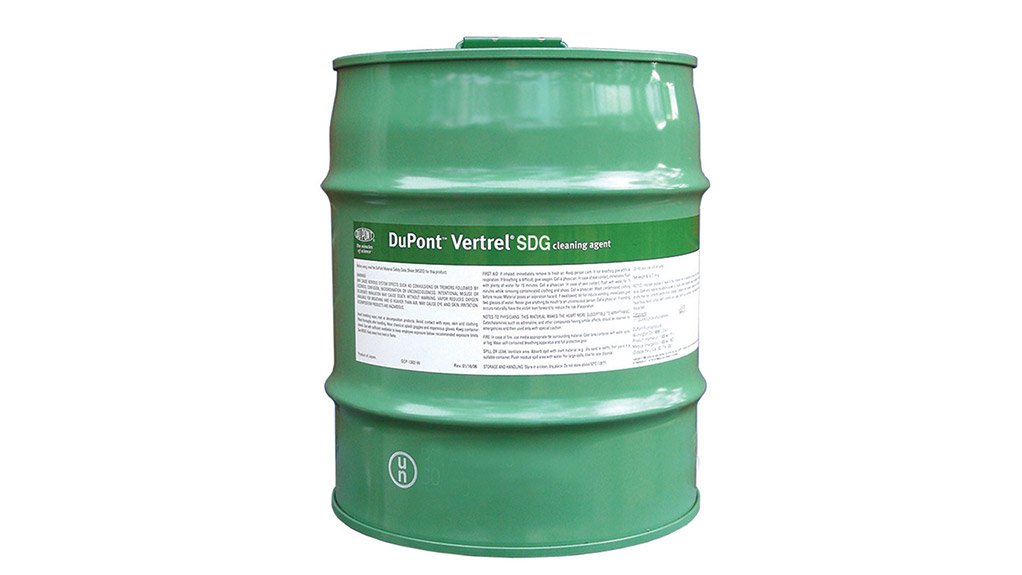
The study by Mark Mitchell of the Marshall Space Center and Nikki Lowery of Jacobs Technology compared alternatives to nPB1. The tests compared the effectiveness of three new alternatives, including Chemours (ex-Dupont) Vertrel® SDG specialty fluid. The tests were strictly controlled. Test coupons were prepared, made from a steel alloy, magnesium and aluminum. The contamination was a mix of aircraft grease, a synthetic hydraulic fluid and a small quantity of carbon black. The contaminant was applied to the test coupons, baked for two hours at 55˚C and aged for seven days. For the cleaning tests, the coupons simply were immersed in boiling solvent for 30 minutes; observed and weighed. As a benchmark, the test showed that nPB removed 96% of the contamination. All of the others did “in the range of or better than” nPB. When tested on a roughened coupon instead of a smooth polished metal surface, all three products surpassed nPB.
While the authors cautioned that their results are not to be considered any sort of a commercial endorsement, they concluded the Chemours Vertrel® SDG fluid “cleaned the most consistently.” Additionally, “all but Vertrel SDG showed reduced cleaning effectiveness on aged contamination.” The authors cautioned that additional operational, commercial and toxicity factors should be considered before finalising a solvent selection, however this test is an encouraging result to the eventual replacement of nPB.
David Ferguson, Product Manager for Precision Cleaning Products at MicroCare., is pleased with this outcome. “The requirement for safer and greener alternatives for critical cleaning is becoming a number one priority for companies,” he said. “as we can see from the test results from NASA, it is clear there is no longer any need to use nPB-based cleaners today. There are viable choices on the market that are substantially safer than nPB.” MicroCare provides many different cleaning fluids for vapor degreasing, including formulations like the popular Chemours Vertrel® SDG precision cleaner. This fluid is a very strong cleaner engineered for vapor degreasing. It is nonflammable, ozone-safe and easy to ship and store. Contact MicroCare for details.
Sources:
1 “Laboratory Evaluation of Drop-in Solvent Alternatives to n-Propyl Bromide for Vapor Degreasing”, MIPR #MIPR2AO80BW013. Contact MicroCare for a copy of the full report.
Article Enquiry
Email Article
Save Article
Feedback
To advertise email advertising@creamermedia.co.za or click here
Research Reports

Projects
Latest Multimedia

Latest News
Showroom
Established in 1983, the ASTPM is an industry association and representative body of the welded carbon steel tube and pipe manufacturers of South...
VISIT SHOWROOM
AirNox (Pty) Ltd is a level 1 BBBEE manufacturer of complete AdBlue® solutions for operators of SCR diesel engines and AUS40 across South Africa...
VISIT SHOWROOM

Announcements
What's On
Subscribe to improve your user experience...
Option 1 (equivalent of R125 a month):
Receive a weekly copy of Creamer Media's Engineering News & Mining Weekly magazine
(print copy for those in South Africa and e-magazine for those outside of South Africa)
Receive daily email newsletters
Access to full search results
Access archive of magazine back copies
Access to Projects in Progress
Access to ONE Research Report of your choice in PDF format
Option 2 (equivalent of R375 a month):
All benefits from Option 1
PLUS
Access to Creamer Media's Research Channel Africa for ALL Research Reports, in PDF format, on various industrial and mining sectors
including Electricity; Water; Energy Transition; Hydrogen; Roads, Rail and Ports; Coal; Gold; Platinum; Battery Metals; etc.
Already a subscriber?
Forgotten your password?
Receive weekly copy of Creamer Media's Engineering News & Mining Weekly magazine (print copy for those in South Africa and e-magazine for those outside of South Africa)
➕
Recieve daily email newsletters
➕
Access to full search results
➕
Access archive of magazine back copies
➕
Access to Projects in Progress
➕
Access to ONE Research Report of your choice in PDF format
RESEARCH CHANNEL AFRICA
R4500 (equivalent of R375 a month)
SUBSCRIBEAll benefits from Option 1
➕
Access to Creamer Media's Research Channel Africa for ALL Research Reports on various industrial and mining sectors, in PDF format, including on:
Electricity
➕
Water
➕
Energy Transition
➕
Hydrogen
➕
Roads, Rail and Ports
➕
Coal
➕
Gold
➕
Platinum
➕
Battery Metals
➕
etc.
Receive all benefits from Option 1 or Option 2 delivered to numerous people at your company
➕
Multiple User names and Passwords for simultaneous log-ins
➕
Intranet integration access to all in your organisation

