


Managing moisture in modern buildings

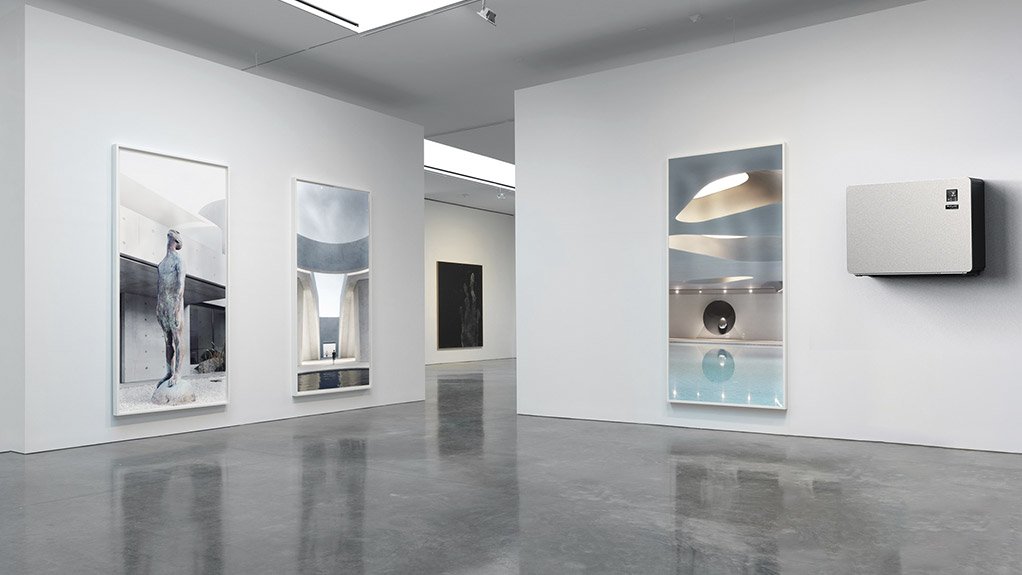



Green building standards aim to make modern buildings more energy efficient and airtight. Older buildings are also increasingly being retrofitted to improve energy performance and insulation. While this reduces energy loss and improves climate control, it also reduces natural airflow, increasing the presence of moisture in interior spaces.
This means that, while buildings may feel cool, they may still retain elevated humidity levels that affect materials, finishes, and equipment over time. Persistent moisture can lead to corrosion, surface degradation, and increased maintenance requirements, particularly in environments where humidity remains high for extended periods.
South African air treatment technology company Solenco says that addressing moisture build-up in sealed environments that lack natural air flow is becoming a design consideration rather than a maintenance issue.
“We have become very good at controlling temperature, but moisture is often left unmanaged. In more airtight buildings, that moisture has nowhere to go, and over time it begins to affect everything from structural finishes to sensitive equipment. We are also seeing increasing demand for dedicated humidity control across hospitality, high-end residential, and light commercial environments, where standard heating, ventilation and air conditioning (HVAC) designs do not fully address moisture management,” says Solenco commercial sales manager Wynand Deyzel.
Deyzel explains that industry standards and guidelines such as ASHRAE 62.2 set minimum requirements for mechanical ventilation in residential buildings, aimed at maintaining indoor air quality. However, ventilation alone does not actively control humidity, particularly in humid climates such as KwaZulu-Natal and Cape Town.
While air conditioning systems remove some moisture as part of the cooling process, they are not designed to directly control humidity levels. Air conditioners respond to temperature settings, cycling on and off to maintain a target temperature regardless of the relative humidity in the space. Dehumidifiers, however, are designed to regulate moisture, maintaining a set humidity level independent of temperature. The two systems serve different functions and are most effective when used together rather than interchangeably.
“Moisture control [needs to be] engineered into the space in the same way as temperature control, especially in environments where humidity is consistently high,” says Deyzel.
Building design is evolving to encompass active management of interior air and not just of heating and cooling requirements. Deyzel asserts that this is leading to greater use of integrated dehumidification within building systems, with dehumidifiers being specified to maintain stable indoor conditions, reduce strain on HVAC systems, and protect long-term asset performance.
For developers and facility operators, this applies both to new builds and retrofits, he says. Ceiling-mounted, inverter-driven systems can be incorporated into design plans or added to existing spaces to consistently manage humidity without disrupting the building's overall aesthetic or energy profile.
Article Enquiry
Email Article
Save Article
Feedback
To advertise email advertising@creamermedia.co.za or click here
Research Reports

Projects


Latest Multimedia

Latest News

Showroom

For over 15 years, Lilak Aluminium, a trusted leader in architectural extrusion supply, has delivered excellence to businesses like yours.
VISIT SHOWROOM
ISO-certified Condra manufactures overhead cranes, portal cranes, cantilever cranes and crane components: hoists, drives, end-carriages, brakes and...
VISIT SHOWROOM

Announcements
What's On
Subscribe to improve your user experience...
Option 1 (equivalent of R125 a month):
Receive a weekly copy of Creamer Media's Engineering News & Mining Weekly magazine
(print copy for those in South Africa and e-magazine for those outside of South Africa)
Receive daily email newsletters
Access to full search results
Access archive of magazine back copies
Access to Projects in Progress
Access to ONE Research Report of your choice in PDF format
Option 2 (equivalent of R375 a month):
All benefits from Option 1
PLUS
Access to Creamer Media's Research Channel Africa for ALL Research Reports, in PDF format, on various industrial and mining sectors
including Electricity; Water; Energy Transition; Hydrogen; Roads, Rail and Ports; Coal; Gold; Platinum; Battery Metals; etc.
Already a subscriber?
Forgotten your password?
Receive weekly copy of Creamer Media's Engineering News & Mining Weekly magazine (print copy for those in South Africa and e-magazine for those outside of South Africa)
➕
Recieve daily email newsletters
➕
Access to full search results
➕
Access archive of magazine back copies
➕
Access to Projects in Progress
➕
Access to ONE Research Report of your choice in PDF format
RESEARCH CHANNEL AFRICA
R4500 (equivalent of R375 a month)
SUBSCRIBEAll benefits from Option 1
➕
Access to Creamer Media's Research Channel Africa for ALL Research Reports on various industrial and mining sectors, in PDF format, including on:
Electricity
➕
Water
➕
Energy Transition
➕
Hydrogen
➕
Roads, Rail and Ports
➕
Coal
➕
Gold
➕
Platinum
➕
Battery Metals
➕
etc.
Receive all benefits from Option 1 or Option 2 delivered to numerous people at your company
➕
Multiple User names and Passwords for simultaneous log-ins
➕
Intranet integration access to all in your organisation

