



Kvanefjeld multi-element project, Greenland

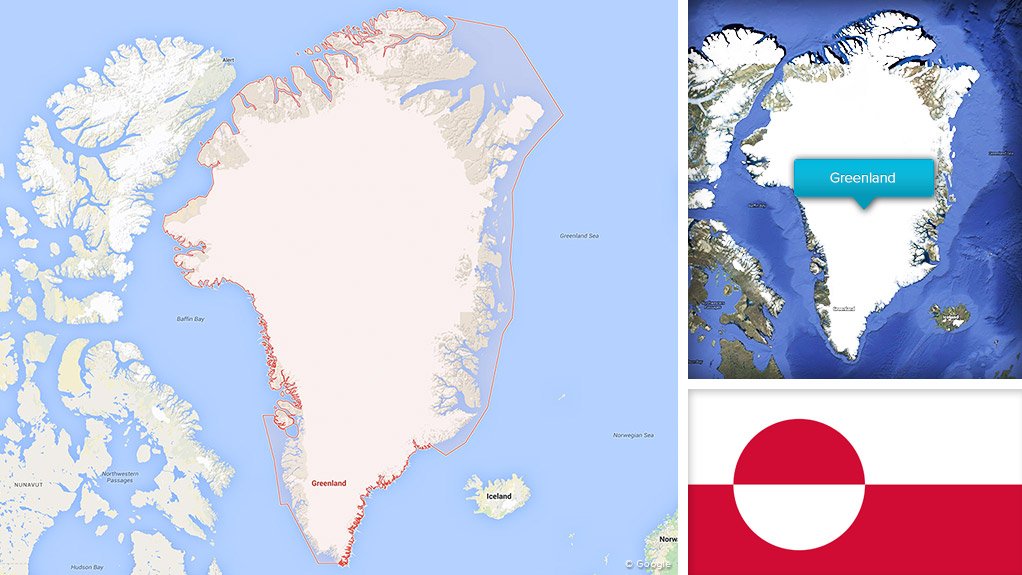


Name of the Project
Kvanefjeld multi-element project.
Location
Greenland.
Client
Greenland Minerals & Energy Limited (GMEL). Shenghe Resources has acquired a 12.5% interest in GMEL.
Project Description
The project comprises several large multi-element deposits rich in rare-earth elements, uranium and zinc. Collectively, these deposits represent one of the world’s largest identified mineral resources of rare earths and uranium.
The feasibility study schedule completed on the project in 2015 outlined a 37-year mine life, including three years of production ramp-up.
Kvanefjeld has a total resource base of 1.01-billion tonnes containing 593-million pounds of uranium and 11.14-million tonnes of total rare-earth oxides. Measured resources are estimated at 143-million tonnes.
The feasibility study completed on the project evaluated the development of a mine, a concentrator, a uranium and rare earths refinery, a rare earths separation plant for lanthanum and cerium, sulphuric and hydrochloric acid (HCI) plants, a power plant, new port facilities, an accommodation village, roads and logistics, as well as water supply and utilities, treating three-million tonnes of ore a year.
The operation will produce critical rare earths and by-products of uranium oxide, lanthanum and cerium, as well as zinc concentrate.
Mining operations will be opencast using standard drill-and-blast and truck-and-shovel methods.
This has been selected as the lowest operating-risk mining method in terms of cost and productivity, as well as mining zinc concentrate and fluorspar.
At the end of 37 years, the pit remains in ore and there is considerable potential to increase the mine life.
Two open satellite deposits also remain for development, and present the opportunity to target specific elements – uranium, dysprosium and neodymium – based on market conditions.
Meanwhile, GMEL has made some material technical improvements to the project in the updated feasibility study released in April this year, which have enabled the company to update Kvanefjeld’s economic metrics.
The Kvanefjeld feasibility study update has demonstrated a robust, high-value rare earths and uranium project with extensive upside, owing to the substantial mineral resource inventory.
Conservative pricing assumptions demonstrate the viability of the project, even in a low-price environment.
GMEL has indicated that the project stands to be a stable, long-term, low-cost supplier of materials essential to clean energy generation and energy efficient technologies.
Potential Job Creation
Not stated.
Net Present Value/Internal Rate of Return
The project’s net present value has increased from $1.4-billion, at an 8% discount rate, in the 2015 feasibility study to $1.59-billion, at a 10% discount rate, in the updated feasibility study.
The internal rate of return has increased from 21.8% to 43.4%, while the payback period has decreased from six to five years.
Value
The 2015 feasibility study estimated a capital requirement for the project of $1.36-billion. This has decreased to $831.9-million in the updated feasibility study.
Duration
Not stated.
Latest Developments
A technical optimisation programme under way at the Kvanefjeld project has identified significant improvements at the project.
The optimisation programme, undertaken in collaboration with major shareholder Shenghe Resources Holding, is investigating a number of opportunities to simplify the leach process and readdress the reagent strategy.
This aims to reduce project infrastructure in Greenland, reduce the number of processing steps and equipment sizing, and to best align intermediate product with downstream separation technology. Testwork has been highly successful in validating the enhanced and simplified leaching method, GMEL has indicated.
The simplified refining circuit will add numerous benefits to the project.
“Coupled with major flotation improvements to produce a higher-grade, lower-mass mineral concentrate, the simplified refining circuit will result in smaller equipment sizing and less support infrastructure leading to a reduction of capital and operating costs,” GMEL MD Dr John Mair has said.
The project enhancements will also reduce the project’s in‐country footprint and impacts while serving to increase the profitability.
Key to the revised processing strategy has been the evaluation of HCl for direct concentrate leaching. This is a departure from the feasibility study process, which uses sulphuric acid for direct leaching and HCI for secondary leaching.
Previous attempts to use direct HCI have been problematic, owing to silica contamination. GMEL has now devised a method that allows for the silica in the concentrate to be controlled in one leaching step, which occurs while still extracting high levels of rare earths and uranium from the concentrate. The new method mixes HCI directly with mineral concentrate to produce a viscous paste, which is then mixed for 30 minutes before being dissolved in water (water leach).
In the viscous paste, the rare earths are dissolved and the silica is controlled by precipitation in a favourable form. This method for extracting the rare earths does not depend on high temperature, high pressure or extreme chemical treatment that is otherwise the norm in rare earths production. The method is suitable, owing to the nonrefractory nature of the key rare earths mineral steenstrupine.
Key Contracts and Suppliers
None stated.
On Budget and on Time?
Not stated.
Contact Details for Project Information
GMEL, tel +61 8 9382 or fax +61 8 9382 2788.
Article Enquiry
Email Article
Save Article
To advertise email advertising@creamermedia.co.za or click here
Research Reports

Projects
Latest Multimedia
Latest News
Showroom
Virtual Gas Network supplies compressed natural gas via a virtual gas distribution network.
VISIT SHOWROOM
Your global lifecycle technology & service partner for materials & minerals processing equipment for coal, iron ore, copper, manganese & other...
VISIT SHOWROOM

Announcements
What's On
Subscribe to improve your user experience...
Option 1 (equivalent of R125 a month):
Receive a weekly copy of Creamer Media's Engineering News & Mining Weekly magazine
(print copy for those in South Africa and e-magazine for those outside of South Africa)
Receive daily email newsletters
Access to full search results
Access archive of magazine back copies
Access to Projects in Progress
Access to ONE Research Report of your choice in PDF format
Option 2 (equivalent of R375 a month):
All benefits from Option 1
PLUS
Access to Creamer Media's Research Channel Africa for ALL Research Reports, in PDF format, on various industrial and mining sectors
including Electricity; Water; Energy Transition; Hydrogen; Roads, Rail and Ports; Coal; Gold; Platinum; Battery Metals; etc.
Already a subscriber?
Forgotten your password?
Receive weekly copy of Creamer Media's Engineering News & Mining Weekly magazine (print copy for those in South Africa and e-magazine for those outside of South Africa)
➕
Recieve daily email newsletters
➕
Access to full search results
➕
Access archive of magazine back copies
➕
Access to Projects in Progress
➕
Access to ONE Research Report of your choice in PDF format
RESEARCH CHANNEL AFRICA
R4500 (equivalent of R375 a month)
SUBSCRIBEAll benefits from Option 1
➕
Access to Creamer Media's Research Channel Africa for ALL Research Reports on various industrial and mining sectors, in PDF format, including on:
Electricity
➕
Water
➕
Energy Transition
➕
Hydrogen
➕
Roads, Rail and Ports
➕
Coal
➕
Gold
➕
Platinum
➕
Battery Metals
➕
etc.
Receive all benefits from Option 1 or Option 2 delivered to numerous people at your company
➕
Multiple User names and Passwords for simultaneous log-ins
➕
Intranet integration access to all in your organisation

