



Is Renewable Energy an answer to the water crisis?





Company Announcement - Clean energy holds the simplest solution to curbing the potential effects of continuing water shortages
South Africa is in crisis. Regardless of the numerous debates happening across various media platforms and amoungst policy makers; one thing that cannot be denied is that South Africa’s energy and water crises have reached a point of concern.
With the President himself having recently confirmed that the country is in a difficult situation, it is important for us as a nation to reflect on the choices that have been made, which have driven us to the current state. But what is reflection without coming up with feasabile solutions?
Our energy crisis has been the direct influencer to the stagnation in our economic growth, food scarcity and job losses and with the current water crisis, we must brace ourselves for the resultant consequences . The International Energy Agency (IEA) has predicated that the amount of fresh water consumed for energy production is set to double within the next 23 years, a key element effecting increased water consumption resulting from expanding coal production. According to the Water Research Commission and the University of Pretoria, Eskom uses almost 4000 million litres of extra water per year as a cooling agent.
The study also suggests that three of the country’s oldest power stations such as Rooiwal, Pretoria West and Komati, which have been operational from as early as 1961 will continue to increase Eskom’s water consumption greatly unless they are decommissioned sooner than prescriibed. This along with the ballooning issues and delays in completing the Madupi and Kusile power stations is creating a concerning climate of uncertainty as to when this overconsumption of water will decrease.
How is renewable energy the answer? Consider the following; 1.90 litres of water is used to produced 1kW of electricity, where its only takes 0.004 litres to produce the same amount of electricity through a wind farm. With water and energy closely interlinked, government and policy makers should be considering the electricity and water crisis in the same light. In 2014 investment into renewable energy rose by 38% attracting an investment of over $11 billion of in South Africa with the country being identified as being a globally significant investment destination for renewable energy solutions. The Department of Energy’s Renewable Energy Independent Power Producer Procurement Programme has been the “African poster child” of showcasing the feasibility of clean energy production in South Africa and the rest of the continent.
In addition to power generation under REIPPPP, embedded generation, such as rooftop solutions is an important area under the Integrated Resource Plan 2010-2030 (IRP2010-2030). The IRP 2010-2030 estimates that residential and commercial PV embedded generation could reach 22.5GW by 2020. NERSA has published a Consultation Paper on Small-Scale Embedded Generation Regulatory Rules (Rules) in order to address the gap in the legislative framework for the installation of systems less than 1MW (embedded generation of 1MW or higher is regulated under REIPPP).
A key element of these Rules is the introduction of an export credit, which would be due to customers exporting any excess electricity, produced using a small-scale embedded generation solution, onto the grid. Unfortunately, it is not clear at this stage when NERSA will be making its decision regarding these Rules with the proposed deadline in the draft timeline having lapsed.
As the renewable energy sector in South Africa matures, it is imperative that regulatory and economic incentives such as those proposed in the Rules are put in place by government as soon as possible to enhance the attractiveness of investing in the sector in order to further accelerate the transition from a high-carbon, fossil fuel-based economy to a less carbon-intensive one that not only encourages innovation and efficiency, but simultaneously addresses the energy and water crisis.
Article Enquiry
Email Article
Save Article
Feedback
To advertise email advertising@creamermedia.co.za or click here
Research Reports

Projects
Latest Multimedia
Latest News
Showroom
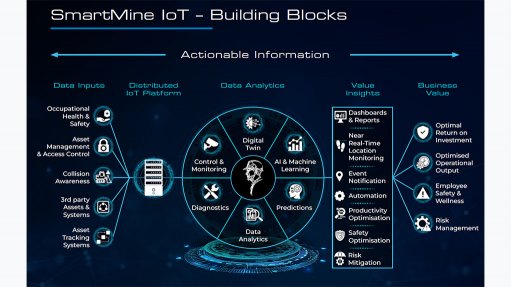
SmartMine IoT has been developed with the mining industry in mind, to provides our customers with powerful business intelligence and data modelling...
VISIT SHOWROOM
Rooted in the hearts of South Africans, combining technology and a quest for perfection to bring you a battery of peerless standing. Willard...
VISIT SHOWROOM
Press Office
Announcements
What's On
Subscribe to improve your user experience...
Option 1 (equivalent of R125 a month):
Receive a weekly copy of Creamer Media's Engineering News & Mining Weekly magazine
(print copy for those in South Africa and e-magazine for those outside of South Africa)
Receive daily email newsletters
Access to full search results
Access archive of magazine back copies
Access to Projects in Progress
Access to ONE Research Report of your choice in PDF format
Option 2 (equivalent of R375 a month):
All benefits from Option 1
PLUS
Access to Creamer Media's Research Channel Africa for ALL Research Reports, in PDF format, on various industrial and mining sectors
including Electricity; Water; Energy Transition; Hydrogen; Roads, Rail and Ports; Coal; Gold; Platinum; Battery Metals; etc.
Already a subscriber?
Forgotten your password?
Receive weekly copy of Creamer Media's Engineering News & Mining Weekly magazine (print copy for those in South Africa and e-magazine for those outside of South Africa)
➕
Recieve daily email newsletters
➕
Access to full search results
➕
Access archive of magazine back copies
➕
Access to Projects in Progress
➕
Access to ONE Research Report of your choice in PDF format
RESEARCH CHANNEL AFRICA
R4500 (equivalent of R375 a month)
SUBSCRIBEAll benefits from Option 1
➕
Access to Creamer Media's Research Channel Africa for ALL Research Reports on various industrial and mining sectors, in PDF format, including on:
Electricity
➕
Water
➕
Energy Transition
➕
Hydrogen
➕
Roads, Rail and Ports
➕
Coal
➕
Gold
➕
Platinum
➕
Battery Metals
➕
etc.
Receive all benefits from Option 1 or Option 2 delivered to numerous people at your company
➕
Multiple User names and Passwords for simultaneous log-ins
➕
Intranet integration access to all in your organisation

