Iran war gives small boost to thermal coal, further gains possible - columnist

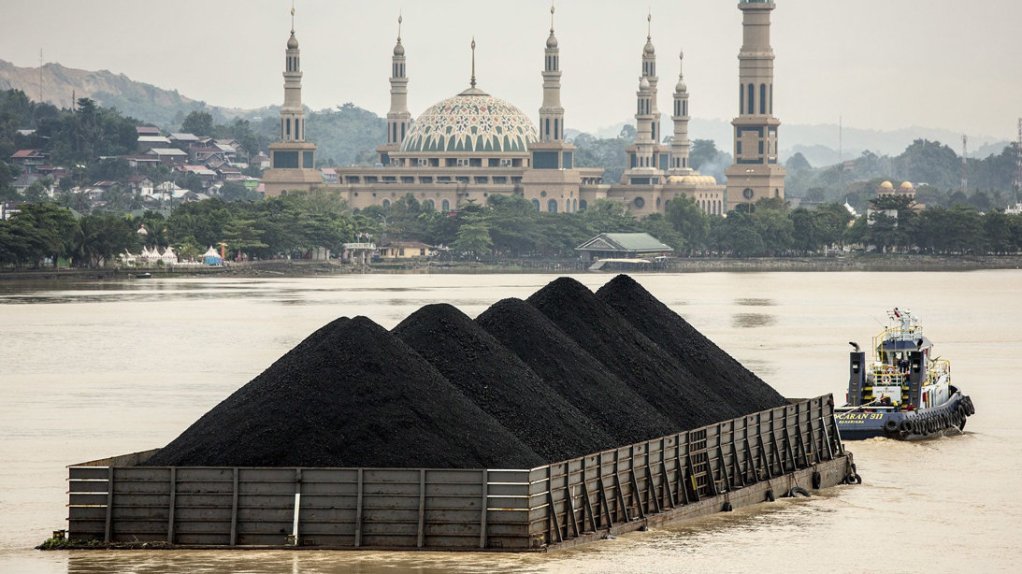


LAUNCESTON - Seaborne thermal coal prices in Asia rallied in the wake of the US and Israeli war against Iran, but the gains are modest and nowhere near the size seen during the crisis created by Russia's invasion of Ukraine.
This may seem counter-intuitive at first glance, given that thermal coal is an alternative to liquefied natural gas (LNG) for electricity generation, and about 20% of global supply of the super-chilled fuel has been lost with the effective closure of the Strait of Hormuz.
Seaborne thermal coal prices surged as much as 78% in the aftermath of Russia's invasion of Ukraine in February 2022, even though there was very little disruption to supply, with the main impact being a re-routing of flows as Western buyers shunned Russian cargoes.
While Asia's LNG imports have slumped since the start of the Iran war, the bulk of the decline has been experienced by China, which has cut arrivals and turned instead to domestic and pipeline natural gas as well as domestic coal.
This has meant that importers in other major Asia buyers haven't had to scramble for extra cargoes as they have had access to sufficient LNG to meet demand.
But with the prices for spot LNG and oil-linked long-term LNG rising, thermal coal is getting more competitive.
There are three main types of thermal coal traded in Asia, high-quality Australian, which is purchased mainly by Japan, South Korea and Taiwan, mid-quality Australian and Indonesian, which goes to China and India, and lower-grade Indonesian, which is also favoured by China and India.
The best performing of the three since the start of the Iran conflict is high-quality Australian coal, with the benchmark weekly index for fuel shipped from Newcastle Port ending at $130.81/t on May 1, up 12.6% from the week prior to the start of the Iran war.
Mid-quality Australian coal with an energy content of 5 500 kilocalories per kilogram (kcal/kg) was assessed by commodity price reporting agency Argus at $96.79/t in the week to May 1, up 11.7% since the start of the Iran war.
Indonesian coal with an energy content of 4 200 kcal/kg was assessed at $61.82/t last week, up 11.6% since February 27.
The data shows that the higher grade fuel has modestly outperformed the mid- and lower-quality coal, which is a reflection that Japan and South Korea are the only major economies in Asia that are capable of switching electricity generation between coal and LNG.
But the import data shows that these two countries have yet to switch in any meaningful way between the two fossil fuels.
FUEL SWITCHING
Japan's imports of thermal coal were 7.89-million tons in April, according to analysts DBX Commodities, down from 9.1-million in March, but slightly above the 7.6-million from the same month in 2025.
South Korea's imports were 5.7-million tons in April, down from 5.8-million in March but above the 4.1-million in April
last year, DBX data showed.
However, both Japan and South Korea recorded imports in April that were well below the five-year average, showing that while demand ticked up slightly from the prior year, it still was modest in terms of recent years.
The question is whether Japan and South Korea will switch more to coal in coming months, especially as peak summer demand arrives.
Certainly, the current pricing for thermal coal and LNG provides a financial incentive to do so, with LSEG data showing that it is cheaper for Japan to use coal when the LNG price is above $10.24 per million British thermal units (mmBtu), while for South Korea the price is $10.45.
Spot LNG for delivery to North Asia was assessed at $17.80 per mmBtu in the week to May 1, meaning coal is cheaper than any spot LNG cargoes.
However, much of the LNG delivered to Japan and South Korea is under long-term contracts linked to the price of Brent crude, with LSEG data showing that the price of this LNG was $10.06 per mmBtu last week, meaning it was still cheaper than coal.
However, Brent futures have rallied in recent days as the crude market becomes more concerned that the Strait of Hormuz won't re-open any time soon, ending at $114.44 a barrel on Monday, up around 32% since the post-war low of $86.09 on April 17.
Using the current Brent futures pricing, LSEG data shows that the price of Brent-linked LNG in Japan will be $12.73 per mmBtu by the beginning of July, which is high enough to encourage gas-to-coal switching.
Article Enquiry
Email Article
Save Article
Feedback
To advertise email advertising@creamermedia.co.za or click here
Research Reports
Latest Multimedia

Latest News
Showroom

Sika South Africa is a trusted partner for the nation’s infrastructure, commercial, residential, and industrial sectors.
VISIT SHOWROOM


Announcements
What's On
Subscribe to improve your user experience...
Option 1 (equivalent of R125 a month):
Receive a weekly copy of Creamer Media's Engineering News & Mining Weekly magazine
(print copy for those in South Africa and e-magazine for those outside of South Africa)
Receive daily email newsletters
Access to full search results
Access archive of magazine back copies
Access to Projects in Progress
Access to ONE Research Report of your choice in PDF format
Option 2 (equivalent of R375 a month):
All benefits from Option 1
PLUS
Access to Creamer Media's Research Channel Africa for ALL Research Reports, in PDF format, on various industrial and mining sectors
including Electricity; Water; Energy Transition; Hydrogen; Roads, Rail and Ports; Coal; Gold; Platinum; Battery Metals; etc.
Already a subscriber?
Forgotten your password?
Receive weekly copy of Creamer Media's Engineering News & Mining Weekly magazine (print copy for those in South Africa and e-magazine for those outside of South Africa)
➕
Recieve daily email newsletters
➕
Access to full search results
➕
Access archive of magazine back copies
➕
Access to Projects in Progress
➕
Access to ONE Research Report of your choice in PDF format
RESEARCH CHANNEL AFRICA
R4500 (equivalent of R375 a month)
SUBSCRIBEAll benefits from Option 1
➕
Access to Creamer Media's Research Channel Africa for ALL Research Reports on various industrial and mining sectors, in PDF format, including on:
Electricity
➕
Water
➕
Energy Transition
➕
Hydrogen
➕
Roads, Rail and Ports
➕
Coal
➕
Gold
➕
Platinum
➕
Battery Metals
➕
etc.
Receive all benefits from Option 1 or Option 2 delivered to numerous people at your company
➕
Multiple User names and Passwords for simultaneous log-ins
➕
Intranet integration access to all in your organisation