Institution implements standards for global competitiveness

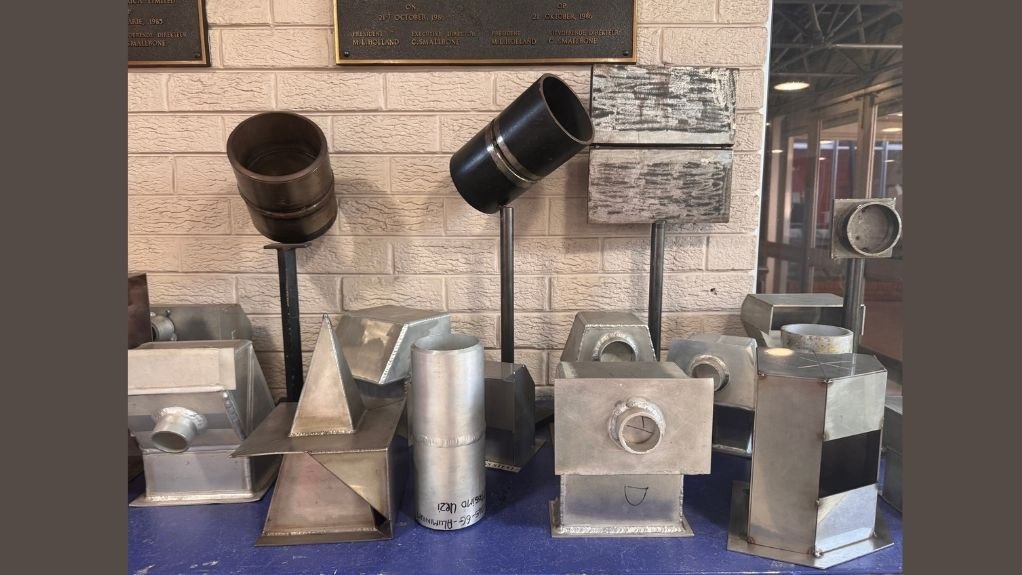
BRIDGING THEORY AND APPLICATION The Material Testing Lab provides tensile, bend, impact, hardness and metallographic testing to support procedure qualification, failure investigations and quality assurance
INDUSTRY COMPETITIVENESS The SAIW runs practical welder training, welding inspection, welding coordination and NDT courses aligned with internationally recognised qualifications, including the International Institute of Welding education, training and qualification guidelines
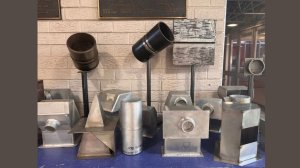


South Africa’s welding and cutting sector is facing a critical shortage of competent welding personnel at a time when local manufacturers must meet tougher global quality demands and adopt automation to remain competitive, says training and certification specialist the Southern African Institute of Welding (SAIW).
The organisation identifies the lack of “quality-focused” welders, inspectors, non-destructive testing (NDT) technicians and welding coordinators as a key concern.
“Industry needs people who can work to procedure, understand standards, interpret defects and support fabrication in safety-critical sectors,” says SAIW GM Confidence Lekoane.
To address this dearth, the SAIW runs practical welder training, welding inspection, welding coordination and NDT courses aligned with internationally recognised qualifications, including the International Institute of Welding education, training and qualification guidelines, ISO 9606 for welder qualification, ISO 14731 for welding coordination, ISO 3834 for welding quality requirements, and ISO 9712 for NDT personnel qualification and certification.
Programmes are also developed with industry input to ensure that the training is directly aligned with fabrication and inspection requirements.
The goal is to produce welding personnel who can deliver consistent, code-compliant work in mining, energy, pressure equipment, transport and infrastructure, Lekoane explains.
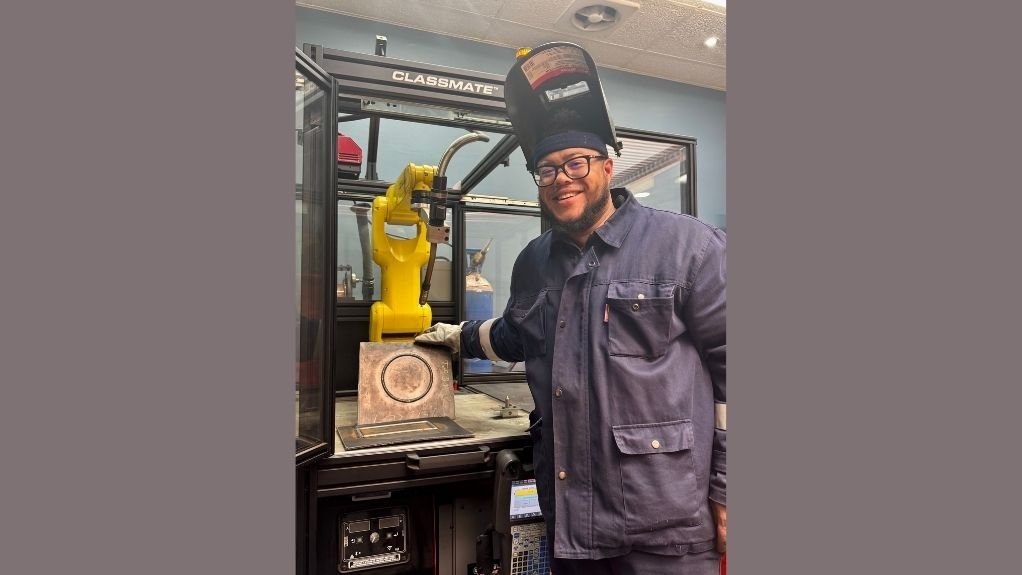
Moreover, with mechanised, automated and digitally-monitored laser welding gaining traction in mining, energy and infrastructure projects, owing to demands for productivity, repeatability and safety, the SAIW is adapting training and certification processes, says Lekoane.
New technology-focused modules at the institute include laser welding awareness and robotic welding training, with SAIW studying future skills requirements linked to robotics, digital manufacturing and AI-supported welding.
“The SAIW already offers a robotic welding training programme aimed at developing the skills required to operate, programme and supervise robotic welding systems.”
This course provides both fundamental and advanced knowledge of robotic welding applications, supporting the transition towards greater automation in manufacturing and fabrication environments.
Future training will also emphasise process control, welding procedure qualification, digital data interpretation, quality assurance and automation oversight, as supervisors, inspectors and welding coordinators will need new competencies to manage and verify automated processes.
The SAIW has also piloted virtual reality and augmented reality for welder training with positive feedback, especially among beginners. Simulation lets learners practise hand positioning, travel speed, work angle and arc length in a low-cost, safe environment before striking an arc.
“These technologies will not replace real welding but will improve training efficiency,” Lekoane explains.
Benefits include reduced material, gas and consumables costs, unlimited repeat practice and data-driven feedback for trainers.
Compliance Gaps
Beyond skills, the SAIW sees persistent gaps in how standards are applied across the industry with the main issues being inconsistent application of welding procedures, poor control of welder qualifications, limited understanding of inspection requirements and weak traceability of welding records.
“In some cases, companies inspect at the end of fabrication instead of building quality into the process from the start,” says Lekoane.
Proper practice should begin with contract review, material control, procedure qualification, welder qualification, fit-up, consumable control, in-process inspection and final verification. Strengthening this chain is critical for safety-critical work, she adds.
The SAIW’s Practical Welding School and ISO 17025-accredited Materials Testing Laboratory combine training and independent verification. The school handles hands-on training and welder qualification testing. The Material Testing Lab provides tensile, bend, impact, hardness and metallographic testing to support procedure qualification, failure investigations and quality assurance.
“Together, they provide a bridge between classroom learning and real-world application by allowing learners and industry clients to verify welding quality through practical assessment and testing.”
As South Africa invests in infrastructure, energy, mining and advanced manufacturing, these facilities remain key to ensuring weld quality and long-term reliability through “world-class training, technical services and independent testing”, comments Lekoane.
Standards as an Export Requirement
Meanwhile, with pressure mounting on local fabricators to compete internationally, SAIW stresses that standards and qualified procedures are non-negotiable and inspection requirements give clients confidence that products are made under controlled conditions.
“Standards help companies reduce rework, improve traceability, manage risk and demonstrate compliance to international customers,” Lekoane says.
To remain competitive in global markets, updates are needed in areas such as automation, laser welding, robotics, digital quality records and advanced NDT. Lekoane argues that South Africa does not need new systems, but stronger implementation of existing ISO, American Society of Mechanical Engineers and American Welding Society standards.
“South Africa does not need to reinvent welding quality systems; it needs to implement internationally recognised systems more consistently and prepare people for the next generation of fabrication technologies,” Lekoane concludes.
Article Enquiry
Email Article
Save Article
Feedback
To advertise email advertising@creamermedia.co.za or click here
Research Reports



Latest Multimedia
Latest News
Showroom
AirNox (Pty) Ltd is a level 1 BBBEE manufacturer of complete AdBlue® solutions for operators of SCR diesel engines and AUS40 across South Africa...
VISIT SHOWROOM


Announcements
What's On
Subscribe to improve your user experience...
Option 1 (equivalent of R125 a month):
Receive a weekly copy of Creamer Media's Engineering News & Mining Weekly magazine
(print copy for those in South Africa and e-magazine for those outside of South Africa)
Receive daily email newsletters
Access to full search results
Access archive of magazine back copies
Access to Projects in Progress
Access to ONE Research Report of your choice in PDF format
Option 2 (equivalent of R375 a month):
All benefits from Option 1
PLUS
Access to Creamer Media's Research Channel Africa for ALL Research Reports, in PDF format, on various industrial and mining sectors
including Electricity; Water; Energy Transition; Hydrogen; Roads, Rail and Ports; Coal; Gold; Platinum; Battery Metals; etc.
Already a subscriber?
Forgotten your password?
Receive weekly copy of Creamer Media's Engineering News & Mining Weekly magazine (print copy for those in South Africa and e-magazine for those outside of South Africa)
➕
Recieve daily email newsletters
➕
Access to full search results
➕
Access archive of magazine back copies
➕
Access to Projects in Progress
➕
Access to ONE Research Report of your choice in PDF format
RESEARCH CHANNEL AFRICA
R4500 (equivalent of R375 a month)
SUBSCRIBEAll benefits from Option 1
➕
Access to Creamer Media's Research Channel Africa for ALL Research Reports on various industrial and mining sectors, in PDF format, including on:
Electricity
➕
Water
➕
Energy Transition
➕
Hydrogen
➕
Roads, Rail and Ports
➕
Coal
➕
Gold
➕
Platinum
➕
Battery Metals
➕
etc.
Receive all benefits from Option 1 or Option 2 delivered to numerous people at your company
➕
Multiple User names and Passwords for simultaneous log-ins
➕
Intranet integration access to all in your organisation