



Rising gold output guarantees a supply crunch in coming quarters - Clark

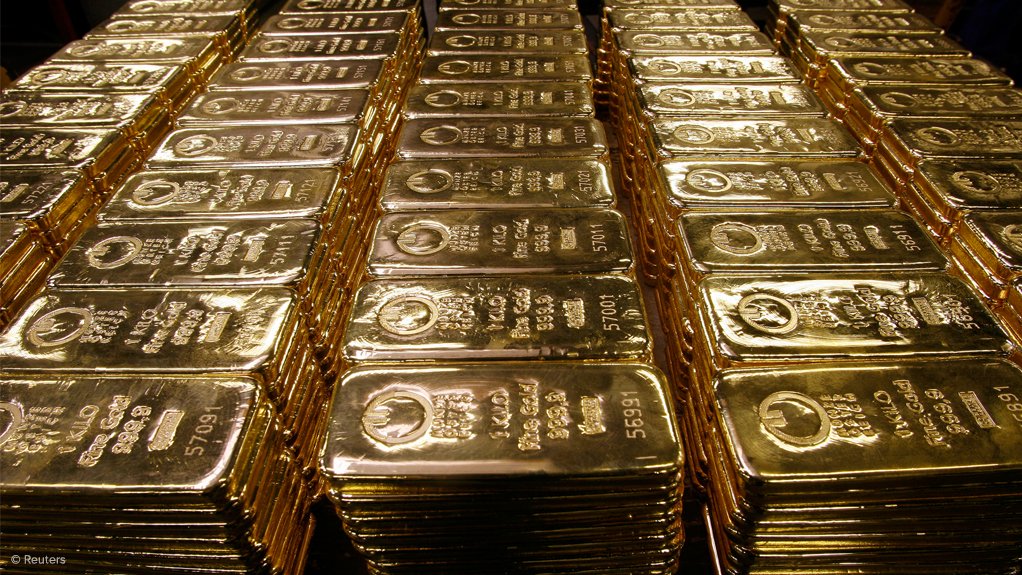



TORONTO (miningweekly.com) – A new trend in the gold market is currently manifesting that would guarantee higher prices in the near future, the author of Big Gold for Casey Research Jeff Clark told investors at the recent 2014 Vancouver Resource Investment Conference.
He said that rising supplies of gold over the following quarters would guarantee a supply crunch.
“In addition to all the other current price drivers for the precious yellow metal, there is going to be a severe supply crunch. The reasons for this are mainly owing to production pullbacks, development delays and exploration delays,” he said.
Clark noted that this trend could not be easily reversed, and would take anything from three to ten years to rectify as new projects took a lot of time to come on line. Even shuttered projects on care and maintenance take years to get back into production.
“So, even if the price rises to $6 000/oz, it will be years before the supply side can react,” he said.
Compounding a looming supply/demand gap, Clark pointed out that the average grades at gold mines were in decline. Over the past several years, the average grade of the ten largest gold mines declined from about 4.5 g/t, to an average of barely 1 g/t, which meant less metal was coming to market.
He also pointed to the practise of ‘high grading’ by mines as gutting deposits of their future output, making low-grade zones uneconomical.
“Mine plans usually call for high-grade and low-grade ores to be mixed, in order to make the low-grade ore economical. However, when the mine chooses to use only higher-grade ore in a low-price environment, it renders the lower-grade ores uneconomical later in the mine life, again removing future ounces from the market,” he said.
Clark stated that the current global gold output was on the rise, mostly as a result of high grading, which foreshadowed a looming output pullback.
“Should the gold price jump back up to $1 800/oz, mining management would first of all do everything in their power to keep the price up. That means not doing all in their power to bring more production on line, but instead, only gradually and very strategically ushering new production on line,” Clark said.
Political hindrances are also at play, preventing a total of about 2.78-million in mineable gold ounces a year from being delivered to market. One such a significant example is the Pebble project, in Alaska, which has the potential to bring to market 673 000 oz/y, but which is currently stalled.
Clark also noted that a once significant player such as South Africa, which as recently as 2003 was the world’s top gold producer, had now declined to being only the fifth-largest gold producer, and output was still on the decline.
Factors authoring this precipitous decline included reserves being depleted as assets were maturing, labour strikes, rising costs, an acute electricity shortage that currently was the worst in five years, and a lot of political interference. He noted that despite the South African government having last year said they were not in favour of nationalising the mines, they slapped miners with higher taxes.
“These trends won’t be easily stopped,” Clark stressed, adding that South African gold output was expected to continue to decline.
The only top-five producing country that was actually increasing its yearly output was China, while the other producers’ output was also in decline, or flat. However, China does not export any of its gold, except for a limited amount of gold coins, which, in effect rendered the global gold supply on a flat trajectory.
Meanwhile, Clark noted that the major bullion mints around the globe could not keep up with the unprecedented strong demand from the public to own bullion, and were resorting to rationing the supply.
“All the major mints in the world are reporting that they cannot keep up with demand. The US Mint had reported that the fourth largest gold sales in its history were taking place right now. This adds to the pressure on the supply side,” Clark said.
Another example of where gold is lost to the market was through dental implants, where substantial amounts of gold are never recovered. Most sources of gold scrap were also not economically recoverable, he added.
Further, gold was in recent months flowing to the East in vast quantities, and was lost to the Western markets.
“There is a classic demand/supply squeeze being set up right now. High supply now guarantees a supply crunch in coming quarters. That is why the gold price is now being set up for new record highs in the near future,” Clark said.
The latest Gold Survey 2013 update by Thomson Reuters GFMS confirmed that physical demand for gold was expected to support the market during the first half of 2014.
Following the end of a 12-year bull run in 2013, 2014 was set to be “the year of consolidation” for gold with the price drivers continuing to adjust on the back of concerns over the health and stability of the global financial systems.
Physical gold demand, however, for jewellery, bars, coins and industrial-use products was expected to support average prices above the $1 200/oz level during the year.
Article Enquiry
Email Article
Save Article
Feedback
To advertise email advertising@creamermedia.co.za or click here
Research Reports

Projects


Latest Multimedia


Latest News

Showroom

CSIR International Convention Centre (CSIR ICC) - the leading conference and events venue in Pretoria/Tshwane.
VISIT SHOWROOM
We supply customers with practical affordable solutions for their testing needs. Our products include benchtop, portable, in-line process control...
VISIT SHOWROOM

Announcements
What's On
Subscribe to improve your user experience...
Option 1 (equivalent of R125 a month):
Receive a weekly copy of Creamer Media's Engineering News & Mining Weekly magazine
(print copy for those in South Africa and e-magazine for those outside of South Africa)
Receive daily email newsletters
Access to full search results
Access archive of magazine back copies
Access to Projects in Progress
Access to ONE Research Report of your choice in PDF format
Option 2 (equivalent of R375 a month):
All benefits from Option 1
PLUS
Access to Creamer Media's Research Channel Africa for ALL Research Reports, in PDF format, on various industrial and mining sectors
including Electricity; Water; Energy Transition; Hydrogen; Roads, Rail and Ports; Coal; Gold; Platinum; Battery Metals; etc.
Already a subscriber?
Forgotten your password?
Receive weekly copy of Creamer Media's Engineering News & Mining Weekly magazine (print copy for those in South Africa and e-magazine for those outside of South Africa)
➕
Recieve daily email newsletters
➕
Access to full search results
➕
Access archive of magazine back copies
➕
Access to Projects in Progress
➕
Access to ONE Research Report of your choice in PDF format
RESEARCH CHANNEL AFRICA
R4500 (equivalent of R375 a month)
SUBSCRIBEAll benefits from Option 1
➕
Access to Creamer Media's Research Channel Africa for ALL Research Reports on various industrial and mining sectors, in PDF format, including on:
Electricity
➕
Water
➕
Energy Transition
➕
Hydrogen
➕
Roads, Rail and Ports
➕
Coal
➕
Gold
➕
Platinum
➕
Battery Metals
➕
etc.
Receive all benefits from Option 1 or Option 2 delivered to numerous people at your company
➕
Multiple User names and Passwords for simultaneous log-ins
➕
Intranet integration access to all in your organisation

