



Gold stands out as a key portfolio diversifier, says council


The World Gold Council (WGC) says the benefits of certain portfolio hedges “came into clear focus” during the 2008/9 financial crisis, the subsequent European sovereign debt crisis, the 2018 December stock market pullback and the current Covid-19 pandemic.
According to the council, “many tail hedges work well during crises”, if timed properly, but are technically considered complex investments and can be expensive to hold systematically.
Thus, the WGC emphasises that “it is important to consider different metrics for assessing the benefits and drawbacks of each hedge”.
In an investment update published on April 23, the WGC’s states: “Historically, any of the hedging choices are better than a diversified hypothetical portfolio without hedging, but gold has historically been the overall optimal hedge over the long run when considering the collective portfolio metrics.”
A WGC report further examines volatility, credit, fixed income and precious-metal hedges, as well as hypothetical portfolios in terms of returns, volatility, risk-adjusted returns and the drawing down of the benefits and drawbacks of the hedges. The report also examines the application to historical and recent market behaviour.
The WGC often highlights gold’s role as a safe haven, and did so more recently in its investment update titled ‘Gold prices swing as markets sell off’, which shows that gold can provide liquidity and protection in risk-off scenarios, especially during so-called systemic events that affect multiple regions and industries.
However, when stock markets sell off quickly, the council says, correlation across risk assets can increase and portfolios that were thought to be diversified could experience unexpected drawdowns, forcing margin calls and low funding ratios.
Thus, investors often rely on selling highly liquid assets like gold in these events, which can sometimes lead to temporary liquidations, as seen in the recent Covid-19 sell-off.
While correlation for most major asset classes, including gold, increased meaningfully during the most recent stock market sell-off, gold’s correlation to the stock market remained flat to slightly negative, the WGC states.
However, as systemic events unfold, it says, gold tends to outperform and, in general, the stronger the pullback in the stock market, the more negatively correlated gold becomes with the market, highlighting its effectiveness in a sustained pullback.
“Analysing tail events is important, but the events are not always contained within a neat periodic window, as they can occur at much shorter intervals and barely register in weekly returns, as we saw during the infamous ‘flash crash’ of 2010, when markets fell precipitously, only to recover quickly,” the council notes, adding that an effective tail-risk hedge may need to extend its performance beyond the window that defined the event.
Isolated EventVolatility-related hedges – like VIX futures and other index put option strategies – have been shown to mean-revert – in other words, the council explains, if the sell-off is an isolated event, then the value of the hedge is likely to “come tumbling back” towards the average quickly afterwards.
Owning put options, in particular, is a form of insurance that requires ‘buying’ protection.
However, because there are various forms of listed option structures outside VIX futures, the council focuses on the VIX as a barometer for option performance and, much like the VIX, “option insurance can erode overall portfolio performance meaningfully if implemented systematically”.
The council adds that each metric highlights different qualities of a hedge, namely overall portfolio performance, portfolio volatility, how that volatility impacts on performance, and how well the hedge helps with pullbacks or tail events.
Further, in addressing the behaviours of some of the various hedges in each category, the WGC notes that volatility hedges are costly, but have historically provided protection, if timed right.
“While the VIX itself is not investible, owning VIX futures across most tenors, along with portfolio insurance [through] option strategies like put options, has historically provided the clearest levered or explosive protection during a tail event,” the council says, adding that this was evidenced most recently in the Covid-19 pullback, as the VIX traded at or near record highs.
“Timing the event with VIX futures or options purchased would have paid out handsomely.”
However, the council warns that the problem with owning VIX futures specifically is that, when implemented systematically, they provide a negative expected value, thereby seriously eroding portfolio performance over time and requiring resources that would demand position monitoring not present in passive hedging strategies.
Owning VIX short-term futures, on the other hand, can, for instance, erode performance by nearly 2% a year.
According to the council, this portfolio attrition has been more significant during the past four years, linked to what is known as the ‘Trump bump’, with US quantitative easing measures, as well as low rates, propelling stocks to their longest bull market in history.
“It is worth noting that all of the hedges in our analysis, except the short-term VIX futures, have historically improved risk-adjusted returns, when compared to a portfolio with no hedges over the past 20 years,” the council comments.
It notes that, “interestingly though”, while VIX futures risk-adjusted returns performed poorly, they significantly reduce portfolio volatility. VIX futures greatly reduce portfolio drawdown, but at a considerable cost, the WGC says.
Additionally, commenting on liquid indices on credit default swaps, a type of insurance on credit events on corporate bonds, such as a stress or default, the WGC says these are popular with investors.
“They represent an easier way to express a bearish view on corporate bonds than actually shorting the bonds – though access for ordinary investors is limited, as they generally trade ‘over the counter’.”
While holdings of these structures over the long term can hurt cumulative returns because of the premium paid, many of the most recent tail events were credit related.
As such, the council notes that these positions have positively contributed to portfolio performance since the financial crisis, performing better than any other hedge during these events.
Further, the council says investors often include US Treasuries as hedges to their stock allocation, but notes that, “while there is generally an initial positive move in Treasuries as crises begin, contrary to popular belief, when looking at the last 20 to 30 years, the correlation of US Treasuries to the S&P 500 is generally somewhat positive in tail events; it is during the nontail events that Treasuries provide diversification”.
During the Covid-19 drawdown in stocks, for example, longer-dated bonds had a daily correlation of 0.60 with the S&P 500.
Treasury Inflation-Protected Securities (TIPS) have done “meaningfully well” as a portfolio hedge, particularly as they relate to overall portfolio performance, according to the council, which says that part of this is likely a diversification factor and the fact that bonds have enjoyed a multidecade bull market.
TIPS, however, are the poorest performers when it comes to tail events and rank near the bottom in portfolio drawdowns, the WGC notes, adding that, while they would likely help in an inflationary event, they have not been shown to effectively hedge systemic events.
Article Enquiry
Email Article
Save Article
Feedback
To advertise email advertising@creamermedia.co.za or click here
Research Reports

Projects


Latest Multimedia


Latest News

Showroom

ZF Aftermarket is the after-sales division of the world-renowned German ZF group, a global leader in mobility technology.
VISIT SHOWROOM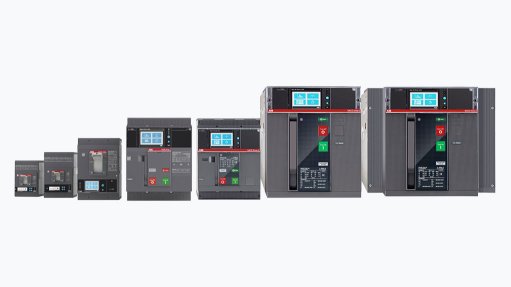
Electrifying the world in a safe, smart, and sustainable way, ABB Electrification is a global technology leader in electrical distribution and...
VISIT SHOWROOM



Announcements
What's On
Subscribe to improve your user experience...
Option 1 (equivalent of R125 a month):
Receive a weekly copy of Creamer Media's Engineering News & Mining Weekly magazine
(print copy for those in South Africa and e-magazine for those outside of South Africa)
Receive daily email newsletters
Access to full search results
Access archive of magazine back copies
Access to Projects in Progress
Access to ONE Research Report of your choice in PDF format
Option 2 (equivalent of R375 a month):
All benefits from Option 1
PLUS
Access to Creamer Media's Research Channel Africa for ALL Research Reports, in PDF format, on various industrial and mining sectors
including Electricity; Water; Energy Transition; Hydrogen; Roads, Rail and Ports; Coal; Gold; Platinum; Battery Metals; etc.
Already a subscriber?
Forgotten your password?
Receive weekly copy of Creamer Media's Engineering News & Mining Weekly magazine (print copy for those in South Africa and e-magazine for those outside of South Africa)
➕
Recieve daily email newsletters
➕
Access to full search results
➕
Access archive of magazine back copies
➕
Access to Projects in Progress
➕
Access to ONE Research Report of your choice in PDF format
RESEARCH CHANNEL AFRICA
R4500 (equivalent of R375 a month)
SUBSCRIBEAll benefits from Option 1
➕
Access to Creamer Media's Research Channel Africa for ALL Research Reports on various industrial and mining sectors, in PDF format, including on:
Electricity
➕
Water
➕
Energy Transition
➕
Hydrogen
➕
Roads, Rail and Ports
➕
Coal
➕
Gold
➕
Platinum
➕
Battery Metals
➕
etc.
Receive all benefits from Option 1 or Option 2 delivered to numerous people at your company
➕
Multiple User names and Passwords for simultaneous log-ins
➕
Intranet integration access to all in your organisation

