Gold major targets lower freshwater intake

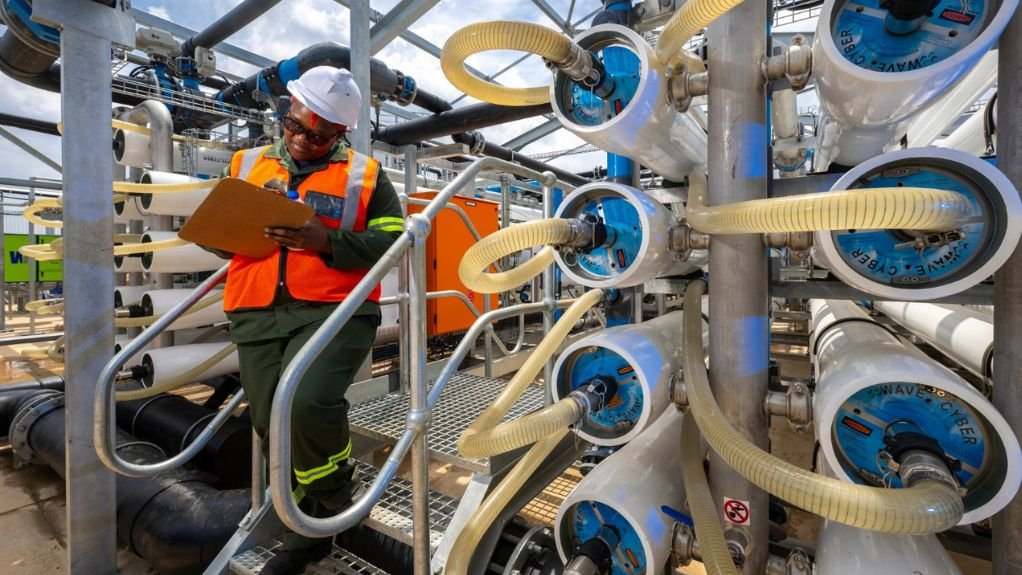
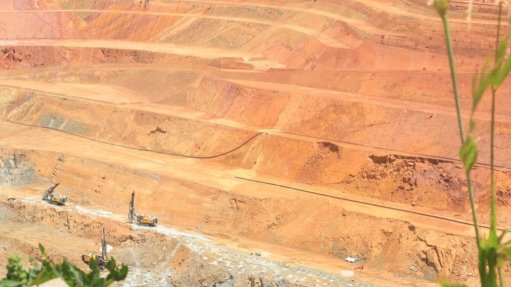
FOUR PILLARS South Deep mine’s water stewardship strategy is structured around four pillars, namely water efficiency, water quality protection, catchment management and climate adaptation


The water recycling performance of gold miner Gold Fields’ South Deep mine, in Gauteng, has improved from 78% in 2024 to 84% by the end of 2025 as part of efforts to reduce freshwater abstraction and increase water recycling and reuse, says environmental advocacy organisation Federation for a Sustainable Environment (FSE) CEO Mariette Liefferink.
Gold Fields informed the FSE of the developments as part of the organisation’s engagement with mining operations on environmental and water-related issues.
The South Deep mine has implemented an integrated water stewardship strategy aligned with Gold Fields’ sustainability commitments.
“The strategy focuses on reducing pressure on shared water resources, supporting long-term water security and catchment resilience, and improving local water access. The mine is also targeting further reductions in freshwater withdrawals over time.”
The strategy is structured around four pillars: water efficiency, water quality protection, catchment management and climate adaptation, adds Liefferink, who notes that Gold Fields’ capital investment in the strategy totals about R253-million.
As for waste management, she notes that a R75-million thickened tailings project – initiated in 2024 and being implemented over three years – is intended to increase water recovery through the production of higher-density tailings while reducing evaporation and seepage losses.
“South Deep advised that the project also improves tailings stability, safety and environmental performance.”
Liefferink adds that South Deep’s tailings storage facilities were also installed with plume interception boreholes to intercept and prevent plume migration while supplementing supply to reverse osmosis plants, consequently allowing for the production of potable water for operational use.
Regarding process water handling, South Deep completed a R178-million upgrade of its South Shaft return water dam in 2025, increasing process water storage capacity and reducing environmental risk through the installation of a high-density polyethylene liner and concrete ballast.
On water quality protection, she highlights that South Deep is a non-acid-generating operation, owing to the relatively low sulphide content of its ore and the controlled management of any subtailings plume within its operational boundary.
Water quality of the operation is monitored through upstream and downstream surface water sampling and groundwater monitoring to allow for the early detection and mitigation of potential impacts.
Mine and process water are treated through reverse osmosis plants with a combined capacity of about 5-million ℓ a day, producing water that meets operational and potable standards. A third reverse osmosis plant, planned for 2027 at an estimated cost of R44-million, is expected to further reduce freshwater intake requirements and strengthen water security, she adds.
Further, South Deep is also working with host communities, regulators and other stakeholders to support the responsible management of shared water resources and contribute to long-term catchment resilience.
It also conducts ongoing climate risk assessments, including a current flood study, to guide adaptive water management measures, she adds.
“These actions are intended to safeguard water security over South Deep’s life-of-mine, estimated at more than 80 years, while supporting operational continuity and community resilience in the face of climate variability,” concludes Liefferink.
Article Enquiry
Email Article
Save Article
Feedback
To advertise email advertising@creamermedia.co.za or click here
Research Reports

Projects
Latest Multimedia
Latest News
Showroom
Rio Carb is an OEM (Original Equipment Manufacturer) of R-C700 Chromium Carbide (CrC) alloy clad wear plates and pipes used for heavy materials...
VISIT SHOWROOM
ALBIS FLANGES — founded in 1965 — is a petro-chemical approved manufacturer of flanges and fittings in most grades of steel, listed with Sasol,...
VISIT SHOWROOM
Announcements
What's On
Subscribe to improve your user experience...
Option 1 (equivalent of R125 a month):
Receive a weekly copy of Creamer Media's Engineering News & Mining Weekly magazine
(print copy for those in South Africa and e-magazine for those outside of South Africa)
Receive daily email newsletters
Access to full search results
Access archive of magazine back copies
Access to Projects in Progress
Access to ONE Research Report of your choice in PDF format
Option 2 (equivalent of R375 a month):
All benefits from Option 1
PLUS
Access to Creamer Media's Research Channel Africa for ALL Research Reports, in PDF format, on various industrial and mining sectors
including Electricity; Water; Energy Transition; Hydrogen; Roads, Rail and Ports; Coal; Gold; Platinum; Battery Metals; etc.
Already a subscriber?
Forgotten your password?
Receive weekly copy of Creamer Media's Engineering News & Mining Weekly magazine (print copy for those in South Africa and e-magazine for those outside of South Africa)
➕
Recieve daily email newsletters
➕
Access to full search results
➕
Access archive of magazine back copies
➕
Access to Projects in Progress
➕
Access to ONE Research Report of your choice in PDF format
RESEARCH CHANNEL AFRICA
R4500 (equivalent of R375 a month)
SUBSCRIBEAll benefits from Option 1
➕
Access to Creamer Media's Research Channel Africa for ALL Research Reports on various industrial and mining sectors, in PDF format, including on:
Electricity
➕
Water
➕
Energy Transition
➕
Hydrogen
➕
Roads, Rail and Ports
➕
Coal
➕
Gold
➕
Platinum
➕
Battery Metals
➕
etc.
Receive all benefits from Option 1 or Option 2 delivered to numerous people at your company
➕
Multiple User names and Passwords for simultaneous log-ins
➕
Intranet integration access to all in your organisation