



Gold from woodchips, grease, mine muck surprises on upside

Goldplat CEO Gerard Kisbey-Green talks to Mining Weekly Online’s Martin Creamer at the company’s Benoni site. Photographs: Duane Daws. Video and Video Editing: Nicholas Boyd.
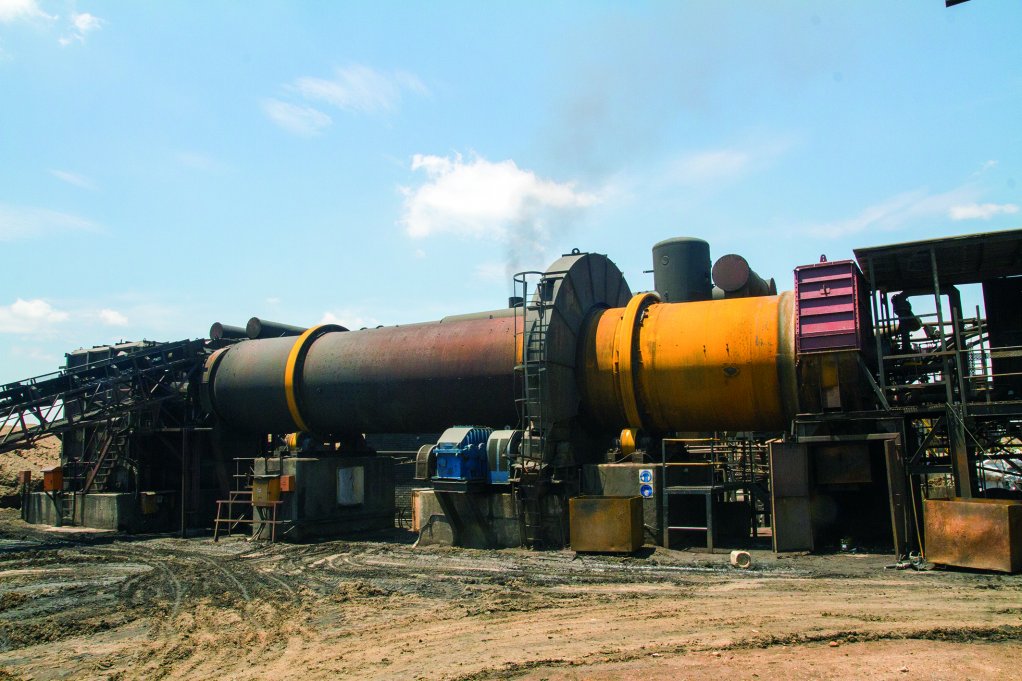
Goldplat kiln
Photo by Duane Daws



The recovery of gold from mine waste at Goldplat Recovery, in Benoni, generates a surprisingly high level of revenue, while simultaneously protecting the environment and providing hundreds of valuable jobs.
The London Aim-listed Goldplat, a bona fide junior producer from secondary material, last year generated revenue of R350-million (£20-million) by recovering 40 000 oz of gold from several forms of mine muck.
The success of Goldplat, headed by CEO Gerard Kisbey-Green, lies in its many decades of institutional knowledge.
The profitable, debt-free gold recovery services company, led operationally by COO Hansie van Vreden and guided by both Ian Visagie, as FD and company founder, and long-serving consultant Dr Bob Smith, takes the burden of environmental responsibility and liability off the shoulders of virtually every major gold mining company by turning to positive account mine woodchips, mill grease, mill liners, fine carbon, concentrate bags and other mine throwaways and muck.
There are many mines that are still pumping fine carbon on to tailings dumps without realising that gold can be recovered from the fine carbon. The gold content of some fine carbon can be as high as 500 g/t.
Surprisingly, Goldplat is able to do the proper and profitable gold recovery routine with the help of off-the-shelf equipment and a multiplicity of processing routes that come with years of experience.
The company, which has both gold mining and gold refining licences, is registered with the Precious Metals Regulator and the National Nuclear Regulator.
Recovered is the gold that finds its way into: • the wood used as support in underground mines; • steel and rubber mill liners, which are used to protect the mill shell used in mine processing plant; • mill grease, which, when replaced, is reprocessed to recover spillages of ore that have stuck to the grease; •fine carbon, which becomes available when modern processing plants reprocess activated carbon for reuse; • ‘vlei’ material, or surface material, in the vicinity of the mine processing plant that tends to accumulate in settlement ponds; and • the cleanup of gold plants and rock dumps.
The multiplier effect elevates the 450-employee ‘green gold’ company to such a height that it even helps to take things a step further for environment-improving, dump- recycling companies like DRDGold, by taking in their operational waste for further processing and gold recovery.
Steel from mill liners is shotblasted to remove the gold concentrate and rubber mill liners are incinerated and the gold is recovered from the ash.
Gold is also recovered from mine pond sludges and catchment dams, which mines cannot put through their standard leach circuit, followed by carbon-in-pulp (CIP), owing to the presence of ‘preg robbers’ or carbon material that preferentially absorbs the gold.
While mining companies are environmentally obliged to deal with their own waste arisings, few venture to do what Goldplat offers because of the complexities involved; some who have tried have incurred steep financial losses in the process.
Creamer Media’s Mining Weekly witnessed Goldplat putting waste material through crusher circuits, several different milling circuits and its own carbon-in-leach (CIL) circuits at the busy operation on 22 ha in Benoni, which also has a rotary kiln, a fluidised bed incinerator, a sizeable elution plant, spiral plants, shotblasting facilities and a smelter.
After testing to establish assay, moisture content, recoverability and size, Goldplat buys the materials from the mine operator when they become available. The operation has proved profitable at a gold price of $1 060/oz.
The waste residues that emanate from the various processing routes are placed on Goldplat’s own on-site ‘tailings’ facility, which has never been classified as such but rather as a stock dam.
Over the years, the company has carefully monitored the exact content and location of the metals stocked in the dam and last year an independent consultant found, in a Joint Ore Reserves Committee resource classification, that the stock dam contained 82 000 oz of gold, as well as significant amounts of silver and uranium, tallying well with Goldplat’s own internal records.
That material will be processed once a new deposition site is finalised, the optimal one being a disused openpit right next door, which is itself an environmental problem and a headache for the government because of its use by illegal miners to access underground workings.
There have been many murders and deaths there and Goldplat has been working closely with government to have the pit allocated to it so that it can deposit the tailings back there once it has reprocessed them.
The business has been built largely through internal profits. The company has not been to the market for more than a decade and has self-funded its projects and maintenance expenditure.
Cash-flow positive and stable, the company is now keen to enter a growth phase.
“It’s a good time to grow and we’ll need to raise some capital for that in time,” Kisbey-Green told Mining Weekly.
But the internal feeling is that it will not raise equity capital while its share price is at current levels.
Some years ago, its share price was 15p a share. That fell to 1.75p a share during the financial crisis. It is now back at 6p a share, but the company is unlikely to raise equity capital until a price of 10p a share or more is reached.
It is consequently contemplating innovative ways of raising debt or some other funding.
Besides the operation in Benoni, Goldplat has another recovery business at Tema, in Accra, Ghana, for which it is sourcing material from South America and North America.
It also intends sourcing material from the rest of West Africa and East Africa, where it has a contract with a gold mine in Tanzania.
In South Africa, all of the major gold mining companies, with the exception of Harmony Gold, are Goldplat clients.
Article Enquiry
Email Article
Save Article
Feedback
To advertise email advertising@creamermedia.co.za or click here
Research Reports

Projects
Latest Multimedia
Latest News
Showroom
SafeQuip is a leading distributor and manufacturer of fire safety solutions, offering a comprehensive range of products designed to meet all...
VISIT SHOWROOM
ROSOND provides fast, efficient, safe, and cost-effective drilling and grouting services to mining and exploration industries throughout Africa.
VISIT SHOWROOM

Announcements
What's On
Subscribe to improve your user experience...
Option 1 (equivalent of R125 a month):
Receive a weekly copy of Creamer Media's Engineering News & Mining Weekly magazine
(print copy for those in South Africa and e-magazine for those outside of South Africa)
Receive daily email newsletters
Access to full search results
Access archive of magazine back copies
Access to Projects in Progress
Access to ONE Research Report of your choice in PDF format
Option 2 (equivalent of R375 a month):
All benefits from Option 1
PLUS
Access to Creamer Media's Research Channel Africa for ALL Research Reports, in PDF format, on various industrial and mining sectors
including Electricity; Water; Energy Transition; Hydrogen; Roads, Rail and Ports; Coal; Gold; Platinum; Battery Metals; etc.
Already a subscriber?
Forgotten your password?
Receive weekly copy of Creamer Media's Engineering News & Mining Weekly magazine (print copy for those in South Africa and e-magazine for those outside of South Africa)
➕
Recieve daily email newsletters
➕
Access to full search results
➕
Access archive of magazine back copies
➕
Access to Projects in Progress
➕
Access to ONE Research Report of your choice in PDF format
RESEARCH CHANNEL AFRICA
R4500 (equivalent of R375 a month)
SUBSCRIBEAll benefits from Option 1
➕
Access to Creamer Media's Research Channel Africa for ALL Research Reports on various industrial and mining sectors, in PDF format, including on:
Electricity
➕
Water
➕
Energy Transition
➕
Hydrogen
➕
Roads, Rail and Ports
➕
Coal
➕
Gold
➕
Platinum
➕
Battery Metals
➕
etc.
Receive all benefits from Option 1 or Option 2 delivered to numerous people at your company
➕
Multiple User names and Passwords for simultaneous log-ins
➕
Intranet integration access to all in your organisation

