



Gauteng claims to be leading South Africa’s 4IR charge


South Africa’s response to the Fourth Industrial Revolution (4IR) must be integrated and comprehensive, involving all stakeholders of the global polity, from the public and private sectors to academia and civil society, Gauteng Premier David Makhura said at the inaugural Digital Economy Summit, earlier this month.
Makhura quoted the Word Economic Forum, which has estimated that 65% of children entering primary school will find themselves in occupations that do not exist today.
“We, in South Africa, are also moving fast to a future in which 41% of current jobs will be rendered obsolete by automation, while 35% of skills that are considered important in today’s workforce will have changed beyond recognition and others would have disappeared completely,” said Makhura.
He added that, if developing economies are to grow, they must implement policies that equip people with the skills required to operate and develop new technologies.
The workforce of 4IR must know how to write and read computer codes and work in conjunction with sophisticated hardware and software.
Makhura said there was evidence that many sectors of the South African economy were undergoing a digital transition, although not at a pace fast enough. For example, the average information and communication technology intensity of jobs in South Africa has increased by 20% over the last decade.
Another example is the Gauteng provincial government, which has set up a Department of e-Government to facilitate a knowledge-based and digital economy.
In Gauteng specifically, Makhura noted, government had invested in the roll-out of broadband to peripheral and deprived communities in the province to address the danger of digital exclusion, digital poverty and digital inequality in an already economically unequal society.
He said that more than 85% of Gauteng households had access to a functional cellular phone and 65% had Internet connectivity, which, he added, had had a positive impact on the gross domestic product, the business environment and the quality of life for citizens in Gauteng.
Demand for Digital Skills“The demand for digital skills is massive and we are already collaborating with major technology companies and our universities to train one-million young people [to equp them] with digital skills through our Tshepo 1 Million programme. “We are also working with our universities and private-sector centres of excellence to build an enduring and agile innovation ecosystem.”
Meanwhile, University of the Witwatersrand (Wits) vice chancellor Adam Habib provided an update on the Fourth Industrial Revolution South Africa (4IRSA) Partnership which was established in June 2018 as a starting point for South Africa to develop an informed, coherent 4IR policy.
The partnership, comprising Wits and the universities of Johannesburg and Fort Hare, had since brought on board more partners, including the Department of Communication and Digital Technologies, consultancy Deloitte, mobile operator Vodacom and technology manufacturer Huawei.
Habib said the dialogue around 4IR was often unconnected, divergent and not fact-based. Moreover he said it was not only a technology discussion but also a socioeconomic one, with the end goal being how to create a more inclusive, fair and just society.
He noted the challenges and opportunities that South Africa had in the context of developing 4IR policy in particular. Habib said the country needed to consider how 4IR could make it more competitive in a global economy, while acknowledging that some jobs would be wiped out, while many more new jobs would be created.
Habib said that South Africa’s cyberphysical boundaries would change, which would, in effect, reshape society, the State and the citizens, and the relationship between them. “4IR will also give us the opportunity to leapfrog in the era of development. “We need to consider which new sectors will emerge and how small enterprises will access the global market.”
Throughout 2018, the 4IRSA Partnership held workshops to gather information from the heavy industry/mining, agriculture and financial sectors, which should help to inform the Presidential Commission on 4IR that President Cyril Ramaphosa established in April.
US geopolitical forecaster and international affairs strategist Dr George Friedman suggested that the industrial revolutions over the years had had negative effects across the world, hurting some countries and helping others in many ways.
He said South Africa should be cognisant of the fact that 4IR might not be the “Messiah” that the suppressed underclass has been waiting for to solve unemployment, inequality and poverty.
“The only certainty of 4IR, as with the other revolutions, is that it will be different from the previous one.”
Firedman added that South Africa coud not afford another round of disappointment, for now the task should be to build technology. . “A vision needs to be embedded in the geopolitical reality; this is an opportunity for South Africa to take advantage of.”
Article Enquiry
Email Article
Save Article
Feedback
To advertise email advertising@creamermedia.co.za or click here
Research Reports

Projects

Latest Multimedia
Latest News
Showroom
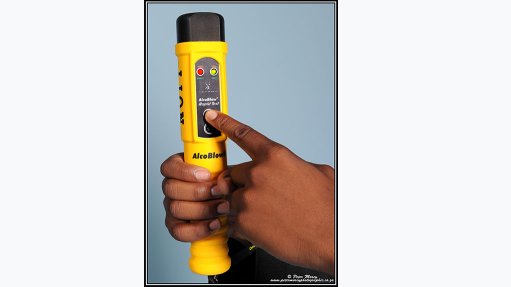
Developed to exceed the latest EN 15964 standards for police breathalysers proving that it will remain accurate and reliable for many years to come.
VISIT SHOWROOM
Rentech provides renewable energy products and services to the local and selected African markets. Supplying inverters, lithium and lead-acid...
VISIT SHOWROOM

Announcements
What's On
Subscribe to improve your user experience...
Option 1 (equivalent of R125 a month):
Receive a weekly copy of Creamer Media's Engineering News & Mining Weekly magazine
(print copy for those in South Africa and e-magazine for those outside of South Africa)
Receive daily email newsletters
Access to full search results
Access archive of magazine back copies
Access to Projects in Progress
Access to ONE Research Report of your choice in PDF format
Option 2 (equivalent of R375 a month):
All benefits from Option 1
PLUS
Access to Creamer Media's Research Channel Africa for ALL Research Reports, in PDF format, on various industrial and mining sectors
including Electricity; Water; Energy Transition; Hydrogen; Roads, Rail and Ports; Coal; Gold; Platinum; Battery Metals; etc.
Already a subscriber?
Forgotten your password?
Receive weekly copy of Creamer Media's Engineering News & Mining Weekly magazine (print copy for those in South Africa and e-magazine for those outside of South Africa)
➕
Recieve daily email newsletters
➕
Access to full search results
➕
Access archive of magazine back copies
➕
Access to Projects in Progress
➕
Access to ONE Research Report of your choice in PDF format
RESEARCH CHANNEL AFRICA
R4500 (equivalent of R375 a month)
SUBSCRIBEAll benefits from Option 1
➕
Access to Creamer Media's Research Channel Africa for ALL Research Reports on various industrial and mining sectors, in PDF format, including on:
Electricity
➕
Water
➕
Energy Transition
➕
Hydrogen
➕
Roads, Rail and Ports
➕
Coal
➕
Gold
➕
Platinum
➕
Battery Metals
➕
etc.
Receive all benefits from Option 1 or Option 2 delivered to numerous people at your company
➕
Multiple User names and Passwords for simultaneous log-ins
➕
Intranet integration access to all in your organisation

