



Fosterville mine, Australia

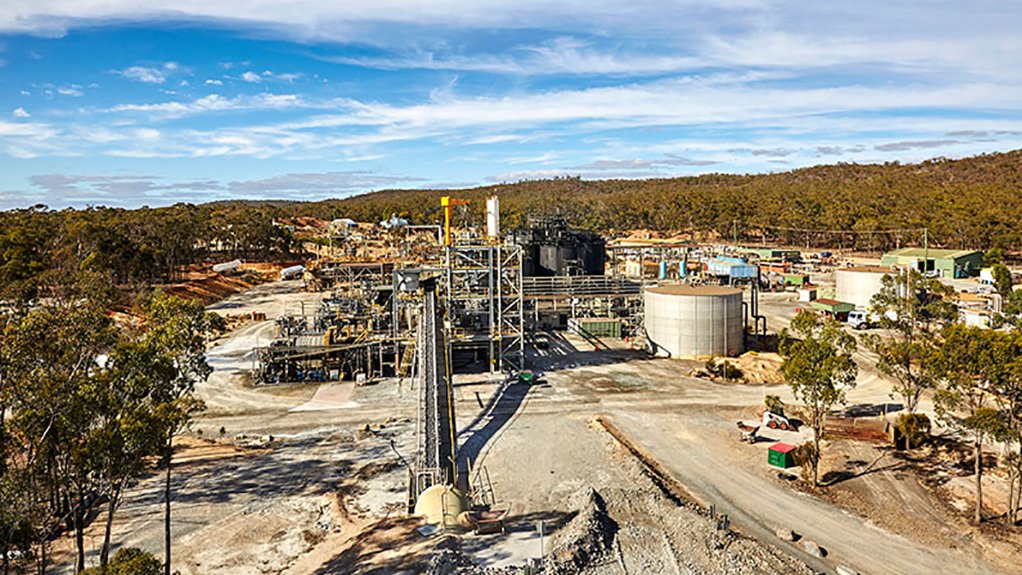


Name: Fosterville mine.
Location: The mine is located 20 km from the city of Bendigo, in Victoria, Australia.
Controlling Company: Kirkland Lake Gold.
Brief Description: Fosterville is a high-grade, low-cost underground gold mine, with mining activities currently focused on the Central, Phoenix and Harrier underground ore zones.
Brief History: Gold was first discovered in the Fosterville area in 1894, with mining activity continuing until 1903. During this time mining was confined to the near-surface oxide material.
Minor tailings retreatment projects were conducted in the 1930s and in the late 1980s.
In 1991, Brunswick Mining, and then Perseverance Corporation (from 1992) started heap-leaching operations from shallow oxide openpits.
In 2003, a feasibility study on a sulphide mining operation was completed by Perseverance, with construction and openpit mining starting in early 2004. Commercial production started in April 2005. In October 2007, Perseverance announced that it had entered into an agreement with Northgate Minerals Corporation to acquire the company with full control passing to Northgate in February 2008.
In August 2011, Northgate entered into a merger agreement with AuRico Gold, which assumed control of Northgate in October 2011. In March 2012 AuRico and Crocodile Gold Corp jointly announced that Crocodile Gold would acquire the Fosterville and Stawell mines. Crocodile Gold’s acquisition of Fosterville was concluded in May 2012. In July 2015, Newmarket Gold merged with Crocodile Gold to form Newmarket Gold.
At the end of November 2016, Kirkland Lake Gold merged with Newmarket Gold to form a new midtier gold company, Kirkland Lake Gold.
Products: Gold.
Geology/Mineralisation: The Fosterville goldfield is located within the Bendigo structural zone in the Lachlan fold belt. The deposit is hosted by an interbedded turbidite sequence of sandstones, siltstones and shales. This sequence has been metamorphosed to subgreenschist facies and folded into a set of upright, open to closed folds. The folding has resulted in the formation of a series of bedding parallel laminated quartz veins.
Mineralisation at Fosterville is controlled by late brittle faulting. These are generally steeply west-dipping, reverse faults with a series of moderately west-dipping, reverse splay faults formed in the footwall of the main fault. There are also moderately east-dipping faults, which have become a more significant footwall to the anticlinal offsets along the west-dipping faults. Primary gold mineralisation occurs as disseminated arsenopyrite and pyrite forming as a selvage to veins in a quartz–carbonate veinlet stockwork. The mineralisation is structurally controlled, with high-grade zones localised by the geometric relationship between bedding and faulting.
Antimony mineralisation, in the form of stibnite, occurs with quartz and varies from replacement and infill of earlier quartz-carbonate stockwork veins to massive stibnite-only veins of up to 0.5 m in width. The stibnite-quartz event occurs in favourable structural locations, such as the Phoenix, Eagle and Lower Phoenix structures. There are also occurrences of primary visible gold that have a spatial association with stibnite in fault-related quartz veins. The occurrence of visible gold is becoming increasingly significant at Fosterville and is being observed more frequently with depth and down-plunge within the Lower Phoenix mineralised zones. Visible gold mineralisation occurrences have also been observed at depth in the Harrier mineralised zones.
Reserves: Total proven and probable reserves as at December 31, 2017, were estimated at 2.29-million tonnes grading 23.1 g/t gold.
Resources: Total mineral resources, exclusive of reserves, as at December 31, 2017, were estimated at 13.9-million tonnes grading 4.8 g/t gold. Inferred resources were estimated at 8.28-million tonnes grading 7.1 g/t gold.
Mining Method: Underground. Current mining is undertaken as owner miner.
Major Infrastructure and Equipment: Underground mining is conducted using a conventional fleet, including jumbos, production drills, loaders, trucks and ancillary equipment.
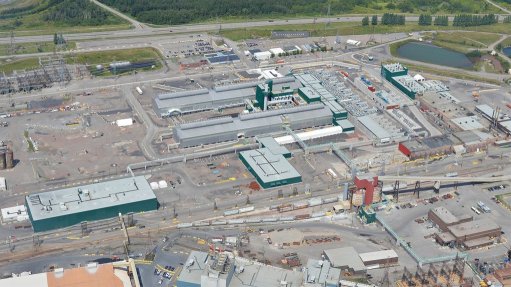
Gold recovery incorporates:
- single-stage crushing;
- an open stockpile with reclaim tunnel;
- a semiautogenous grinding mill;
- a flotation circuit to produce a gold-bearing sulphide mineral concentrate and a barren residue;
- a gravity circuit to recover coarse gold from the flotation concentrate, with gravity circuit concentrate being direct smelted;
- a bio-oxidation circuit consisting of BIOX reactors to oxidise the flotation concentrate, releasing gold from the sulphide mineral matrix;
- a three-stage counter-current decantation circuit to separate the gold bearing oxidized solid residue from the solubilised acid oxidation products;
- a liquor neutralisation circuit to neutralise acid and precipitate arsenic as stable basic ferric arsenate and sulphate as calcium sulphate (gypsum) using ground limestone and lime slurries;
- a limestone-grinding facility comprising a wet ball mill operated in closed circuit with hydrocyclones to produce ground limestone slurry for neutralisation of sulphuric and arsenic acids produced from oxidation of gold-bearing sulphide minerals;
- a carbon-in-leach circuit with a pH adjustment tank at the head of the circuit to leach gold from oxidised material and load the cyanide soluble gold onto activated carbon;
- a heated leach circuit to combat preg-robbing capabilities of the noncarbonaceous carbon always present in the mill feed; and
- a pressure Zadra elution circuit to remove gold from carbon, followed by recovery by electrowinning and smelting to doré.
Prospects: Kirkland reported exceptionally high-grade intersections from exploration drilling in the Swan zone (previously known as the Lower Phoenix Footwall) at Fosterville, in the quarter ended September 30, 2018, highlighting the potential for continued growth in mineral reserves and mineral resources.
Contact Details:
Kirkland Lake Gold
Tel +1 416 840 7884
Email info@klgold.com
Article Enquiry
Email Article
Save Article
Feedback
To advertise email advertising@creamermedia.co.za or click here
Research Reports

Projects
Latest Multimedia
Latest News
Showroom
North Ridge Pumps is an independent manufacturer of pumps. We have a proven track record for product support and customer service throughout the...
VISIT SHOWROOM
Rittal is a world leading provider of top-quality integrated systems for enclosures, power distribution, climate control, IT infrastructure and...
VISIT SHOWROOM

Press Office
Announcements
What's On
Subscribe to improve your user experience...
Option 1 (equivalent of R125 a month):
Receive a weekly copy of Creamer Media's Engineering News & Mining Weekly magazine
(print copy for those in South Africa and e-magazine for those outside of South Africa)
Receive daily email newsletters
Access to full search results
Access archive of magazine back copies
Access to Projects in Progress
Access to ONE Research Report of your choice in PDF format
Option 2 (equivalent of R375 a month):
All benefits from Option 1
PLUS
Access to Creamer Media's Research Channel Africa for ALL Research Reports, in PDF format, on various industrial and mining sectors
including Electricity; Water; Energy Transition; Hydrogen; Roads, Rail and Ports; Coal; Gold; Platinum; Battery Metals; etc.
Already a subscriber?
Forgotten your password?
Receive weekly copy of Creamer Media's Engineering News & Mining Weekly magazine (print copy for those in South Africa and e-magazine for those outside of South Africa)
➕
Recieve daily email newsletters
➕
Access to full search results
➕
Access archive of magazine back copies
➕
Access to Projects in Progress
➕
Access to ONE Research Report of your choice in PDF format
RESEARCH CHANNEL AFRICA
R4500 (equivalent of R375 a month)
SUBSCRIBEAll benefits from Option 1
➕
Access to Creamer Media's Research Channel Africa for ALL Research Reports on various industrial and mining sectors, in PDF format, including on:
Electricity
➕
Water
➕
Energy Transition
➕
Hydrogen
➕
Roads, Rail and Ports
➕
Coal
➕
Gold
➕
Platinum
➕
Battery Metals
➕
etc.
Receive all benefits from Option 1 or Option 2 delivered to numerous people at your company
➕
Multiple User names and Passwords for simultaneous log-ins
➕
Intranet integration access to all in your organisation

