First phase of Sibanye-Stillwater’s secondary mining thrust given thumbs up

Sibanye-Stillwater EVP Lucas Msimanga's presentation covered by Mining Weekly's Martin Creamer. Video: Dalene Creamer.
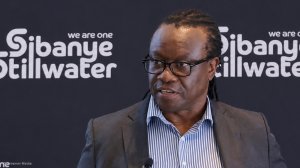


JOHANNESBURG (miningweekly.com) – A lower-risk secondary mining business, which focuses on extracting value from platinum group metals (PGM) surface waste that hosts chrome, is being built by the South Africa PGM Operations of Sibanye-Stillwater.
The opportunity lies in unlocking PGM and chrome value from the large, accessible upper group two (UG2) tailings resources on surface.
UG2 tailings retreatment, fine chrome recovery and processing capability are creating a new value stream.
The first part of the surface processing strategy – Phase 1 of the WLTR recovery plant upgrade project – has already arrived.
This phase, which involves treating tailings to recover chrome as well as PGMs, supports the broader South Africa PGM Operations surface retreatment strategy.
The feasibility study has been completed, board approval has been received, and construction is scheduled to begin in the second half of this year, with commissioning expected by the end of 2027, Sibanye-Stillwater executive VP processing Lucas Msimanga reported during the Capital Day covered by Mining Weekly. (Also watch attached Creamer Media video.)
The projected capital is R0.9-billion, payback is two years, Phase 1’s economic life is six years, net present value is R1-billion, internal rate of return is 43%, and operating costs were described by an upbeat Msimanga as being “very competitive”.
Historical UG2 tailings storage facilities (TSFs) across the Rustenburg and Marikana regions provide the material, the primary value driver is chrome coupled to meaningful PGM upside, and available PGM concentrator capacity offers the capability of recovering PGMs in an integrated and efficient manner.
With a switch to magnetic processing technologies, the surface resources also present a significant chrome recovery opportunity.
A million tons of historic UG2 tailings are there for the taking and Sibanye-Stillwater has vast processing and tailings infrastructure spread across 70 km of PGM footprint to handle current and future mining output.
The Johannesburg Stock Exchange- and New York Stock Exchange-listed mining and marketing company’s vast footprint takes in Marikana as well as the Rustenburg region, and within the footprint are concentrators for primary processing of the material from the underground operations.
Capacity is adequate to process the current and future projects. Total available concentrate capacity across Sibanye-Stillwater’s South Africa PGM operations is 1 605 000 t a month.
All of this is linked to long-term TSFs. The life of the Paardekraal TSF in Rustenburg extends to 2060, as does the Marikana Pits TSF and Hoedspruit in Marikana extends to 2044.
“We've got the capacity to dispose of those tailings safely, as well as in an environment-friendly manner.
“When processing, we continuously seek to improve recoveries. We’re benchmarking internally as well as externally, and we want to raise recoveries as high as possible,” Msimanga pointed out.
Standout 36% recovery is being achieved by the WTD5, Hoedspruit and Marikana Pits TSFs, with recoveries from the other TSFs ranging from 11% to 17%.
“Our objective is to get close as possible to the 36%, which will be done by optimisation of the TSF operations and the deployment of the right technology,” said Msimanga, who drew attention to the focus of Sibanye-Stillwater’s seven relatively shallow primary adjoining mining projects also being largely on UG2 reef, which, provided the company continues to invest appropriately across concentrators, supports operational reliability.
Targeted sustaining capital has maintained high equipment availability and recovery performance. This approach supports structurally lower unit costs.
The result is a flexible processing platform that supports processing requirements of current operations and positions the business well for future brownfield projects.
Cycle consistent capital investment in processing assets is supporting important availability, which from 2022, has been north of 92%.
A fine chrome magnetic technology introduced is delivering better recoveries.
“Because we're also extracting the chrome, we’re also going to be reducing the tailings volumes, and from a rehabilitation point of view it's got a positive impact up to about 30% and this enhances the overall economics of the operations,” Msimanga reported.
A digital footprint twin has been developed to optimise deposition planning and long-term capacity.
Msimanga described the Marikana Pits TSF as a cornerstone of the surface strategy in that it maximises residue deposition capacity for the WLTR and Kroondal surface concentrators while supporting future underground operations.
“These are existing pits, so it means that, in terms of time to bring those tailings facilities, they can be brought quicker and also at a lesser capital cost.
“We can deal with that in these Marikana Pits TSFs, and they will help us to maximise deposition capacity for the WLTR and Kroondal surface concentrators, while supporting future underground operations.
“So, we've got the resource, we've dealt with the technology, but also, we've got a solution for the tailings disposals, and now this WLTR recovery project to actualise value creation,” said Msimanga.
Transition from Merensky-rich to UG2 tailings is driving a fundamental change in the revenue mix, with chrome becoming a core value driver alongside PGMs.
Surface margins are expected to improve as the portfolio shifts to UG2 and chrome production provides an extra value stream through the PGM price cycle.
Article Enquiry
Email Article
Save Article
Feedback
To advertise email advertising@creamermedia.co.za or click here
Research Reports

Latest Multimedia
Latest News


Showroom
Iritron delivers advanced automation, control, and optimisation solutions to the Mining, Minerals & Metals, Consumer Package Goods and...
VISIT SHOWROOM
For over 60 years, VEGA has provided industry-leading products for the measurement of level, density, weight and pressure. As the inventor of the...
VISIT SHOWROOM
Announcements
What's On
Subscribe to improve your user experience...
Option 1 (equivalent of R125 a month):
Receive a weekly copy of Creamer Media's Engineering News & Mining Weekly magazine
(print copy for those in South Africa and e-magazine for those outside of South Africa)
Receive daily email newsletters
Access to full search results
Access archive of magazine back copies
Access to Projects in Progress
Access to ONE Research Report of your choice in PDF format
Option 2 (equivalent of R375 a month):
All benefits from Option 1
PLUS
Access to Creamer Media's Research Channel Africa for ALL Research Reports, in PDF format, on various industrial and mining sectors
including Electricity; Water; Energy Transition; Hydrogen; Roads, Rail and Ports; Coal; Gold; Platinum; Battery Metals; etc.
Already a subscriber?
Forgotten your password?
Receive weekly copy of Creamer Media's Engineering News & Mining Weekly magazine (print copy for those in South Africa and e-magazine for those outside of South Africa)
➕
Recieve daily email newsletters
➕
Access to full search results
➕
Access archive of magazine back copies
➕
Access to Projects in Progress
➕
Access to ONE Research Report of your choice in PDF format
RESEARCH CHANNEL AFRICA
R4500 (equivalent of R375 a month)
SUBSCRIBEAll benefits from Option 1
➕
Access to Creamer Media's Research Channel Africa for ALL Research Reports on various industrial and mining sectors, in PDF format, including on:
Electricity
➕
Water
➕
Energy Transition
➕
Hydrogen
➕
Roads, Rail and Ports
➕
Coal
➕
Gold
➕
Platinum
➕
Battery Metals
➕
etc.
Receive all benefits from Option 1 or Option 2 delivered to numerous people at your company
➕
Multiple User names and Passwords for simultaneous log-ins
➕
Intranet integration access to all in your organisation