


First local seed selection to take place for biofuel crop


South African seed selection for research and development company Sunchem’s solaris crop – a nicotine-free tobacco variety that yields significant amounts of sustainable oil for biojet fuel feedstock – has started locally for the first time since the launch of Project Solaris in 2014.
“Solaris is an Italian crop and, up until now, all of the seed selection was done in Italy,” Sunchem South Africa project manager Samantha Hampton told Engineering News during a recent site visit to Project Solaris, in Limpopo, South Africa.
Solaris is the first crop in the region to achieve certification by the Roundtable on Sustainable Biomaterial. The international organisation sets criteria for sustainable biomass production and conversion and is the best-in-class in the field, having also received widespread support from the aviation industry.
She explained that the seed had been selected to get the variety that would produce the best yield.
“It makes sense to bring the seed selection to South Africa, as it will help the crop thrive in the South African climate, which is drier than conditions in Italy,” she said.
Hampton further pointed out that the tobacco plant is semidrought resistant, making it useful for planting in marginal soils and in areas where rainfall is low.
“Initially, when the project was launched, we wanted to prove that we could successfully grow this crop in South Africa, as well as process it and fly with it,” she said, noting that the initial objectives had been achieved, but that, as it is a small-scale project, most of the processing had been outsourced.
The result of the first harvest was used to produce aviation fuel for the first biofueled flight in Africa, which took place in July in conjunction with South African Airways.
Meanwhile, Hampton explained that the long-term goal of Project Solaris was to set up a biojet fuel refinery in South Africa to enable the full value chain to be established locally, as there were no biojet fuel refineries in the country.
“There are different ways that scaling up can happen. Given that our crop is mostly a feed crop and the oil is a bonus, we can actually turn the whole crop into animal feed to increase volumes and reach capacity to fill a local refinery,” she said.
She added that upscaling would need to happen in an organic fashion, as increasing the size of the property from 50 ha to 40 000 ha a year would not be viable.
Biodiesel IndustryHampton further noted that it would also be possible to divert oil to the local biodiesel industry.
“There isn’t a lot of clarity from government regarding a biofuels programme in terms of the road transport sector. “However, it could be a mechanism to scale up, because biodiesel can be made in South Africa today,” she said.
She added that, to grow Project Solaris, a partnership between the public and private sector was crucial.
“The construction of a local refinery will meet government’s objectives for rural economic development, job creation and localised manufacturing. We can walk that road together with government and get there, but this cannot happen overnight.”
She further pointed out that Sunchem was currently in talks with various government departments, as well as the Industrial Development Corporation, for funding.
Hampton noted that last season was tough for many farmers in the area and that a large percentage of farmers’ crop yields was lost, owing to the ongoing drought currently facing the country.
“Solaris is a hardy crop. Our yields were about 50% lower last year, but our crops survived,” she said.
Hampton noted that, while extreme weather events were becoming more common, owing to climate change, there would always be “an El Niño year or two” at the Solaris Project, given the history of the area where the Solaris crop is grown.
“Farming is a five-year exercise; you get a year or two where drought is prevalent and then three years usually make up for it. “We’re not worried that the drought might be a disaster for our project, but it’s tough for our farmers,” she concluded.
Article Enquiry
Email Article
Save Article
Feedback
To advertise email advertising@creamermedia.co.za or click here
Research Reports

Projects
Latest Multimedia
Latest News
Showroom
Established in 1933, EKATO is the world leader in agitation technology, supplying agitators for processes and applications such as chemicals and...
VISIT SHOWROOM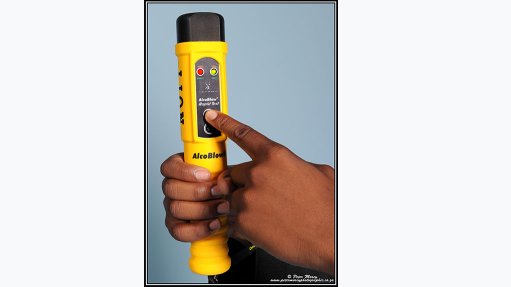
Developed to exceed the latest EN 15964 standards for police breathalysers proving that it will remain accurate and reliable for many years to come.
VISIT SHOWROOM

Announcements
What's On
Subscribe to improve your user experience...
Option 1 (equivalent of R125 a month):
Receive a weekly copy of Creamer Media's Engineering News & Mining Weekly magazine
(print copy for those in South Africa and e-magazine for those outside of South Africa)
Receive daily email newsletters
Access to full search results
Access archive of magazine back copies
Access to Projects in Progress
Access to ONE Research Report of your choice in PDF format
Option 2 (equivalent of R375 a month):
All benefits from Option 1
PLUS
Access to Creamer Media's Research Channel Africa for ALL Research Reports, in PDF format, on various industrial and mining sectors
including Electricity; Water; Energy Transition; Hydrogen; Roads, Rail and Ports; Coal; Gold; Platinum; Battery Metals; etc.
Already a subscriber?
Forgotten your password?
Receive weekly copy of Creamer Media's Engineering News & Mining Weekly magazine (print copy for those in South Africa and e-magazine for those outside of South Africa)
➕
Recieve daily email newsletters
➕
Access to full search results
➕
Access archive of magazine back copies
➕
Access to Projects in Progress
➕
Access to ONE Research Report of your choice in PDF format
RESEARCH CHANNEL AFRICA
R4500 (equivalent of R375 a month)
SUBSCRIBEAll benefits from Option 1
➕
Access to Creamer Media's Research Channel Africa for ALL Research Reports on various industrial and mining sectors, in PDF format, including on:
Electricity
➕
Water
➕
Energy Transition
➕
Hydrogen
➕
Roads, Rail and Ports
➕
Coal
➕
Gold
➕
Platinum
➕
Battery Metals
➕
etc.
Receive all benefits from Option 1 or Option 2 delivered to numerous people at your company
➕
Multiple User names and Passwords for simultaneous log-ins
➕
Intranet integration access to all in your organisation

