



Export Restrictions in Respect Designated Minerals by South Africa


This article has been supplied.
The World Trade Organization's dispute resolution panel concluded that export restrictions imposed by China in respect of certain rare earths (minerals) violated international trade law. China controls approximately 90% of the world's rare earth market which are essential minerals for the manufacturing of high-tech electronic equipment (i.e. smartphones, computers, wind turbines, missiles etc.). As a result of the restrictions on the export of rare earths the price thereof increased dramatically.
Japan, the United States and the European Union petitioned the WTO during 2012 stating that Chinese export duties, export quotas, and restrictions of rare earths violate certain provisions of the General Agreement on Tariff and Trade and China’s 2001 accession agreement to the WTO. China responded to the allegation stating, amongst others, that the restrictions improved economic development in China and protected its natural resources. The written ruling of the WTO dispute resolution panel has not yet been formally released to consider in detail. It is understood that China intends to lodge an appeal to the ruling of the dispute resolution panel.
The proposal by the South African government to restrict the export of minerals, mineral products or petroleum designated by the Minister of Mineral Resources for local beneficiation, as currently contained in the draft Amendment Bill to the Mineral and Petroleum Resources Development Act No. 28 of 2002 (MPRDA), may also be deemed as a violation of South Africa's international trade obligations and open South Africa up to possible complaints at the WTO similar to China. The current proposal implies that a mineral designated by the Minister (whether coal, manganese, iron ore etc.) may not be exported until such aggregate of raw minerals as determined by the Minister and subject to the differentiated price has been made available to local beneficiators. If a person exports such designated mineral without meeting the domestic quota of such mineral for local beneficiation or without the written consent of the Minister such person commits an offence, which on conviction could result in imprisonment or a penalty of 10% of its annual turnover.
The South African proposed amendments to the MPRDA to restrict the export of designated minerals to ensure the local beneficiation of a certain percentage thereof is not unique to South Africa, as a number of other resources rich countries are also considering such restrictions or have already implemented restrictions. Indonesia (the world's 16th largest economy by nominal GDP and a resource rich country) has also recently adopted legislation which came into effect on 12 January 2014 prohibiting the export of raw minerals or ore to ensure that such minerals are beneficiated locally to improve economic development in that country. The prohibition on export of raw minerals in Indonesia appears to have caused a lot of concerns to foreign investors, similar to what the proposed amendments in South Africa has done.
The South Africa beneficiation strategy adopted by the government in 2011 states that the local beneficiation of certain mineral resources are imperative to stimulate economic growth and development in South Africa. This is also recognized in a number of other policy documents adopted by the government (i.e. National Development Plan). The industry has however been up in arms with the proposed amendment to the MPRDA to restrict the export percentage of certain raw minerals and introduce differentiated pricing for local beneficiators. Should the proposed amendments be adopted in its current format, it is not clear what the extent of the export restriction in respect of certain minerals would be as this will be determined by regulation or by notice in the Government Gazette. This will only be known once the Minister designates certain mineral or petroleum for local beneficiation and only then it appears one would be able to determine whether such restriction violates South Africa's international trade obligations.
The demand for local processing or beneficiation of minerals by mineral resource countries has become much more prominent with more of these countries adopting the views that raw mineral cannot merely be exported, but should be processed to higher value product before being exported domestically. It will have to be seen whether the restriction imposed by Indonesia and the proposed restriction by South Africa would result in similar actions as with China at the WTO.
Article Enquiry
Email Article
Save Article
Feedback
To advertise email advertising@creamermedia.co.za or click here
Research Reports

Projects

Latest Multimedia
Latest News
Showroom

The SAIMM started as a learned society in 1894 after the invention of the cyanide process that saved the South African gold mining industry of the...
VISIT SHOWROOM
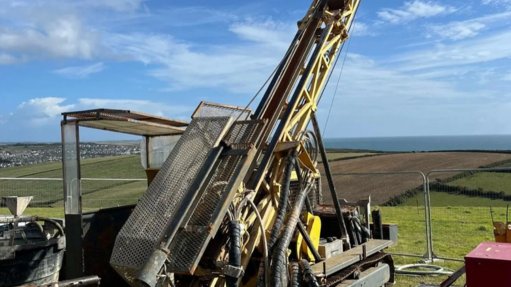
ROSOND provides fast, efficient, safe, and cost-effective drilling and grouting services to mining and exploration industries throughout Africa.
VISIT SHOWROOM

Announcements
What's On
Subscribe to improve your user experience...
Option 1 (equivalent of R125 a month):
Receive a weekly copy of Creamer Media's Engineering News & Mining Weekly magazine
(print copy for those in South Africa and e-magazine for those outside of South Africa)
Receive daily email newsletters
Access to full search results
Access archive of magazine back copies
Access to Projects in Progress
Access to ONE Research Report of your choice in PDF format
Option 2 (equivalent of R375 a month):
All benefits from Option 1
PLUS
Access to Creamer Media's Research Channel Africa for ALL Research Reports, in PDF format, on various industrial and mining sectors
including Electricity; Water; Energy Transition; Hydrogen; Roads, Rail and Ports; Coal; Gold; Platinum; Battery Metals; etc.
Already a subscriber?
Forgotten your password?
Receive weekly copy of Creamer Media's Engineering News & Mining Weekly magazine (print copy for those in South Africa and e-magazine for those outside of South Africa)
➕
Recieve daily email newsletters
➕
Access to full search results
➕
Access archive of magazine back copies
➕
Access to Projects in Progress
➕
Access to ONE Research Report of your choice in PDF format
RESEARCH CHANNEL AFRICA
R4500 (equivalent of R375 a month)
SUBSCRIBEAll benefits from Option 1
➕
Access to Creamer Media's Research Channel Africa for ALL Research Reports on various industrial and mining sectors, in PDF format, including on:
Electricity
➕
Water
➕
Energy Transition
➕
Hydrogen
➕
Roads, Rail and Ports
➕
Coal
➕
Gold
➕
Platinum
➕
Battery Metals
➕
etc.
Receive all benefits from Option 1 or Option 2 delivered to numerous people at your company
➕
Multiple User names and Passwords for simultaneous log-ins
➕
Intranet integration access to all in your organisation

