



Eskom to fast-track socioeconomic assessments for five coal stations facing closure


State-owed electricity utility Eskom is prioritising the completion of socioeconomic impact assessments for its coal-fired power stations in Mpumalanga, five of which have been earmarked for decommissioning over the coming five years, owing to flat demand and the introduction of new Eskom and independent power producer capacity.
The studies will follow the same format as a socioeconomic impact assessment compiled by KPMG Services for the Koeberg power station, in the Western Cape, and are required to provide an empirical basis for deliberations on the future of the stations as South Africa transitions towards a more diversified electricity mix. The outcomes may even influence the Integrated Resource Plan, which should be updated this year.
The Koeberg study offered an overwhelmingly positive assessment, estimating the plant’s contribution to the Western Cape’s economy over the past three years at R29-billion, while also sustaining 1 700 direct jobs and a further 14 000 indirect jobs. Koeberg is Africa’s only nuclear power station, with an installed capacity of 1 860 MW, which services half of the Western Cape’s electricity demand.
Eskom interim CEO Matshela Koko said the Koeberg study took two months to complete and that studies for the five coal-fired power stations earmarked for accelerated decommissioning – Hendrina, Kriel, Komati, Grootvlei and Camden – were currently being treated as a priority.
“We hope that, once the studies are complete and we see the social and economic impact for those plants, we will think twice and will put all our efforts into ensuring that we don’t close these power stations,” Koko said, indicating that the board had, in 2016, endorsed a fleet renewal strategy to extend the life of the existing power stations from 50 to 60 years.
However, in light of the current surplus, Eskom insists that it will need to start closing units at the five stations from as early as March 2018.
Social and labour plans are required prior to closing the units, with two trade unions – the National Union of Mineworkers (NUM) and the National Union of Metalworkers of South Africa – having already voiced opposition to the retirement of the plants. The NUM said recenlty that it would embark on mass protest action against the decommissioning plan, which it said threatened 50 000 direct and indirect jobs.
The retirement plan also served as the trigger for a March 1 protest by the Coal Transportation Forum, whose members blocked key roads to Pretoria as part of their protest to the Union Buildings.
“We are expected by law to have a social plan for those plants that may be retired. But the social plan will not be adequate without having understood the socioeconomic impacts of these individual power stations. Consequently, we are now extending this study done at Koeberg to these five power stations so that we are able to have a meaningful conversation about what to do with these power stations and to coordinate the value chain as well,” Koko said during a presentation at Koeberg.
However, he also indicated that the timing of any closure could be influenced by demand for electricity, which has remained flat for nearly a decade, owing to weak economic growth and suppressed demand associated with electricity shortages.
Eskom intends raising export sales by 8% a year between 2017/18 and 2020/21 and increasing domestic sales by 2.1% a year over the same period. However, failure to do so is likely to result in power station closures.
The utility recently signed a supply agreement with NamPower, Namibia’s electricity utility, and Koko would sign similar deals with utilities in Zimbabwe and Zambia in the coming weeks.
In addition, the State-owned utility has approached the Energy Intensive User Group of Southern Africa (EIUG) to discuss the kinds of electricity pricing arrangements that would enable its members to help restart idle mining and smelting activities.
“We are engaging with energy-intensive users and I recently met with AngloGold Ashanti and we continue to engage. And the question I put on the table is: What is it in your operation that is constrained by electricity? . . . Let’s talk about it and let’s agree on a tariff that will allow you to ramp up production.”
The EIUG has indicated that it supports the plan and has told Engineering News that there is policy, legislative and regulatory space to introduce new electricity pricing arrangements.
“All our energy plans are dependent on whether we have energy-intensive growth,” Koko said.
Article Enquiry
Email Article
Save Article
Feedback
To advertise email advertising@creamermedia.co.za or click here
Research Reports

Projects

Latest Multimedia
Latest News
Showroom
ZF Aftermarket is the after-sales division of the world-renowned German ZF group, a global leader in mobility technology.
VISIT SHOWROOM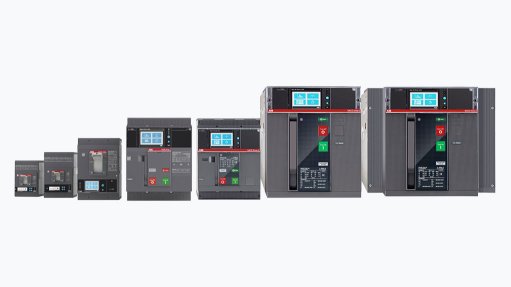
Electrifying the world in a safe, smart, and sustainable way, ABB Electrification is a global technology leader in electrical distribution and...
VISIT SHOWROOM
Announcements
What's On
Subscribe to improve your user experience...
Option 1 (equivalent of R125 a month):
Receive a weekly copy of Creamer Media's Engineering News & Mining Weekly magazine
(print copy for those in South Africa and e-magazine for those outside of South Africa)
Receive daily email newsletters
Access to full search results
Access archive of magazine back copies
Access to Projects in Progress
Access to ONE Research Report of your choice in PDF format
Option 2 (equivalent of R375 a month):
All benefits from Option 1
PLUS
Access to Creamer Media's Research Channel Africa for ALL Research Reports, in PDF format, on various industrial and mining sectors
including Electricity; Water; Energy Transition; Hydrogen; Roads, Rail and Ports; Coal; Gold; Platinum; Battery Metals; etc.
Already a subscriber?
Forgotten your password?
Receive weekly copy of Creamer Media's Engineering News & Mining Weekly magazine (print copy for those in South Africa and e-magazine for those outside of South Africa)
➕
Recieve daily email newsletters
➕
Access to full search results
➕
Access archive of magazine back copies
➕
Access to Projects in Progress
➕
Access to ONE Research Report of your choice in PDF format
RESEARCH CHANNEL AFRICA
R4500 (equivalent of R375 a month)
SUBSCRIBEAll benefits from Option 1
➕
Access to Creamer Media's Research Channel Africa for ALL Research Reports on various industrial and mining sectors, in PDF format, including on:
Electricity
➕
Water
➕
Energy Transition
➕
Hydrogen
➕
Roads, Rail and Ports
➕
Coal
➕
Gold
➕
Platinum
➕
Battery Metals
➕
etc.
Receive all benefits from Option 1 or Option 2 delivered to numerous people at your company
➕
Multiple User names and Passwords for simultaneous log-ins
➕
Intranet integration access to all in your organisation

