



Energy Conservation And Efficiency: Investing In Our Future


This article has been supplied.
Electricity has historically been taken for granted in South Africa which has led to us not thinking about what electrical appliances we use, and when. Electricity consumption is therefore higher than it could be. With the demand for electricity at times being more than how much is available, we all need to reduce our electricity use by being more efficient and by conserving it wherever and whenever possible. Not only will this ease the pressure on the national electricity supply (“the grid”), but will also reduce your environmental footprint (for example lower Greenhouse Gas emissions) and your monthly expenses.
Although electricity efficiency and electricity conservation often get mentioned together, they are actually two different concepts. To be more electricity efficient, we can use products that do the same job but use less energy to do so. Newer models of electrical appliances are generally more efficient than older models, for example; refrigerators, freezer, dishwashers, tumble-driers and stoves. More modern appliances often have “power-save” modes that automatically lower electricity consumption. Although most energy-efficient appliances cost more initially, they save money in the long term. A more efficient appliance soon pays for itself because monthly electricity costs stay lower. Unlike electricity efficiency the conservation of electricity requires a much more active effort to decrease the amount of electricity that we use, for example by switching lights and plugs off when the appliance is not needed. Conserving electricity is therefore often more difficult than being more efficient as it requires a change in our behaviour. Another important difference between electrical efficiency and conservation is that being efficient often results in energy conservation, but being conservative does not result in being more efficient.
With winter around the corner, it is important to consider the easiest ways to lower your energy consumption. Instead of turning down the heater, it may be more worthwhile and effective to invest in a more efficient heater. In this way you could lower your electricity consumption without changing you behaviour or level of comfort. Adding insulation to your home will also keep the heat in for longer, which might lower your use of electricity even more because you will not need the heater to be on for so long – even if it is a more electricity efficient one. In summer, insulation will also help you keep your home cool – so this is really a good idea.
Another example of how to save money and electricity is by using South Africa’s sunshine to light your home – install natural skylights to conserve electricity, or air-dry clothes. A way to be more efficient with lighting in the home is to install compact fluorescent lights that use one-third of the electricity that traditional light bulbs use.
Industries use a lot of electricity to power a diverse range of manufacturing processes. There are many ways that industry in South Africa can be more electricity efficient and can conserve electricity. The chemical industry in South Africa is continuously implementing changes to their processes to reduce the amount of electricity it uses, as well as to use more efficient equipment. The Responsible Care Initiative, brought to South Africa by the Chemical and Allied Industries Association, helps the South African chemical industry look at ways that it can do this. Responsible Care aims to raise safety, health and environmental performance throughout the chemical industry.
Electricity efficiency combined with electricity conservation is important to all South Africans, our environment, our pockets and our economy.
This message is brought to you by the Chemical and Allied Industries’ Association in the interests of achieving reductions in electricity consumption for a more sustainable environment.
Article Enquiry
Email Article
Save Article
Feedback
To advertise email advertising@creamermedia.co.za or click here
Research Reports

Projects


Latest Multimedia

Latest News


Showroom
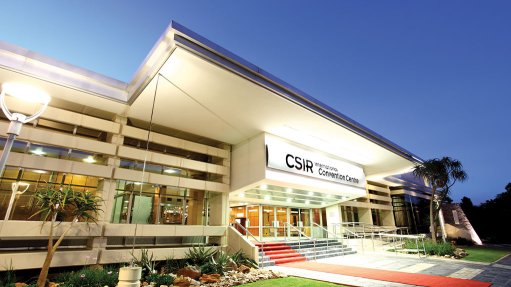
CSIR International Convention Centre (CSIR ICC) - the leading conference and events venue in Pretoria/Tshwane.
VISIT SHOWROOM
We supply customers with practical affordable solutions for their testing needs. Our products include benchtop, portable, in-line process control...
VISIT SHOWROOM


Announcements
What's On
Subscribe to improve your user experience...
Option 1 (equivalent of R125 a month):
Receive a weekly copy of Creamer Media's Engineering News & Mining Weekly magazine
(print copy for those in South Africa and e-magazine for those outside of South Africa)
Receive daily email newsletters
Access to full search results
Access archive of magazine back copies
Access to Projects in Progress
Access to ONE Research Report of your choice in PDF format
Option 2 (equivalent of R375 a month):
All benefits from Option 1
PLUS
Access to Creamer Media's Research Channel Africa for ALL Research Reports, in PDF format, on various industrial and mining sectors
including Electricity; Water; Energy Transition; Hydrogen; Roads, Rail and Ports; Coal; Gold; Platinum; Battery Metals; etc.
Already a subscriber?
Forgotten your password?
Receive weekly copy of Creamer Media's Engineering News & Mining Weekly magazine (print copy for those in South Africa and e-magazine for those outside of South Africa)
➕
Recieve daily email newsletters
➕
Access to full search results
➕
Access archive of magazine back copies
➕
Access to Projects in Progress
➕
Access to ONE Research Report of your choice in PDF format
RESEARCH CHANNEL AFRICA
R4500 (equivalent of R375 a month)
SUBSCRIBEAll benefits from Option 1
➕
Access to Creamer Media's Research Channel Africa for ALL Research Reports on various industrial and mining sectors, in PDF format, including on:
Electricity
➕
Water
➕
Energy Transition
➕
Hydrogen
➕
Roads, Rail and Ports
➕
Coal
➕
Gold
➕
Platinum
➕
Battery Metals
➕
etc.
Receive all benefits from Option 1 or Option 2 delivered to numerous people at your company
➕
Multiple User names and Passwords for simultaneous log-ins
➕
Intranet integration access to all in your organisation

