



Correct choice of sand vital for quality plaster




This article has been supplied.
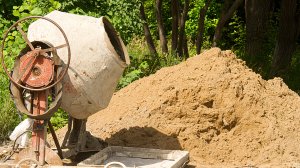
The quality of plaster - in both fresh and hardened states - depends to a large extent on the properties of the materials used to make it. Sand is by far the major constituent of plaster and has a significant influence on its performance and material cost, Bryan Perrie, managing director of The Concrete Institute (TCI), has pointed out.
Perrie says in South Africa, where natural sands such as pit, river and dune sands, are almost invariably used, an important requirement is that the sand should be free of organic matter such as roots, seeds, twigs, and humus. This is absolutely essential in the case of white or pigmented plasters, he advises.
Any sand being considered for plaster work should ideally comply with SANS 1090 which has requirements to limit organic impurities, clay content and other requirements but it has been found that sands meeting this standard do not necessarily produce satisfactory plaster – and conversely sands that do not meet the standard may produce acceptable mixes.
“If a sand includes lumps that are not easily broken between the fingers, it is not ideal for use in plaster and if such a sand has to be used, then all lumps should be removed by sieving. Crusher sands are not generally suitable for use in plaster due to their angular particle shape but have been successfully used in rich mixes for special applications such as plastering of squash court walls and pipe linings. Limestone or marble crusher sands are commonly used, with white cement, for plastering swimming pool shells.”
Perrie says the use of ash as aggregate is not recommended unless the ash has been thoroughly tested and proven to be sound. Specialist advice should also be sought if there is any doubt about the content and type of clay in plaster sand, he adds.
“Ideally, the sand should have a continuous grading - from dust up to the largest particles. The fractions passing the 0.150‐mm and 0.075‐mm sieves (fines) are important because they significantly influence the water requirement, workability and water retentivity of the mix.”
“Increasing these fractions results in increased water requirement with consequent lower strength and higher shrinkage, but improves workability and water retentivity. The optimum fines content is therefore a compromise between these properties.
“For plasters, a sand lacking in fines may be used with hydrated builder’s lime, mortar plasticiser, or masonry cement, or it may be blended with a fine filler sand. Sand with a good grading is likely to be suitable for use with CEM l or CEM ll A cements without the addition of builder’s lime or other products. A sand with excessive fines may be improved by washing or by blending with a suitable coarser sand. The coarser sand could be a crusher sand provided that the resulting plaster is suitable for the application, and gives acceptable results.”
Perrie recommends that for conventional smooth plaster, all the sand should pass through a sieve with 2.36‐mm openings, and for coarsely textured decorative work, the corresponding sieve size should be 4.75 mm. Oversized particles and lumps should be removed by sieving.
“When it comes particle shape, for good workability, the particle shape ideally should be acceptably rounded and the surface texture should be smooth. The particle shape of natural sands tends to be rounded due to weathering whereas that of crusher sands tends to be angular or flaky. Some river sands, however, contain newly weathered particles with a rough surface texture and angular particle shape. These particles are normally in the coarser fraction of the sand and should be screened out,” he adds.
Perrie sums it up: “Only ‘good’ sands are suitable for use in all plaster work. ‘Average’ sands may be used for interior plaster but ‘Poor’ and “Very Poor’ sands are not recommended and should be avoided.”
Article Enquiry
Email Article
Save Article
Feedback
To advertise email advertising@creamermedia.co.za or click here
Research Reports

Projects


Latest Multimedia


Latest News

Showroom

For over 30 years, Werner South Africa Pumps & Equipment (PTY) LTD has been designing, manufacturing, supplying and maintaining specialist...
VISIT SHOWROOM
Your global lifecycle technology & service partner for materials & minerals processing equipment for coal, iron ore, copper, manganese & other...
VISIT SHOWROOM



Announcements
What's On
Subscribe to improve your user experience...
Option 1 (equivalent of R125 a month):
Receive a weekly copy of Creamer Media's Engineering News & Mining Weekly magazine
(print copy for those in South Africa and e-magazine for those outside of South Africa)
Receive daily email newsletters
Access to full search results
Access archive of magazine back copies
Access to Projects in Progress
Access to ONE Research Report of your choice in PDF format
Option 2 (equivalent of R375 a month):
All benefits from Option 1
PLUS
Access to Creamer Media's Research Channel Africa for ALL Research Reports, in PDF format, on various industrial and mining sectors
including Electricity; Water; Energy Transition; Hydrogen; Roads, Rail and Ports; Coal; Gold; Platinum; Battery Metals; etc.
Already a subscriber?
Forgotten your password?
Receive weekly copy of Creamer Media's Engineering News & Mining Weekly magazine (print copy for those in South Africa and e-magazine for those outside of South Africa)
➕
Recieve daily email newsletters
➕
Access to full search results
➕
Access archive of magazine back copies
➕
Access to Projects in Progress
➕
Access to ONE Research Report of your choice in PDF format
RESEARCH CHANNEL AFRICA
R4500 (equivalent of R375 a month)
SUBSCRIBEAll benefits from Option 1
➕
Access to Creamer Media's Research Channel Africa for ALL Research Reports on various industrial and mining sectors, in PDF format, including on:
Electricity
➕
Water
➕
Energy Transition
➕
Hydrogen
➕
Roads, Rail and Ports
➕
Coal
➕
Gold
➕
Platinum
➕
Battery Metals
➕
etc.
Receive all benefits from Option 1 or Option 2 delivered to numerous people at your company
➕
Multiple User names and Passwords for simultaneous log-ins
➕
Intranet integration access to all in your organisation

