



CHIETA-funded local vaccine development moves to next stage


A ground-breaking vaccine development project is entering phase 2 of the pre-clinical trials following significant success in the phase 1 pre-clinical trials. The project is being run by Walter Sisulu and North-West universities, with co-funding by CHIETA, the chemical industries’ SETA.
CHIETA and Walter Sisulu University (WSU) signed an MOU in 2021, through which CHIETA granted R3.5m funding for research and skills development in the vaccine programme headed by Prof Markus Depfenhart, renowned for his seminal work in vaccine development and pandemic management interventions in Africa.
Prof Depfenhart explains, “The first trial, which was finalised in 2021, produced exceptional results regarding the efficacy against Covid- 19 variants. The lessons learned from this first pre-clinical trial, together with the experimental know-how that we gained during that trial, led to some capacity building. This allowed us to develop new vaccine constructs, based on funding provided by the NWU and CHIETA. We are currently in the process of a second pre-clinical trial of a completely novel vaccine candidate based on my platform technology.”
Prof Depfenhart says the partnership with CHIETA has provided resources that have enabled WSU to expand into territories it would otherwise not have been able to afford. “The knowledge garnered from the partnership will enrich teaching and learning, as well as innovation and research in this field. We are also witnessing an increase in requests for institutional funding for research and conferences related to vaccinology and epidemiology, which, for WSU, indicates that the partnership has created the space for further investigation and research.”
Yershen Pillay, CEO of CHIETA, acknowledges the significance of the vaccine development and the impact of the results of the first pre-clinical trial. “These results indicate that the collaborative initiative by WSU, North-West University, and Prof Depfenhart, is well-positioned to develop a novel, safe, and effective DNA vaccine against respiratory diseases in South Africa, which forms the basis for the second pre-clinical trial.”
Pillay says the partnership is part of CHIETA’s focused transformation and innovation efforts. “Our 2022 Sector Skills Planning analysis highlights that in 2020, most students in public HEIs enrolled in Science, Engineering and Technology fields. However the total number of doctoral degrees decreased by an average 10.3% per year for the 2016 to 2020 period, which impacts the chemical industry’s skills supply as it relies heavily on research and development. This partnership with WSU provides an opportunity for CHIETA to support the growth of research capacity in public institutions.”
Prof Depfenhart notes that in terms of the DNA constructs of the second trial, all constructs, designed by him and synthesised by commercial companies, have now been received. “Human cells have been transfected with most of these constructs, and an encouraging analysis of the in vitro expression of the antigens of interest for this vaccine has been performed. In confirmation with a parallel effort by a commercial company in Germany and one in South Africa, we demonstrated that the vectors are working well and that we see strong expression of the antigens for the diseases of interest.”
As part of the vaccine development initiative, a Pan-African network of collaborating universities and research institutions keen on participating in vaccine and pandemic management in Africa has been established with a common goal to pursue academic, commercial, and social justice imperatives. Scientists from universities in Kenya, Senegal, Gabon, Uganda, Botswana, Germany, and Slovenia have already committed to this.
Pillay says CHIETA is proud to be involved in this unique and impactful vaccine project that is contributing to the development of critical skills locally and is showing excellent promise of establishing a local value chain for vaccine production. “This far-reaching collaboration is about more than Covid-19; it is also enabling consideration of other pathogens that challenge Africa, including parasites like malaria. It is placing Africa in a strong position to manufacture and ensure supply of vaccines and next-gen biologics.”
Article Enquiry
Email Article
Save Article
Feedback
To advertise email advertising@creamermedia.co.za or click here
Research Reports

Projects


Latest Multimedia
Latest News
Showroom
Established in 1983, the ASTPM is an industry association and representative body of the welded carbon steel tube and pipe manufacturers of South...
VISIT SHOWROOM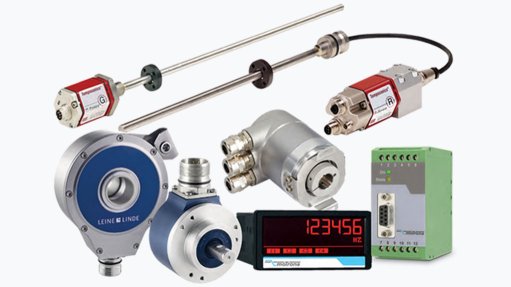
ATI systems comprises five divisions: electrical assemblies, drives and controls, feedback sensors, enclosures, and strip guiding.
VISIT SHOWROOM

Announcements
What's On
Subscribe to improve your user experience...
Option 1 (equivalent of R125 a month):
Receive a weekly copy of Creamer Media's Engineering News & Mining Weekly magazine
(print copy for those in South Africa and e-magazine for those outside of South Africa)
Receive daily email newsletters
Access to full search results
Access archive of magazine back copies
Access to Projects in Progress
Access to ONE Research Report of your choice in PDF format
Option 2 (equivalent of R375 a month):
All benefits from Option 1
PLUS
Access to Creamer Media's Research Channel Africa for ALL Research Reports, in PDF format, on various industrial and mining sectors
including Electricity; Water; Energy Transition; Hydrogen; Roads, Rail and Ports; Coal; Gold; Platinum; Battery Metals; etc.
Already a subscriber?
Forgotten your password?
Receive weekly copy of Creamer Media's Engineering News & Mining Weekly magazine (print copy for those in South Africa and e-magazine for those outside of South Africa)
➕
Recieve daily email newsletters
➕
Access to full search results
➕
Access archive of magazine back copies
➕
Access to Projects in Progress
➕
Access to ONE Research Report of your choice in PDF format
RESEARCH CHANNEL AFRICA
R4500 (equivalent of R375 a month)
SUBSCRIBEAll benefits from Option 1
➕
Access to Creamer Media's Research Channel Africa for ALL Research Reports on various industrial and mining sectors, in PDF format, including on:
Electricity
➕
Water
➕
Energy Transition
➕
Hydrogen
➕
Roads, Rail and Ports
➕
Coal
➕
Gold
➕
Platinum
➕
Battery Metals
➕
etc.
Receive all benefits from Option 1 or Option 2 delivered to numerous people at your company
➕
Multiple User names and Passwords for simultaneous log-ins
➕
Intranet integration access to all in your organisation

