Can South Africa Trust Its ESG Data?


This article has been supplied and will be available for a limited time only on this website.
Environmental, Social and Governance (ESG) considerations are now firmly embedded in investment decision-making, with 73% of global asset owners incorporating sustainable investment approaches, according to FTSE Russell's 2025 Global Asset Owner Survey.
The stakes are rising. The World Bank requires funded projects to actively manage and report environmental and social risks, while the International Finance Corporation (IFC) underscores the growing importance of reliable ESG data. As ESG becomes increasingly linked to access to capital, organisations face a critical test: can they prove their ESG data is accurate, reliable and verifiable?
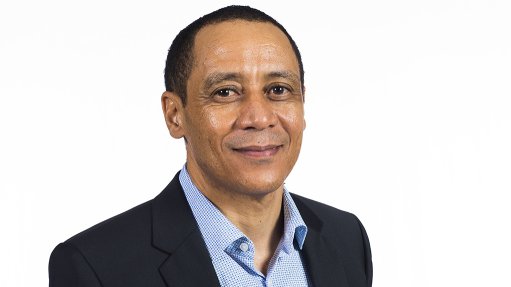
"ESG is no longer just a reporting exercise," says Muhammad Ali, Managing Director of World Wide Industrial & Engineering Systems (WWISE). "Investors, lenders and funders want clear evidence that organisations are actively managing ESG risks." However, he believes the bigger challenge is data integrity.
This challenge is growing as organisations are increasingly expected to align with multiple ESG frameworks and disclosure requirements, including the Corporate Sustainability Reporting Directive (CSRD), IFRS S1 and S2, JSE Sustainability Disclosure Guidance, and emerging regulations.
Yet, fragmented data and inconsistent reporting continue to weaken the credibility of many ESG disclosures.
According to Ali, this creates risks that extend well beyond compliance.
"Organisations that cannot verify their ESG claims risk losing trust, opportunities and credibility," he says.
Development finance institutions are also raising the bar. Under the World Bank's Environmental and Social Framework, weak environmental and social risk management can result in increased oversight, corrective measures and potential funding risks.
However, building credible ESG governance comes at a cost with gap assessments ranging from around R100,000 for smaller organisations to several million rand for large multinationals, while full implementation programmes can run into tens of millions depending on scale, complexity and reporting obligations.
According to Ali, implementation costs are shaped by factors such as organisational scale, complexity, footprint and compliance requirements. But the cost of poor ESG governance, he argues, is often far higher.
"The question organisations should be asking is not whether they can afford to improve ESG governance, but whether they can afford not to," he says. "Trust has become a critical business asset."
The shift is already evident globally. Rio Tinto plans to invest approximately R82 billion to R98 billion (US$5 billion to US$6 billion) in decarbonisation by 2030, while Mercedes-Benz has committed more than approximately R750 billion (€40 billion) to electrification, sustainability and supply-chain transformation. BMW, meanwhile, has embedded sustainability requirements across a network of more than 12,000 suppliers. Together, these investments highlight how ESG governance and assurance are rapidly becoming core business requirements.
Recent enforcement actions highlight the cost of getting ESG wrong. Asset manager DWS was fined R412.5 million (US$25 million) by the U.S. SEC in 2023 over ESG-related misstatements, while further penalties in Germany pushed total sanctions close to approximately R 823 million (US$50 million). The case also triggered significant reputational damage, regulatory scrutiny and leadership changes.
One solution lies in adopting internationally recognised management systems that provide structured, auditable approaches to governance, measurement and continuous improvement.
A range of ISO standards provides practical frameworks that support ESG objectives. ISO 14001, ISO 14064 and ISO 50001 support environmental performance and emissions management; ISO 45001 and ISO 26000 strengthen social responsibility and workplace practices; while ISO 37001, ISO 27001, ISO 42001 and IWA48 reinforce governance, ethics, information security and AI governance.
As ESG reporting becomes more data-intensive and technology-driven, strong governance and independent assurance are essential. Together, these standards help strengthen data integrity, improve verification and build confidence in ESG disclosures.
"ISO standards help turn ESG commitments into verifiable performance," says Ali. "They provide the governance, controls and assurance needed to build trust in ESG disclosures." Beyond compliance, they ensure sustainability claims are evidence-based, not intent-based.
Ali notes the benefits go beyond compliance. Strong governance improves investor confidence, access to funding, procurement competitiveness and resilience. In cybersecurity, frameworks such as ISO 27001 are also increasingly used by insurers and underwriters to assess risk maturity.
As investor expectations, funding requirements and regulatory oversight continue to intensify, Ali believes the conversation is shifting fundamentally.
"For years the focus was ESG reporting," he concludes. "Today it is ESG proof. Organisations that can demonstrate credible, verifiable data will be better positioned to attract investment, funding and trust."
Article Enquiry
Email Article
Save Article
Feedback
To advertise email advertising@creamermedia.co.za or click here
Research Reports

Projects
Latest Multimedia
Latest News
Showroom
ECG provides specialised electrical engineering services to the Mining, Utilities, Materials Handling and Industrial industries, with extensive and...
VISIT SHOWROOM
We supply customers with practical affordable solutions for their testing needs. Our products include benchtop, portable, in-line process control...
VISIT SHOWROOM
Announcements
What's On
Subscribe to improve your user experience...
Option 1 (equivalent of R125 a month):
Receive a weekly copy of Creamer Media's Engineering News & Mining Weekly magazine
(print copy for those in South Africa and e-magazine for those outside of South Africa)
Receive daily email newsletters
Access to full search results
Access archive of magazine back copies
Access to Projects in Progress
Access to ONE Research Report of your choice in PDF format
Option 2 (equivalent of R375 a month):
All benefits from Option 1
PLUS
Access to Creamer Media's Research Channel Africa for ALL Research Reports, in PDF format, on various industrial and mining sectors
including Electricity; Water; Energy Transition; Hydrogen; Roads, Rail and Ports; Coal; Gold; Platinum; Battery Metals; etc.
Already a subscriber?
Forgotten your password?
Receive weekly copy of Creamer Media's Engineering News & Mining Weekly magazine (print copy for those in South Africa and e-magazine for those outside of South Africa)
➕
Recieve daily email newsletters
➕
Access to full search results
➕
Access archive of magazine back copies
➕
Access to Projects in Progress
➕
Access to ONE Research Report of your choice in PDF format
RESEARCH CHANNEL AFRICA
R4500 (equivalent of R375 a month)
SUBSCRIBEAll benefits from Option 1
➕
Access to Creamer Media's Research Channel Africa for ALL Research Reports on various industrial and mining sectors, in PDF format, including on:
Electricity
➕
Water
➕
Energy Transition
➕
Hydrogen
➕
Roads, Rail and Ports
➕
Coal
➕
Gold
➕
Platinum
➕
Battery Metals
➕
etc.
Receive all benefits from Option 1 or Option 2 delivered to numerous people at your company
➕
Multiple User names and Passwords for simultaneous log-ins
➕
Intranet integration access to all in your organisation