



Indian billionaires halt mining deals on rupee erosion


Indian billionaires led by Kumar Mangalam Birla are stalling purchases of mines overseas as the rupee’s 13% drop this year inflates the cost of deals.
The Aditya Birla group, which runs the nation’s second-biggest copper and aluminium maker, has put acquisition plans on hold, says a person with direct knowledge of the matter. JSW Steel, controlled by the billionaire Jindal family, would prefer to wait, says commercial director Jayant Acharya.
“It won’t be easy to make decisions on mergers and acquisitions in such a volatile environment,” Acharya says in an interview. “Calls need to be made in a measured manner.”
Indian companies have spent $12.7-million on mining assets abroad this year, the lowest amount since at least 2008, as the rupee’s tumble made it Asia’s second-worst performer. Companies that have refrained from overseas purchases risk facing higher import costs for raw materials should the rupee weaken further because of India’s record current account deficit.
JSW, India’s third-largest steelmaker, was looking to buy coking coal mines overseas to feed its yearly 14-million-ton capacity in the country, chairperson Sajjan Jindal said in May. In July, the company received shareholder approval to raise its borrowing limit to 400-billion rupees ($6.3-billion) from 250- billion rupees to fund expansion projects and acquisitions.
The Aditya Birla group, which is scouting for iron-ore, coal and copper ore assets outside India, had bid through wholly owned unit Essel Mining for Northern Iron, an Australian miner of iron-ore. Essel later ended the effort, Northern Iron said in a statement in November.
The group had also sought to buy Australian coal producer New Hope, two people with direct knowledge of the matter said in December 2011. New Hope ended the sale process after talks with potential buyers had failed to fetch an offer reflecting the company’s value, chairperson Robert Millner said in March 2012.
“Deals could slow down further as assets have become more expensive,” says Ketan Shaah, executive director and head of invest- ment banking at Daiwa Capital Markets India, in Mumbai. “Financing has also become more difficult.”
Average dollar debt costs for Indian companies jumped to a 19-month high of 6.32% on August 22 from a record low of 3.76%, indexes compiled by HSBC Holdings show.
Big Risk
A weaker rupee is weighing on producers of electricity, coal and metal as shrinking indus- trial output squeezes profit margins and strains finances. India’s gross domestic product grew 4.4% in the three months to June 30 from a year earlier, after increasing 5% in the year to March 31, the smallest gain since 2003.
Any “external shock” could sink the rupee past 70, says Arvind Virmani, an adviser on the Reserve Bank of India’s panel on monetary policy. The rupee touched an unprecedented low of 68.845 to the dollar on August 28 and has rebounded about 9% since.
The fall in the currency in “such a short time is a big risk and companies in the middle of talks will have to recalculate their economics”, says Prasun Kumar Mukherjee, executive director at billionaire Anil Agarwal-controlled Sesa Goa.
The weakening rupee has exacerbated hurdles in the way of mining acquisitions, including falling commodity prices and court-ordered bans and restrictions.
The cash flows of some mining-related companies have dwindled by about 50%, impeding their ability to raise loans, says Ravi Shankar, MD and head of investment banking in India at UBS.
Revenue from the iron-ore business at Sesa Goa, which was India’s biggest exporter till mining and shipments were banned in the western state of Goa, where it produced more than 80% of the commodity, fell after sales plunged to 3.1-million tons in the year ended March 31, the lowest since Agarwal bought the company in 2007. Sales at State-owned NMDC, the nation’s biggest miner of the ore, may decline for a third consecutive fiscal year, according to the median estimate of 35 analysts compiled by Bloomberg.
“Where there’s so much uncertainty in the operations, relying on that cash flow to take a loan and fund equity of a mine abroad becomes that more difficult,” Shankar says.
Shares of NMDC have plunged 25%, while those of Sesa have declined 5% this year. Sesa shares have climbed 42% since close of trade on August 16, after the company had said it had absorbed Sterlite Industries, another unit of London-listed Vedanta, which produces alumi- nium and copper. The benchmark S&P BSE Sensex has gained 2.2% this year.
Indian power utilities, including NTPC, Tata Power and Adani Power, are increasing imports of coal, which fuels about 60% of the country’s electricity generation. A decline in the rupee is making these imports more expensive.
More than 10 000 MW of new capacity in India is lying idle, according to the Association of Power Producers, and generators, including Reliance Power, Adani Power and NTPC, have halted some 50 000 MW of projects combined, citing fuel constraints.
Spot iron-ore at Tianjin port, in China, rose 41% in the past year to $135.2/t on September 10. Prices rose more than 67% in the first five months, followed by a 31% decline in the next three before recovering 25%, according to a price index compiled by The Steel Index, owned by McGraw-Hill Financial. The 100-day volatility at 33 in January was the highest level since September 2009, according to data compiled by Bloomberg.
One-month implied volatility in the rupee, a measure of expected moves in the exchange rate used to price options, surged 508 basis points this quarter, or 5.08 percentage points, the most since the three months to September 2011. The rate touched 22.4% on September 4, the highest since December 2008.
“The rupee continues to face challenges,” says Devendra Pant, chief economist at India Ratings & Research, the local unit of Fitch Ratings. “Only if it is a good asset at a really low price, there may be interest from India.”
Article Enquiry
Email Article
Save Article
Feedback
To advertise email advertising@creamermedia.co.za or click here
Research Reports

Projects
Latest Multimedia
Latest News
Showroom
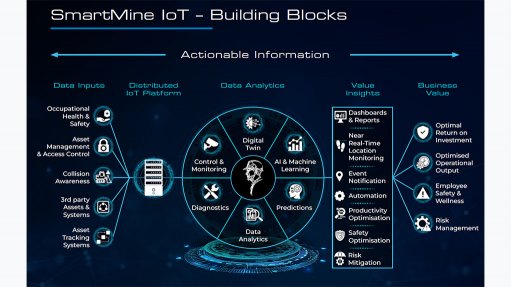
SmartMine IoT has been developed with the mining industry in mind, to provides our customers with powerful business intelligence and data modelling...
VISIT SHOWROOM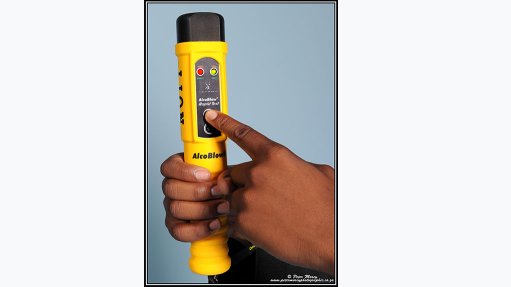
Developed to exceed the latest EN 15964 standards for police breathalysers proving that it will remain accurate and reliable for many years to come.
VISIT SHOWROOM
Press Office
Announcements
What's On
Subscribe to improve your user experience...
Option 1 (equivalent of R125 a month):
Receive a weekly copy of Creamer Media's Engineering News & Mining Weekly magazine
(print copy for those in South Africa and e-magazine for those outside of South Africa)
Receive daily email newsletters
Access to full search results
Access archive of magazine back copies
Access to Projects in Progress
Access to ONE Research Report of your choice in PDF format
Option 2 (equivalent of R375 a month):
All benefits from Option 1
PLUS
Access to Creamer Media's Research Channel Africa for ALL Research Reports, in PDF format, on various industrial and mining sectors
including Electricity; Water; Energy Transition; Hydrogen; Roads, Rail and Ports; Coal; Gold; Platinum; Battery Metals; etc.
Already a subscriber?
Forgotten your password?
Receive weekly copy of Creamer Media's Engineering News & Mining Weekly magazine (print copy for those in South Africa and e-magazine for those outside of South Africa)
➕
Recieve daily email newsletters
➕
Access to full search results
➕
Access archive of magazine back copies
➕
Access to Projects in Progress
➕
Access to ONE Research Report of your choice in PDF format
RESEARCH CHANNEL AFRICA
R4500 (equivalent of R375 a month)
SUBSCRIBEAll benefits from Option 1
➕
Access to Creamer Media's Research Channel Africa for ALL Research Reports on various industrial and mining sectors, in PDF format, including on:
Electricity
➕
Water
➕
Energy Transition
➕
Hydrogen
➕
Roads, Rail and Ports
➕
Coal
➕
Gold
➕
Platinum
➕
Battery Metals
➕
etc.
Receive all benefits from Option 1 or Option 2 delivered to numerous people at your company
➕
Multiple User names and Passwords for simultaneous log-ins
➕
Intranet integration access to all in your organisation

