



Big data offers prospects for more efficient transport system in South Africa – Wipro

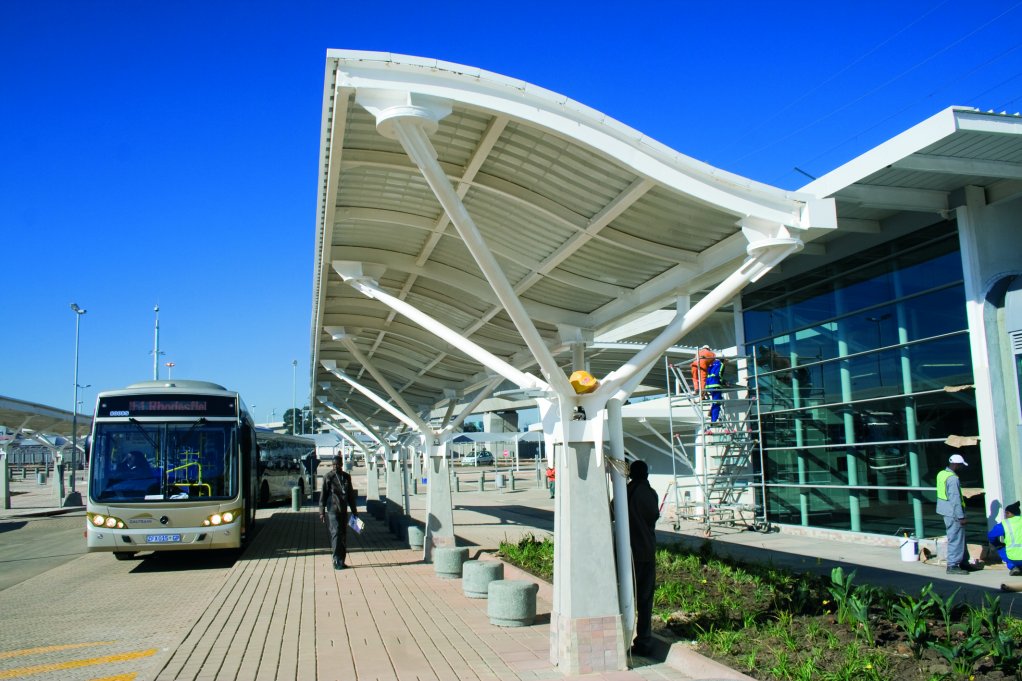
INTEGRATED PUBLIC TRANSPORT New transport systems, such as the Gautrain and MyCiti buses, in South Africa are not part of an integrated national approach to commuter payment and profile management
Photo by Duane Daws


Tracking geospatial trends to understand user behaviour and congestion patterns enables transport operators to develop rail and bus networks that suit people’s lifestyles and incentivise more motorists to move away from private transport by improving visibility and predictability, say Indian information technology multinational Wipro Africa country manager Gavin Holme and Wipro Africa Analytics practice manager Rudraksh Bhawalkar.
“Public transport has not yet capitalised on the opportunities presented by new technology advancements. Developments in the realm of big data present tantalising opportunities to create a more efficient transport system in South Africa.”
Road-based transport challenges include high volumes of daily commuters using informal transport systems not governed by central authorities and a middle class heavily reliant on private transport, which increases congestion, particularly on urban roads.
Further, rapid expansion of urban infrastruc-ture, including housing and office developments, is not supported by the same level of investment in transport networks and the problem is exacerbated by an emerging trend of closed-loop and localised systems – such as the Gautrain rail network, in Gauteng, and the MyCiti bus network, in Cape Town – with no national approach to integration of payment and profile management.
“Radical changes in the private taxi industry, including the move away from traditional metered taxis to the phenomenally popular disrupter, Uber, unfortunately do not help in solving South Africa’s transportation woes,” Holme and Bhawalkar add.
However, with real-time data streamed to the right authorities and stakeholders, it becomes possible to minimise the negative structural, time-based and traffic collision effects on mobility.
For example, streaming data to traffic police makes it possible to reduce the impact of common traffic collisions causing traffic snarl-ups for kilometres. In these cases, the authorities would be able to deploy resources to reroute traffic to different roads and assist people in getting to their destinations on time. Such information can also be streamed to public and private transport vehicles, helping to reduce or avoid congestion.
However, more viable public transport systems require that technology be afforded a central role to ensure that they are designed and managed in an optimal manner.
With increased interoperability between the country’s various transport networks, ticketing could be digitised and one would be able to use the same card or payment mechanism to travel locally in any region, and over longer distances when making long-haul trips. Alerts can also be sent to users when there are any delays or changes to schedules affecting various forms of public transport, including rail and road transport, that they regularly use.
In the most mature examples, predictive analytics makes it possible to predict volumes of commuters on specific routes and make capacity-planning decisions in advance, say Holme and Bhawalkar.
“While this might still be some way off for South Africa, it is clear that there are many advantages to capitalising on big data – to not only enhance convenience for today’s motorists, but also to make transport authorities and operators more successful and profitable.”
A sophisticated system that manages huge volumes of data and transforms it into useful insights is absolutely critical for such an integrated public transport system. Data collection, warehousing, integration and quality-control are essential aspects for transport oper-ators as they embark on their big data journey.
“Numerous examples from around the world have shown that transport operators are able to effectively develop networks of road and rail systems that improve the lives of commuters and benefit the economy at large by using high volumes of high-quality information.
Article Enquiry
Email Article
Save Article
Feedback
To advertise email advertising@creamermedia.co.za or click here
Research Reports

Projects


Latest Multimedia


Latest News

Showroom

The SAIMM started as a learned society in 1894 after the invention of the cyanide process that saved the South African gold mining industry of the...
VISIT SHOWROOM
ROSOND provides fast, efficient, safe, and cost-effective drilling and grouting services to mining and exploration industries throughout Africa.
VISIT SHOWROOM

Announcements
What's On
Subscribe to improve your user experience...
Option 1 (equivalent of R125 a month):
Receive a weekly copy of Creamer Media's Engineering News & Mining Weekly magazine
(print copy for those in South Africa and e-magazine for those outside of South Africa)
Receive daily email newsletters
Access to full search results
Access archive of magazine back copies
Access to Projects in Progress
Access to ONE Research Report of your choice in PDF format
Option 2 (equivalent of R375 a month):
All benefits from Option 1
PLUS
Access to Creamer Media's Research Channel Africa for ALL Research Reports, in PDF format, on various industrial and mining sectors
including Electricity; Water; Energy Transition; Hydrogen; Roads, Rail and Ports; Coal; Gold; Platinum; Battery Metals; etc.
Already a subscriber?
Forgotten your password?
Receive weekly copy of Creamer Media's Engineering News & Mining Weekly magazine (print copy for those in South Africa and e-magazine for those outside of South Africa)
➕
Recieve daily email newsletters
➕
Access to full search results
➕
Access archive of magazine back copies
➕
Access to Projects in Progress
➕
Access to ONE Research Report of your choice in PDF format
RESEARCH CHANNEL AFRICA
R4500 (equivalent of R375 a month)
SUBSCRIBEAll benefits from Option 1
➕
Access to Creamer Media's Research Channel Africa for ALL Research Reports on various industrial and mining sectors, in PDF format, including on:
Electricity
➕
Water
➕
Energy Transition
➕
Hydrogen
➕
Roads, Rail and Ports
➕
Coal
➕
Gold
➕
Platinum
➕
Battery Metals
➕
etc.
Receive all benefits from Option 1 or Option 2 delivered to numerous people at your company
➕
Multiple User names and Passwords for simultaneous log-ins
➕
Intranet integration access to all in your organisation

