Central, East African mining faces evolving risks - firm

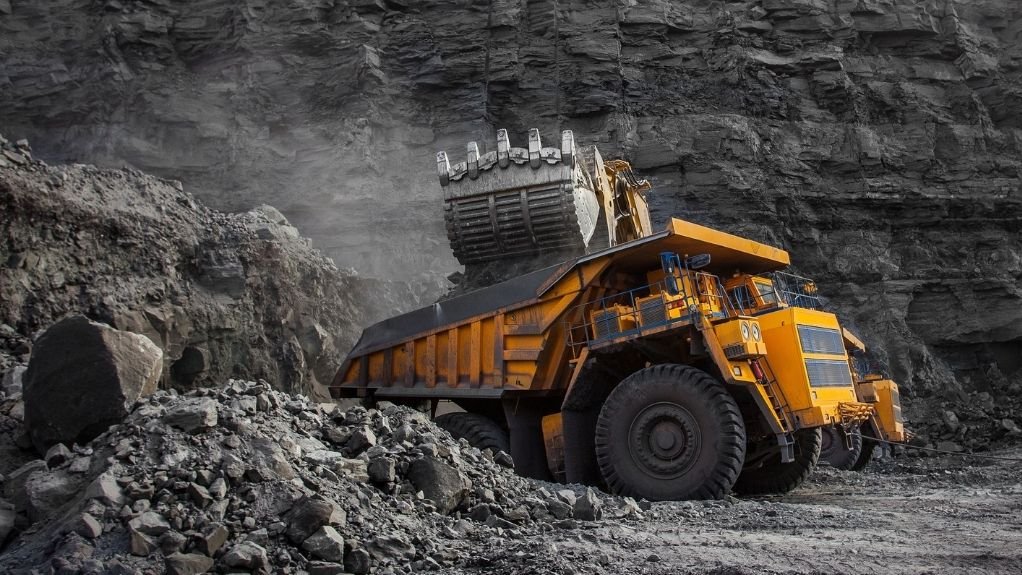
A SHIFT TOWARDS BENEFICIATION Local content and beneficiation requirements are becoming one of the most visible expressions of resource nationalism across East Africa


The mining industry in Central and East Africa is bracing for an evolving operating environment driven by a complex interplay of security threats, resource nationalism and shifting global supply chain dynamics, says global strategic intelligence and security firm Control Risks East Africa and the Great Lakes analyst Wambui Nzigo.
Amid governments aiming to increase the benefits derived from their mineral wealth in the region, international mining companies are facing increased scrutiny, regulatory uncertainty and operational risks.
Apart from exceptional situations precluding international mining companies from accessing their sites, most companies continue to invest and operate in high-risk security environments, Nzigo adds.
These mining companies are likely to implement security risk mitigation measures at mining sites, including community engagement and grievance management, layered with security systems, which sometimes involves partnering with governments to deploy security forces where needed.
The security threats faced by mining operations vary by country and even by region in-country, Nzigo elaborates.
For example, in the Democratic Republic of Congo (DRC), the eastern part of the country faces security threats related to an active armed conflict between the Congolese military and affiliated rebels, as well as the M23 rebel group. The activities of militant Islamist group the Allied Democratic Forces are also considered a risk, she says.
There are similar armed conflicts and insurgency risks in Ethiopia, Sudan, the Central African Republic, South Sudan and Mozambique.
She notes that, in the southern part of the DRC, where most industrial mines are located, the main security risk is illegal and artisanal miners intruding on concessions and escalating confrontation between legitamate miners, company security, public security forces and nearby communities.
“Similar threats are posed by artisanal miners in Zimbabwe,” she adds.
Resource Nationalism
Nzigo notes a broad trend towards resource nationalism in various African jurisdictions, including Central and East Africa, with a notable example being Tanzania, where several pieces of legislation were enacted in 2017.
The regulations enabled the government to renegotiate mining agreements, and required mining companies to secure financial services through Tanzanian institutions only. The legislation also included restrictions on using foreign arbitration, increased Tanzanian ownership of mining companies that are granted concessions in the country and increased free carry interest and royalties for government in mining companies.
“Significant emphasis was also placed on [the] in-country processing of minerals. The changes elicited cautious investments . . . in the mining sector and more broadly.”
She further notes that although many of the provisions have been subject to clarifications and minor amendments, key parts of the nationalist laws remain unchanged and are unlikely to be changed as they remain politically popular in Tanzania.
Local-content and beneficiation requirements are also becoming one of the most visible expressions of resource nationalism across the region, driven by domestic political pressures, industrial policy ambitions and rising global demand for processed critical minerals, she adds.
Nonetheless, Central and East Africa remain central to critical minerals supply chains, owing to vast mineral reserves.
In this regard, Nzigo highlights that the DRC accounts for more than 70% of the world’s cobalt exports, while Tanzania, Madagascar and Mozambique collectively produce more than 20% of the world’s graphite. The Central African Copperbelt – comprising Zambia and the DRC – also contains some of the world’s highest-grade copper. The Central and East African regions also contain significant quantities of nickel, lithium, tin, tantalum and tungsten.
However, countries in the region face challenges such as corruption, bureaucracy, political interference and regulatory uncertainty, she says.
Operational constraints – such as infrastructure gaps, particularly power supply, transport and logistics links – also abound, and sustained investment and political will are necessary to overcome these obstacles if the region is to reap the benefits of the vast critical mineral endowments.
Tightening the Grip on Strategic Minerals
Several trends are likely to shape the mining sector in Central and East Africa, with governments increasingly designating a broader range of minerals as strategic, consequently subjecting them to higher royalties, tighter export controls and expanded State participation.
Nzigo adds that the DRC announced the addition of lithium, tantalum, niobium, tungsten and uranium, as well as rare earth elements, to its list of strategic minerals in May 2026, while in Zimbabwe, a Mineral Classification and Declaration Framework designates 14 minerals as critical minerals.
“This status makes the minerals subject to strict dual controls over export permissions, domestic shareholding and mandatory State equity participation.”
Similar strategic mineral regimes are in force in Kenya, Tanzania, Uganda, Malawi and Angola.
Over the next three to five years, Nzigo says more countries in the region will expand their strategic minerals lists, impose export quotas and increase royalties on minerals considered essential to the energy transition.
“Over the next three to five years, mining companies operating across East and Central Africa should expect stricter local-content compliance regimes and requirements to demonstrate credible progress on domestic processing,” concludes Nzigo.
Article Enquiry
Email Article
Save Article
Feedback
To advertise email advertising@creamermedia.co.za or click here
Research Reports
Projects
Latest Multimedia
Latest News
Showroom
Roytec Global is an international company specializing in liquid / solid and mineral separation technologies for the Mining and Industrial sectors.
VISIT SHOWROOM
Rittal is a world leading provider of top-quality integrated systems for enclosures, power distribution, climate control, IT infrastructure and...
VISIT SHOWROOM

Announcements
What's On
Subscribe to improve your user experience...
Option 1 (equivalent of R125 a month):
Receive a weekly copy of Creamer Media's Engineering News & Mining Weekly magazine
(print copy for those in South Africa and e-magazine for those outside of South Africa)
Receive daily email newsletters
Access to full search results
Access archive of magazine back copies
Access to Projects in Progress
Access to ONE Research Report of your choice in PDF format
Option 2 (equivalent of R375 a month):
All benefits from Option 1
PLUS
Access to Creamer Media's Research Channel Africa for ALL Research Reports, in PDF format, on various industrial and mining sectors
including Electricity; Water; Energy Transition; Hydrogen; Roads, Rail and Ports; Coal; Gold; Platinum; Battery Metals; etc.
Already a subscriber?
Forgotten your password?
Receive weekly copy of Creamer Media's Engineering News & Mining Weekly magazine (print copy for those in South Africa and e-magazine for those outside of South Africa)
➕
Recieve daily email newsletters
➕
Access to full search results
➕
Access archive of magazine back copies
➕
Access to Projects in Progress
➕
Access to ONE Research Report of your choice in PDF format
RESEARCH CHANNEL AFRICA
R4500 (equivalent of R375 a month)
SUBSCRIBEAll benefits from Option 1
➕
Access to Creamer Media's Research Channel Africa for ALL Research Reports on various industrial and mining sectors, in PDF format, including on:
Electricity
➕
Water
➕
Energy Transition
➕
Hydrogen
➕
Roads, Rail and Ports
➕
Coal
➕
Gold
➕
Platinum
➕
Battery Metals
➕
etc.
Receive all benefits from Option 1 or Option 2 delivered to numerous people at your company
➕
Multiple User names and Passwords for simultaneous log-ins
➕
Intranet integration access to all in your organisation