Aluminium supply shock revives long-idled Western smelters, Reuters says



LONDON - The supply shock caused by the Iran war is sparking old Western aluminium smelters back into life.
In the US, Magnitude 7 Metals is reactivating the New Madrid smelter in Missouri.
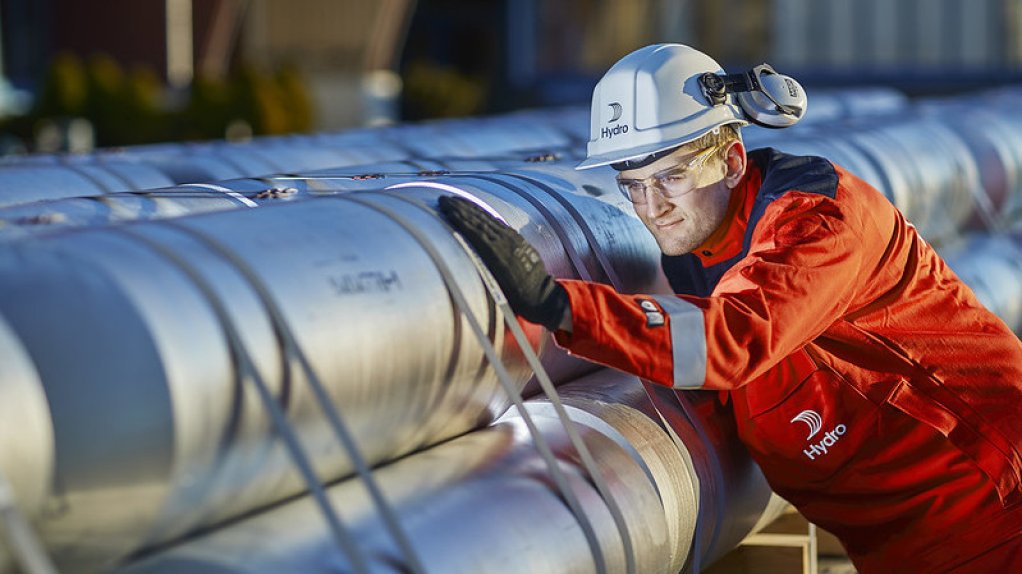
Across the Atlantic, Norwegian producer Hydro has announced the partial restart of the Slovalco joint venture smelter in Slovakia.
Both plants have been fully idled for several years, victims of low aluminium prices and the energy price spike that followed Russia's invasion of Ukraine in 2022.
The restarts are laden with political significance for Washington and Brussels, both equally desperate to reduce import dependency on a metal that is ubiquitous across a diverse range of industrial sectors.
Neither will move the global dial much, but the return of these zombie smelters shows how much has changed in the aluminium market since Middle East hostilities broke out in February.
BACK FROM THE DEAD (AGAIN)
New Madrid, with yearly production capacity of 263 000 tons, began operations in 1971, originally under the ownership of Canada's Noranda.
Idled in 2016, it was reactivated by privately owned Magnitude 7 Metals in 2018 and closed again with little warning in early 2024. The smelter had the dubious distinction of being the worst-polluting plant in the country in 2019.
The plan is to restart one 75 000 t/y potline by the end of the year, with the possibility of operations ramping up further in 2027.
The resuscitation of New Madrid has undoubtedly been helped by US President Donald Trump's doubling of import tariffs to 50% last year.
The resulting premium for US delivery has ballooned to $2 375 a ton over the London Metal Exchange (LME) basis price.
But equally significant to New Madrid's revival is the rise in the LME basis price from $2 200 a ton at the start of 2024 to $3 165 today, even after the recent and possibly premature unwind of the war premium.
SLOVAK REVIVAL
The Slovalco plant, owned 55.3% by Hydro and 44.7% by Central Europe-focused Penta Investments Group, is also planning to restart 75 000 tons of capacity.
The decision is predicated on a new power supply deal with state-owned hydropower utility Vodohospodarska Vystavba and a compensation scheme for indirect carbon costs under the EU Emissions Trading System (ETS).
The latter is still subject to approval by the European Commission.
Europe has lost around half of its primary aluminium smelting capacity since 2022, which makes the restart a significant win for both Slovakia and Europe.
However, high power costs, now combined with the European Union's emissions regulations, still make for a highly challenging operating environment for power-hungry aluminium smelters.
Hydro noted that a restart of the remaining 100 000 tons of capacity at Slovalco "will depend on ETS framework conditions beyond 2030 combined with additional power contracts."
WINDOW OF OPPORTUNITY
The war in Iran has caused Gulf aluminium production to slump by an annualised two-million tons, reflecting both direct missile hits on two plants and logistics constraints on others.
With Chinese production running up against the government's 45-million tons a year capacity cap, a market characterised by years of oversupply has swung alarmingly fast into deficit.
LME stocks have been tapped to fill the resulting supply-chain gaps, with total inventory, including off-warrant metal, now below 400 000 tons.
The war has accentuated existing import dependencies in both the US and Europe, opening a window of opportunity for idled capacity to fire back up.
How long this window stays open is a moot point.
Other parts of the global supply chain are also reacting.
China has been lifting exports of semi-manufactured products such as bar, rods and foil to capitalise on the West's shortage of metal. Product exports fell by 9.4% last year relative to 2024 but grew by 10% in the first five months of this year. May's tally of 595 000 tons was the highest monthly count since November 2024.
Chinese players are also pouring money into constructing new smelting capacity in Indonesia.
One new project, Juwan with a capacity of 270 000 t/y, reached full capacity in January, according to Macquarie Bank.
Another, the 500 000 t/y Adaro joint venture, made its first export shipments last month, according to Export Genius, a trade data platform.
Adaro aims to grow capacity to 1.5 million tons a year, part of a broader national production surge that could see over ten-million tons of new yearly capacity ramp up over the coming years.
This puts the 150 000 t/y combined restarts at New Madrid and Slovakia in context, whatever their political significance.
Much now depends on what happens next in the Middle East.
The LME aluminium price has sold off aggressively on signs of de-escalation and hopes of normalisation at the affected Gulf smelters.
That's starting to look optimistic given the renewed US bombing campaign and Iranian retaliation.
The window of opportunity for more restarts remains open for now.
Article Enquiry
Email Article
Save Article
Feedback
To advertise email advertising@creamermedia.co.za or click here

Projects
Latest Multimedia
Latest News
Showroom

SABAT Batteries is a renowned brand in the battery industry, manufacturing a wide range of batteries at its state-of-the-art production facility in...
VISIT SHOWROOM
Columbus Stainless, based in Middelburg, Mpumalanga, is Africa’s only producer of stainless steel flat products. In addition, Columbus is the only...
VISIT SHOWROOM
Press Office
Announcements
What's On
Subscribe to improve your user experience...
Option 1 (equivalent of R125 a month):
Receive a weekly copy of Creamer Media's Engineering News & Mining Weekly magazine
(print copy for those in South Africa and e-magazine for those outside of South Africa)
Receive daily email newsletters
Access to full search results
Access archive of magazine back copies
Access to Projects in Progress
Access to ONE Research Report of your choice in PDF format
Option 2 (equivalent of R375 a month):
All benefits from Option 1
PLUS
Access to Creamer Media's Research Channel Africa for ALL Research Reports, in PDF format, on various industrial and mining sectors
including Electricity; Water; Energy Transition; Hydrogen; Roads, Rail and Ports; Coal; Gold; Platinum; Battery Metals; etc.
Already a subscriber?
Forgotten your password?
Receive weekly copy of Creamer Media's Engineering News & Mining Weekly magazine (print copy for those in South Africa and e-magazine for those outside of South Africa)
➕
Recieve daily email newsletters
➕
Access to full search results
➕
Access archive of magazine back copies
➕
Access to Projects in Progress
➕
Access to ONE Research Report of your choice in PDF format
RESEARCH CHANNEL AFRICA
R4500 (equivalent of R375 a month)
SUBSCRIBEAll benefits from Option 1
➕
Access to Creamer Media's Research Channel Africa for ALL Research Reports on various industrial and mining sectors, in PDF format, including on:
Electricity
➕
Water
➕
Energy Transition
➕
Hydrogen
➕
Roads, Rail and Ports
➕
Coal
➕
Gold
➕
Platinum
➕
Battery Metals
➕
etc.
Receive all benefits from Option 1 or Option 2 delivered to numerous people at your company
➕
Multiple User names and Passwords for simultaneous log-ins
➕
Intranet integration access to all in your organisation