African mining sustainability gaining traction


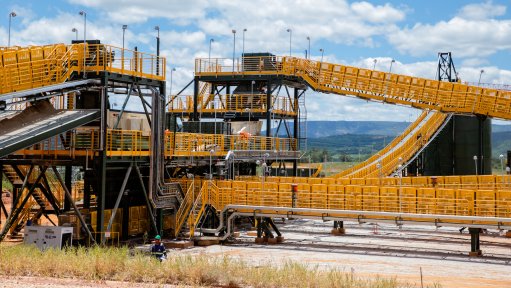
SHINING LIGHT Gold major Newmont’s Ahafo North project in Ghana has made great strides in improving gender parity as well as training and workforce development programmes



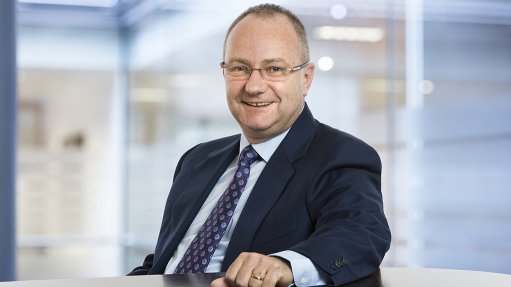
Despite some impressive sustainability gains in the mining sector over the past decade, sustainable mining industry body ICMM CEO Rohitesh Dhawan says progress in Africa displays inconsistencies across various countries based on many different factors.
He highlights two areas as particularly noteworthy in terms of how countries are progressing toward more sustainable mining practices: safety and risk management, and transparency.
With safety and risk management, Dhawan highlights implications around tailings storage facilities (TSFs), adding that the single biggest structural improvement of the decade is in tailings safety.
Subsequent to the launch of the Global Industry Standard on Tailings Management (GISTM) in 2020, every ICMM member has committed to bringing their highest-consequence TSFs into conformance, including some of the biggest tailings footprints on the continent – in South Africa, Ghana, the Democratic Republic of Congo and Zambia.
The ICMM’s latest tailings progress report, published in November 2025, shows that across 115 member facilities in Africa, 62% are now in full conformance with the GISTM, while the remainder are in partial conformance.
“We’ve been candid that full alignment is taking longer than originally anticipated, but the improvements in engineering, governance and disclosure are significant.”
As for transparency, Dhawan says mining companies are currently disclosing far more information on safety performance, tax contributions, contracts and sustainability performance than was common a decade ago.
Importantly, he says ICMM members have helped drive that change, which is seen as an essential foundation for accountability and trust.
In terms of the impact a country’s leadership can have on any advanced transition to sustainable mining, Dhawan says that two countries in particular stand out for different reasons.
South Africa has driven a significant improvement in mine safety, he says, adding that Minerals Council South Africa reported the country’s lowest-ever fatality figures in 2024 and 2025.
In addition, Dhawan points out that Botswana has shown for decades that mineral wealth can fund development, spotlighting the recently renegotiated agreement between diamond major De Beers and the Government of Botswana to raise the State’s share of diamond sales and create a Diamonds for Development Fund. He says this is a positive model the whole of Africa’s mining sector can learn from.
At the Forefront
In advocating for the mining industry to improve its sustainability endeavours, Dhawan says he is most interested in companies that integrate sustainability into operations from the start.
In this regard, he singles out gold major Newmont’s Ahafo North project in Ghana as having demonstrated exemplary investment into improving gender parity in its workforce from the outset and supporting that goal with training and workforce development programmes.
“Such concrete, site-level commitments matter because they show what responsible mining can look like in practice,” he explains.
Importantly, Dhawan says standards exist to make good practices commonplace rather than the exception, which is the goal of the ongoing consolidation of industry standards.
The implementation of ICMM’s Mining Principles – which define good practice, and environmental, social and governance requirements for the mining and metals industry – have changed operational practices at mines in Africa in three “concrete ways”, says Dhawan, explaining that they primarily serve to shift accountability closer to the mine site itself as a result of assessments being carried out at asset level through third-party validation.
This means responsibility lies with the operation rather than a distant corporate office.
Secondly, the Mining Principles have helped members in addressing more rigorous tailings governance, with members disclosing conformance on a facility-by-facility basis which, at many African operations, has led to the establishment of independent engineers of record, clearly identified accountable executives and stronger emergency preparedness planning alongside local communities.
The third way the Mining Principles have helped ICMM members is through growing focus on the critical controls that prevent fatalities and serious incidents.
“Our analysis of fatalities in 2024 found that 83% involved failures in critical controls, which is why we’ve strengthened our guidance in this area,” he states, adding that, given the concentration of underground mining in Africa, this is particularly relevant to the continent.
However, implementation depth, says Dhawan, still varies between operations, which is why independent assurance and verification remain so important to the ICMM and its members.
Commitments have to translate into better outcomes on the ground, he says, adding that this is the direction ICMM is moving in with the Consolidated Mining Standard Initiative, which could see similar developments in the standards landscape more generally.
While there is a lot of “chatter” around expanding in-continent minerals beneficiation, Dhawan says the foundation should be responsible production, and only after this has been established and solidified, can beneficiation endeavours take off.
Article Enquiry
Email Article
Save Article
Feedback
To advertise email advertising@creamermedia.co.za or click here

Projects
Latest Multimedia

Latest News
Showroom

SABAT Batteries is a renowned brand in the battery industry, manufacturing a wide range of batteries at its state-of-the-art production facility in...
VISIT SHOWROOM
Developed to exceed the latest EN 15964 standards for police breathalysers proving that it will remain accurate and reliable for many years to come.
VISIT SHOWROOM

Press Office
Announcements
What's On
Subscribe to improve your user experience...
Option 1 (equivalent of R125 a month):
Receive a weekly copy of Creamer Media's Engineering News & Mining Weekly magazine
(print copy for those in South Africa and e-magazine for those outside of South Africa)
Receive daily email newsletters
Access to full search results
Access archive of magazine back copies
Access to Projects in Progress
Access to ONE Research Report of your choice in PDF format
Option 2 (equivalent of R375 a month):
All benefits from Option 1
PLUS
Access to Creamer Media's Research Channel Africa for ALL Research Reports, in PDF format, on various industrial and mining sectors
including Electricity; Water; Energy Transition; Hydrogen; Roads, Rail and Ports; Coal; Gold; Platinum; Battery Metals; etc.
Already a subscriber?
Forgotten your password?
Receive weekly copy of Creamer Media's Engineering News & Mining Weekly magazine (print copy for those in South Africa and e-magazine for those outside of South Africa)
➕
Recieve daily email newsletters
➕
Access to full search results
➕
Access archive of magazine back copies
➕
Access to Projects in Progress
➕
Access to ONE Research Report of your choice in PDF format
RESEARCH CHANNEL AFRICA
R4500 (equivalent of R375 a month)
SUBSCRIBEAll benefits from Option 1
➕
Access to Creamer Media's Research Channel Africa for ALL Research Reports on various industrial and mining sectors, in PDF format, including on:
Electricity
➕
Water
➕
Energy Transition
➕
Hydrogen
➕
Roads, Rail and Ports
➕
Coal
➕
Gold
➕
Platinum
➕
Battery Metals
➕
etc.
Receive all benefits from Option 1 or Option 2 delivered to numerous people at your company
➕
Multiple User names and Passwords for simultaneous log-ins
➕
Intranet integration access to all in your organisation