Access to capital: a persistent barrier for South Africa’s young entrepreneurs


This article has been supplied and will be available for a limited time only on this website.
South Africa’s youth unemployment crisis continues to deepen as reflected in Stats SA’s latest Quarterly Labour Force Survey (QLFS). The data shows that 258 000 South Africans under the age of 34 lost their jobs in the first quarter of 2026, underscoring the growing pressure on the country’s labour market.
This brings the total number of unemployed youth to 4,7 million, pushing the youth unemployment rate to a staggering 45,8%. The figures signal the scale and persistence of the challenge, with nearly half of the country’s young people of working age unable to access meaningful economic opportunities.
Within this context, entrepreneurship is increasingly positioned as a viable path for young South Africans seeking income and independence, yet access to funding remains a significant barrier.
This is according to Megan Dedekind, Area Manager at Business Partners Limited, who notes that many young entrepreneurs are struggling to secure formal finance. “The main problem is not a lack of ideas or motivation,” she says. “Instead, most traditional finance systems still only focus on collateral, long trading histories, and credit records – things that most young business owners do not yet have.”
This disconnect between how youth-owned small and medium enterprises (SMEs) operate and how funding decisions are made continues to constrain the growth of otherwise viable businesses. Without the right guidance towards funding readiness coupled with equitable access to appropriate capital, promising youth-led businesses are often unable to start, grow, invest in critical infrastructure and equipment. This ultimately limits their ability to create jobs and build sustainable wealth for themselves.
“As a result, businesses that could be contributing meaningfully to local economies and job creation often remain small or stagnate,” says Dedekind. “In some cases, they fail altogether, not because the concept is flawed, but because the funding model does not accommodate early-stage realities or newer business models.”
She emphasises, however, that access to funding alone is not enough to ensure success. “Funding needs to be paired with practical support, as many first-time entrepreneurs face challenges related to business management, financial planning, and navigating regulatory requirements.
These capabilities such as cash flow management, compliance and operational efficiency, are critical factors to long-term sustainability, yet are often underdeveloped in the early stages of a business.
“Mentorship, training, and ongoing guidance therefore play a critical role in helping young business owners build resilience and make informed decisions as they grow,” she says.
At the same time, Dedekind points out that traditional approaches to assessing risk are becoming increasingly misaligned with the realities of a modern, digital economy. New and innovative businesses often demonstrate potential through alternative indicators, such as customer traction or digital engagement, rather than long-term financial records.
“We need to rethink how we define risk and potential,” she explains. “A business without a lengthy track record is not necessarily a high-risk venture, particularly in sectors where growth can be rapid and data-driven insights are readily available.”
Unlocking youth entrepreneurship at scale will require a shift in how funding institutions approach lending to emerging businesses. This includes moving beyond conservative models that prioritise asset backing towards more inclusive frameworks that recognise future potential.
According to Dedekind, this shift is critical not only for supporting entrepreneurs, but also for stimulating economic growth and addressing South Africa’s persistent unemployment crisis.
She believes SME financiers have an important role to play in closing this gap. “We are all learning and adjusting as financiers. At Business Partners Limited, we have a suite of non-financial initiatives such as the SMEToolkit platform which equips aspiring young entrepreneurs with essential business start-up resources alongside workshops that build the practical skills needed to launch and grow sustainable businesses. From a funding perspective, we take a more tailored approach, combining funding with hands-on support and technical assistance to improve the long-term viability of the businesses we back.
“When entrepreneurs are supported holistically, the likelihood of success – and by extension, job creation – increases significantly,” she concludes.
Article Enquiry
Email Article
Save Article
Feedback
To advertise email advertising@creamermedia.co.za or click here
Research Reports

Projects


Latest Multimedia


Latest News


Showroom

EIMS is an independent specialised environmental consulting firm offering the full spectrum of environmental management services across all sectors...
VISIT SHOWROOM
ZF Aftermarket is the after-sales division of the world-renowned German ZF group, a global leader in mobility technology.
VISIT SHOWROOM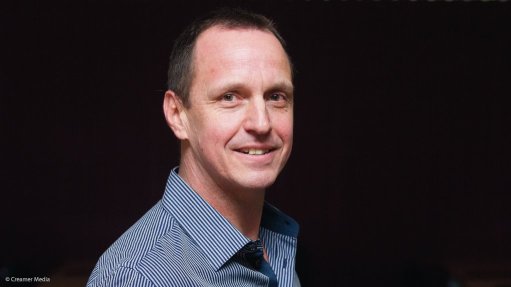



Announcements
What's On
Subscribe to improve your user experience...
Option 1 (equivalent of R125 a month):
Receive a weekly copy of Creamer Media's Engineering News & Mining Weekly magazine
(print copy for those in South Africa and e-magazine for those outside of South Africa)
Receive daily email newsletters
Access to full search results
Access archive of magazine back copies
Access to Projects in Progress
Access to ONE Research Report of your choice in PDF format
Option 2 (equivalent of R375 a month):
All benefits from Option 1
PLUS
Access to Creamer Media's Research Channel Africa for ALL Research Reports, in PDF format, on various industrial and mining sectors
including Electricity; Water; Energy Transition; Hydrogen; Roads, Rail and Ports; Coal; Gold; Platinum; Battery Metals; etc.
Already a subscriber?
Forgotten your password?
Receive weekly copy of Creamer Media's Engineering News & Mining Weekly magazine (print copy for those in South Africa and e-magazine for those outside of South Africa)
➕
Recieve daily email newsletters
➕
Access to full search results
➕
Access archive of magazine back copies
➕
Access to Projects in Progress
➕
Access to ONE Research Report of your choice in PDF format
RESEARCH CHANNEL AFRICA
R4500 (equivalent of R375 a month)
SUBSCRIBEAll benefits from Option 1
➕
Access to Creamer Media's Research Channel Africa for ALL Research Reports on various industrial and mining sectors, in PDF format, including on:
Electricity
➕
Water
➕
Energy Transition
➕
Hydrogen
➕
Roads, Rail and Ports
➕
Coal
➕
Gold
➕
Platinum
➕
Battery Metals
➕
etc.
Receive all benefits from Option 1 or Option 2 delivered to numerous people at your company
➕
Multiple User names and Passwords for simultaneous log-ins
➕
Intranet integration access to all in your organisation