A unified secondary plant approach: Why renewable projects need integrated protection and control

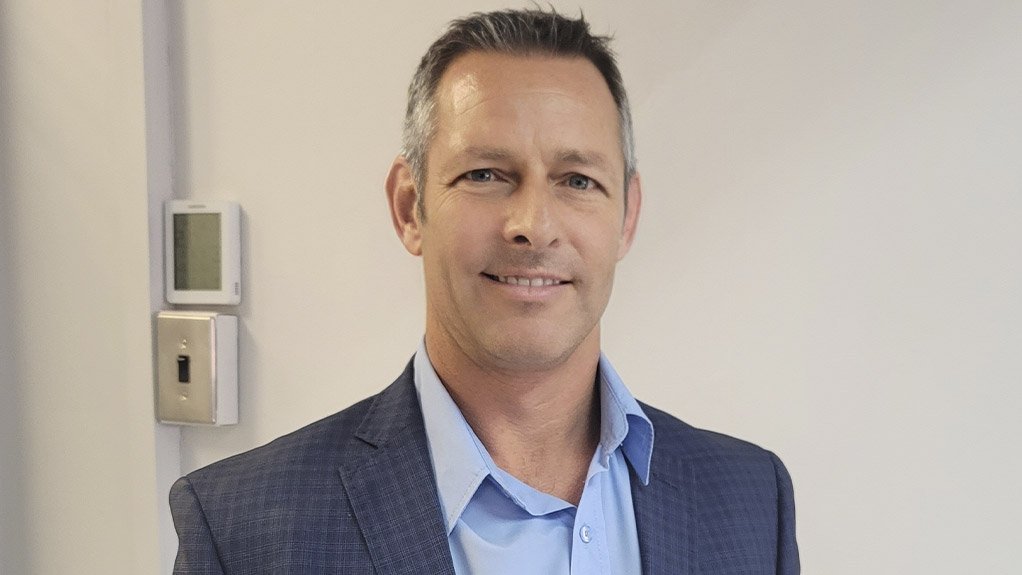



This article has been supplied.
South Africa’s renewable energy sector is expanding at a rapid pace, but the speed of delivery is often slowed by the familiar and avoidable challenge of fragmented secondary plant integration.
When protection systems, Supervisory Control and Data Acquisition (SCADA) development, plant-level automation, and grid code compliance are handled by multiple suppliers, the result is often misaligned designs, conflicting interfaces, and commissioning delays that cost developers both time and money.
According to Herman Mare, General Manager at ACTOM Smart Technologies, as projects become larger and more complex, the industry can no longer afford the inefficiencies created by siloed engineering.
“This is the gap ACTOM Protection & Control’s Secondary Plant Integration (SPI) solution is designed to close. By consolidating all secondary systems under a single accountable partner, the SPI provides a unified, end‑to‑end approach that supports compliance, reduces risk, and accelerates energisation,” explains Mare.
Why multi‑vendor secondary systems cause delays
He notes that the most common cause of delays in renewable projects is the lack of coordination between suppliers responsible for different parts of the primary and secondary systems. Each vendor designs and tests their equipment in isolation, often without full visibility of how their components will interact with others on site. Problems only surface during integrated testing – at the point when delays are most expensive.
“When mismatches arise between plant‑level systems and substation controls, teams must scramble to identify the source of the issue. This leads to finger‑pointing, duplicated troubleshooting and extended periods where the site stands still. Every day lost increases accommodation costs, travel costs and contractor fees, while pushing out the project’s commercial operation date,” says Mare.
A single, integrated framework for secondary systems
ACTOM’s SPI solution eliminates these inefficiencies by bringing primary and secondary plant functions into one coordinated architecture. Instead of managing protection relays, SCADA, plant data acquisition, communication interfaces and Eskom integration separately, the SPI solution aligns them within a single engineering framework.
This integrated approach ensures that:
- Protection schemes and logic are designed to work seamlessly with plant‑level systems
- SCADA and automation functions are aligned with substation requirements
- Communication channels are configured to support both plant and grid‑code needs
- All components are tested together before reaching the site
“By engineering the entire system under one roof, the solution removes the mismatches that typically emerge when multiple vendors work independently,” Mare points out.
Minimising risk through integrated design and testing
One of the strongest advantages of SPI is the ability to conduct a full, integrated Factory Acceptance Test (FAT) before equipment is dispatched. Instead of testing components in isolation, ACTOM validates the entire system (including switchgear, protection, SCADA, communication and plant interfaces) as a complete, functioning whole.
“This approach ensures that system logic is correct, communication paths are stable, plant signals map accurately into the SCADA system, and that Eskom‑required data points are fully compliant,” says Mare.
“Solving issues in the factory is significantly faster and more cost‑effective than resolving them on site. By the time the equipment arrives at the project, the system has already been proven, reducing commissioning risk and shortening the path to energisation.”
Grid‑code compliance is one of the most critical and most misunderstood elements of renewable project delivery, says Mare, adding that misalignment with Eskom requirements can lead to failed audits, repeat testing and costly delays in grid connection.
“SPI addresses this challenge by embedding Eskom logic, communication protocols and compliance requirements into the design from day one. This proactive approach prevents last‑minute redesigns and ensures a smoother approval process,” he says.
The value of a single accountable partner
For developers and EPCs, the benefits of having one integration partner are substantial. A single point of accountability means there is no ambiguity about responsibility, enabling faster decision‑making, streamlined communication, reduced engineering duplication and fewer disputes during commissioning.
“With SPI, all engineering, testing, and site services are delivered by one team that understands the full system. This creates a more predictable project environment and reduces the risk of unexpected delays,” says Mare.
“Renewable energy projects demand precision, coordination and compliance. Fragmented commissioned systems undermine all three. ACTOM’s SPI provides a unified, proven approach that aligns engineering, reduces risk, and accelerates delivery from design through to energisation.”
As South Africa continues to scale its renewable capacity, integrated solutions like SPI will be essential to keeping projects on track and ensuring reliable grid connection.
Article Enquiry
Email Article
Save Article
Feedback
To advertise email advertising@creamermedia.co.za or click here
Research Reports

Projects


Latest Multimedia


Latest News


Showroom
For over 30 years, Werner South Africa Pumps & Equipment (PTY) LTD has been designing, manufacturing, supplying and maintaining specialist...
VISIT SHOWROOM



Announcements
What's On
Subscribe to improve your user experience...
Option 1 (equivalent of R125 a month):
Receive a weekly copy of Creamer Media's Engineering News & Mining Weekly magazine
(print copy for those in South Africa and e-magazine for those outside of South Africa)
Receive daily email newsletters
Access to full search results
Access archive of magazine back copies
Access to Projects in Progress
Access to ONE Research Report of your choice in PDF format
Option 2 (equivalent of R375 a month):
All benefits from Option 1
PLUS
Access to Creamer Media's Research Channel Africa for ALL Research Reports, in PDF format, on various industrial and mining sectors
including Electricity; Water; Energy Transition; Hydrogen; Roads, Rail and Ports; Coal; Gold; Platinum; Battery Metals; etc.
Already a subscriber?
Forgotten your password?
Receive weekly copy of Creamer Media's Engineering News & Mining Weekly magazine (print copy for those in South Africa and e-magazine for those outside of South Africa)
➕
Recieve daily email newsletters
➕
Access to full search results
➕
Access archive of magazine back copies
➕
Access to Projects in Progress
➕
Access to ONE Research Report of your choice in PDF format
RESEARCH CHANNEL AFRICA
R4500 (equivalent of R375 a month)
SUBSCRIBEAll benefits from Option 1
➕
Access to Creamer Media's Research Channel Africa for ALL Research Reports on various industrial and mining sectors, in PDF format, including on:
Electricity
➕
Water
➕
Energy Transition
➕
Hydrogen
➕
Roads, Rail and Ports
➕
Coal
➕
Gold
➕
Platinum
➕
Battery Metals
➕
etc.
Receive all benefits from Option 1 or Option 2 delivered to numerous people at your company
➕
Multiple User names and Passwords for simultaneous log-ins
➕
Intranet integration access to all in your organisation