2026 Junior Indaba: ‘South Africa cannot build tomorrow's mines with yesterday’s systems’


This article has been supplied.
By Fred Arendse, President of Junior Mining Council
The central question posed during a panel discussion at the 2026 Junior Indaba was both simple and significant: How do we create an enabling environment that supports junior mining in South Africa?
This is precisely the issue I addressed alongside fellow panellists Jacob Mbele, Director-General of the Department of Mineral and Petroleum Resources (DMPR); Mosa Mabuza, CEO of the Council for Geoscience; and Mzila Mthenjane, CEO of the Minerals Council South Africa. The discussion, chaired by Billy Mawasha, CEO of Bokamoso Gold, formed part of the two-day Junior Indaba currently taking place at the Country Club Johannesburg in Auckland Park.
My view is straightforward. We must stop treating junior miners as scaled-down versions of major mining companies and start recognising them for what they truly are: explorers, innovators and risk-takers responsible for discovering the mines of tomorrow.
South Africa's mining industry remains a cornerstone of our economy and a critical driver of investment, employment and economic growth. Yet while we continue to celebrate our vast mineral endowment, we are failing to create the conditions necessary to unlock new discoveries and develop the next generation of mining projects.
The reality is that junior mining companies operate in a vastly different environment from established mining houses. Their business is exploration. They invest significant capital into finding mineral deposits that may never become mines. The odds are daunting. Globally, only a fraction of exploration projects ultimately progress to production. Yet it is these companies that shoulder the highest levels of risk and make the discoveries that keep the mining industry alive.
Unlike major mining companies, junior miners cannot rely on strong balance sheets or traditional bank funding. Access to finance remains one of the biggest obstacles facing the sector. Juniors depend largely on venture capital and private investment. Investors, however, are highly selective. They seek jurisdictions where the rules are clear, permitting processes are efficient and regulatory risks are manageable.
Unfortunately, South Africa is struggling to compete on all three fronts.
The Junior Mining Council (JMC) has consistently argued that creating an enabling environment is not about asking for special treatment. It is about implementing practical reforms that have already proven successful in leading mining jurisdictions such as Canada and Australia.
The first and perhaps most urgent requirement is a fully functional digital cadastral system. Investors need certainty regarding mineral rights ownership and land availability. A modern digital cadastre allows applicants to see in real time which areas are available, who holds existing rights and where applications stand within the system. It creates transparency, reduces disputes and limits administrative discretion.
The long-awaited roll-out of South Africa's cadastral system is therefore a welcome development. However, its success will ultimately be measured by whether it restores investor confidence and significantly reduces licensing bottlenecks.
Secondly, South Africa needs to address the chronic shortage of exploration funding. While countries such as Canada have successfully used Flow-Through Share schemes to attract billions in exploration investment, South Africa has no comparable incentive mechanism. As a result, exploration expenditure continues to lag behind global competitors.
Recognising this gap, the JMC has taken proactive steps by establishing an early-stage development fund aimed at providing capital directly to promising junior mining projects. While this initiative is important, it cannot replace the need for broader policy reforms that encourage private sector investment into exploration.
Thirdly, we must dramatically improve permitting timelines. In competing jurisdictions such as Australia, exploration permits can often be processed within 60 to 90 days. In South Africa, approvals frequently take between 12 and 18 months, and sometimes even longer. Such delays create uncertainty, increase project costs and discourage much-needed investment.
The fourth issue relates to empowerment and transformation. Transformation remains a critical objective for South Africa's mining sector and the JMC fully supports meaningful economic participation. However, exploration projects and producing mines are fundamentally different.
Applying the same ownership, compliance and reporting requirements to early-stage exploration companies as those imposed on operating mines often produces the opposite of the intended outcome. Exploration ventures are already high-risk investments. Additional regulatory burdens at this stage can make projects uninvestable and drive capital elsewhere.
If South Africa wishes to compete for scarce exploration capital, regulatory certainty must become non-negotiable.
The fifth pillar involves the formalisation of artisanal and small-scale mining activities. Illegal mining continues to present serious social, economic and security challenges.
Yet enforcement alone will not solve the problem.
Creating legal pathways for small-scale miners through appropriately sized permits and formal market access can transform a challenge into an opportunity. By bringing these activities into the formal economy, government can improve compliance, create jobs and generate economic activity in mining communities.
Beyond these five pillars, there is a broader shift in thinking that must take place.
Government and industry must stop regulating junior miners as though they are already producing mines. Excessive compliance requirements, lengthy approval processes and administrative burdens that may be manageable for large corporations can be fatal for small exploration companies.
Similarly, larger mining companies should view juniors not as competitors but as partners in discovery. The future of South African mining depends on a healthy pipeline of new projects. Without exploration, there can be no new mines. Without new mines, there can be no sustainable growth in the sector.
The JMC is committed to being part of the solution. We have made formal submissions to government on all five pillars of reform. We continue to engage regulators and policymakers. We have submitted comments to the National Energy Regulator of South Africa (NERSA) to improve access to renewable energy for junior miners. We monitor licensing performance and advocate for accountability where necessary.
Most importantly, we are not waiting for change to happen. We are actively working to create it. The choice before us is clear. We can continue to rely on systems designed for a different era and watch investment flow elsewhere. Or we can build an enabling environment that attracts capital, encourages exploration and unlocks the discoveries that will power the next generation of South African mining.
If we want new mines tomorrow, we must make it easier for junior miners to discover them today.
Article Enquiry
Email Article
Save Article
Feedback
To advertise email advertising@creamermedia.co.za or click here
Projects
Latest Multimedia
Latest News
Showroom
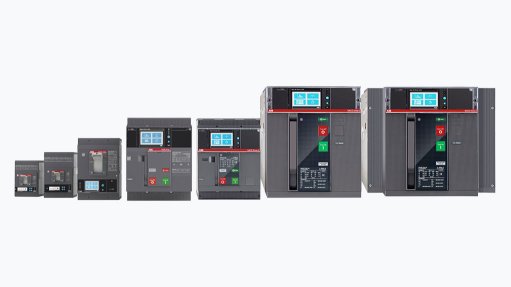
Electrifying the world in a safe, smart, and sustainable way, ABB Electrification is a global technology leader in electrical distribution and...
VISIT SHOWROOM
Your global lifecycle technology & service partner for materials & minerals processing equipment for coal, iron ore, copper, manganese & other...
VISIT SHOWROOM

Announcements
What's On
Subscribe to improve your user experience...
Option 1 (equivalent of R125 a month):
Receive a weekly copy of Creamer Media's Engineering News & Mining Weekly magazine
(print copy for those in South Africa and e-magazine for those outside of South Africa)
Receive daily email newsletters
Access to full search results
Access archive of magazine back copies
Access to Projects in Progress
Access to ONE Research Report of your choice in PDF format
Option 2 (equivalent of R375 a month):
All benefits from Option 1
PLUS
Access to Creamer Media's Research Channel Africa for ALL Research Reports, in PDF format, on various industrial and mining sectors
including Electricity; Water; Energy Transition; Hydrogen; Roads, Rail and Ports; Coal; Gold; Platinum; Battery Metals; etc.
Already a subscriber?
Forgotten your password?
Receive weekly copy of Creamer Media's Engineering News & Mining Weekly magazine (print copy for those in South Africa and e-magazine for those outside of South Africa)
➕
Recieve daily email newsletters
➕
Access to full search results
➕
Access archive of magazine back copies
➕
Access to Projects in Progress
➕
Access to ONE Research Report of your choice in PDF format
RESEARCH CHANNEL AFRICA
R4500 (equivalent of R375 a month)
SUBSCRIBEAll benefits from Option 1
➕
Access to Creamer Media's Research Channel Africa for ALL Research Reports on various industrial and mining sectors, in PDF format, including on:
Electricity
➕
Water
➕
Energy Transition
➕
Hydrogen
➕
Roads, Rail and Ports
➕
Coal
➕
Gold
➕
Platinum
➕
Battery Metals
➕
etc.
Receive all benefits from Option 1 or Option 2 delivered to numerous people at your company
➕
Multiple User names and Passwords for simultaneous log-ins
➕
Intranet integration access to all in your organisation