GOLD 1567.39 $/ozChange: 23.74
PLATINUM 1426.50 $/ozChange: 11.50
R/$ exchange 8.37Change: -0.03
R/€ exchange 10.52Change: 0.05
 
We have detected that the browser you are using is no longer supported. As a result, some content may not display correctly.
We suggest that you upgrade to the latest version of any of the following browsers:
         
close notification
powered by
Advanced Search


Home
 
Magazine
 
Weekly Features
 
 
PLATINUM GROUP METALS
Global palladium supply shock?
 
21st January 2011
TEXT SIZE
Text Smaller Disabled Text Bigger
 

A global palladium sup- ply shock, and accom- panying high prices, will be inevitable should the Russian State hamper or stop supply, says stockbroking firm BP Bernstein stockbroker Menelaos Hatziandreou.

Media reports in November highlighted a Johnson Matthey report reference to the outlook for Russian State stock sales in 2011 as “unclear”, but added that, if sales should peter out, this could cause supply to lag far behind demand. Further, Russian stock sales, traditionally important for palladium supply, were reportedly “dwindling”.

There is a supply deficit for palladium in South Africa, whereas the Russian State’s sales make up the difference between supply and demand, says Hatziandreou.

Meanwhile, platinum-group metals (PGMs) supply has stagnated in South Africa owing to the closure of uneconomical shafts, safety stoppages and strikes, he explains.

However, the firm reports that there are many junior miners that will come into operation in the next three to five years, and mines in Zimbabwe could come into full production, which could affect the presently stagnant supply.

Further, platinum markets have slowly stabilised, despite the significant increase in the commodity price. He says that this is due to the increase in production of vehicles requiring auto-catalysts, the electronic sector picking up and the improvement in jewellery demand since the recession. However, platinum shares have not followed this trend, which he attributes to the effects of the strong rand.

Regarding other PGMs, ruthenium and iridium are performing well as global economies recover and consumer spend increases in the electronics sector. Ruthenium demand has increased owing to its increased use in China’s chloride-alkali industry, as well as in hard disks in the electrical sector.

Iridium demand increased from 87 000 oz in 2009, to 204 000 oz in 2010, which Hatziandreou attributes to its use in the production of light-emitting globes, as well as in China’s chloride-alkali industry.

Meanwhile, the firm reports that the current top five performers in the PGMs market for 2010 are JSE-listed platinum-mining aspirant Village Main Reef, which is up 88,52%, TSX-, Aim- and JSE-listed platinum-miner Eastern Platinum, which is up 65,91%, PGMs producer, Anooraq Resources, which is up 43,2%, the world’s second-largest platinum producer, Impala Platinum, which is up 8,87%, and JSE-listed Northam Platinum, which is up 3,06%.

Exchange-Traded Funds
Investment demand, amount-ing to about 440 000 oz judging by the listing of platinum and palladium exchange-traded funds (ETFs) in North America, has resulted in the price not always reflecting demand and supply fundamentals, he says. Platinum and palladium ETFs have been driven by investment and increased buying, owing to concerns about the weakness in the dollar, a hedge against inflation, a recovery in the auto industry and supply concerns over Russian sales of palladium.

The outperformance of palladium ETFs over platnum shows that the driving force is a supply issue, rather than one of demand, and that palladium will benefit more from the strong vehicle sales in China owing to its preference for petrol-driven vehicles, which require palladium autocatalysts, says Hatziandreou. As such, palladium demand will also be affected by China’s economic and industrial growth.

BP Bernstein states that, as recessionary and inflationary fears increase, investors are shifting their portfolios increasingly into commodity ETFs, such as platinum. Therefore, the firm concurs with Johnson Matthey’s ‘Platinum 2010 Interim Review’, released in November, which reports that the recent performance of platinum suggests that its price is being steered by speculative futures positions, ETF holdings and external influences, such as the dollar and the gold price, rather than supply/demand fundamentals.

PGMs Forecasts
Johnson Matthey forecasts that platinum will trade between $1 550/oz and $1 900/oz and will average $1 750/oz from December 2010 to mid-2011. It reports that the price of palladium will average $710/oz in the next four months, trading as high as $850/oz in the period, with the price unlikely to fall below $550/oz. BP Bernstein concurs with this forecast, as platinum would have a small surplus of about 245 000 oz, while palladium has a surplus of only 45 000 oz, says Hatziandreou. He predicts that, as the economy recovers, demand from the jewellery and auto-catalysts sectors will forge ahead.

In South Africa, inter-national volatility, domestic uncertainties about the local mining charter, the rand strength and wage hikes are just some of the factors that have affected the profits of companies and added to the production costs that have reduced South Africa’s competitiveness in the international market, he says.

The biggest challenges to the local PGMs market, in 2011, will be sovereign debt concerns leading to tighter credit control and national austerity, which could result in slow economic growth and, therefore, have an effect on the automobile and electronic industry, he concludes.

Edited by: Brindaveni Naidoo

To subscribe to Mining Weekly's print magazine email subscriptions@creamermedia.co.za or buy now.

Subscribe Now Login


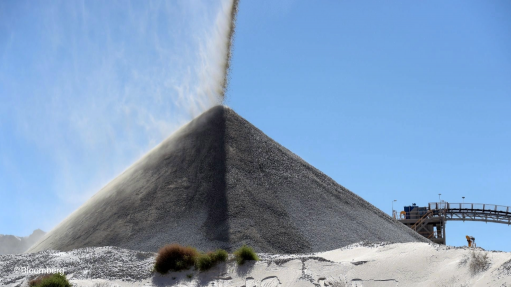
LOCAL SHORTFALL(Source: Bloomberg)Palladium is being mined at a deficit in South Africa, unlike that of the Russian State's sales that make up the difference between supply and demand
 
Picture by: Bloomberg
LOCAL SHORTFALL(Source: Bloomberg)Palladium is being mined at a deficit in South Africa, unlike that of the Russian State's sales that make up the difference between supply and demand
 
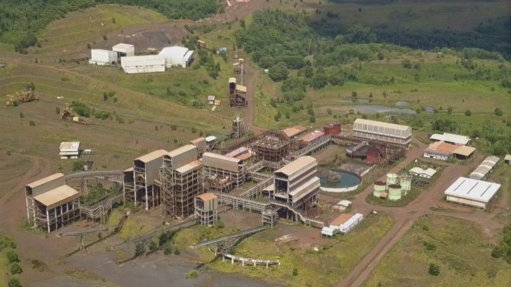
GAINING STRENGTH(Source: Wikimedia)Iridium use has increased, particularly in the production of light emitting globes, as well as in the chloride-alkali industry in China
 
Picture by: Wikimedia
GAINING STRENGTH(Source: Wikimedia)Iridium use has increased, particularly in the production of light emitting globes, as well as in the chloride-alkali industry in China
 
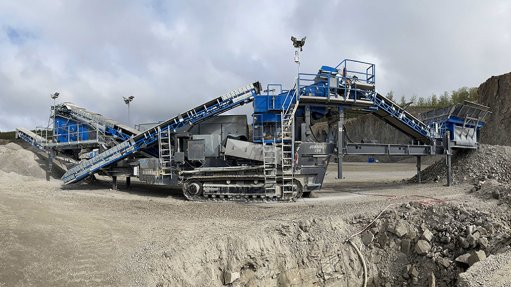
INDISTINCT REFLECTION(Source: Bloomberg)Investment demand by the listing of platinum and palladium ETFs in North America has resulted in the price not always reflecting demand and supply fundamentals
 
Picture by: Bloomberg
INDISTINCT REFLECTION(Source: Bloomberg)Investment demand by the listing of platinum and palladium ETFs in North America has resulted in the price not always reflecting demand and supply fundamentals
 
 
Previous Play Next
 
Pullout Quote
Platinum markets have slowly stabilised, despite the significant increase in the commodity price
he outperformance of palladium ETFs over platinum shows that the driving force is a supply issue, rather than a demand one