



Labour market rigidity excluding youth, low-skilled people from the economy

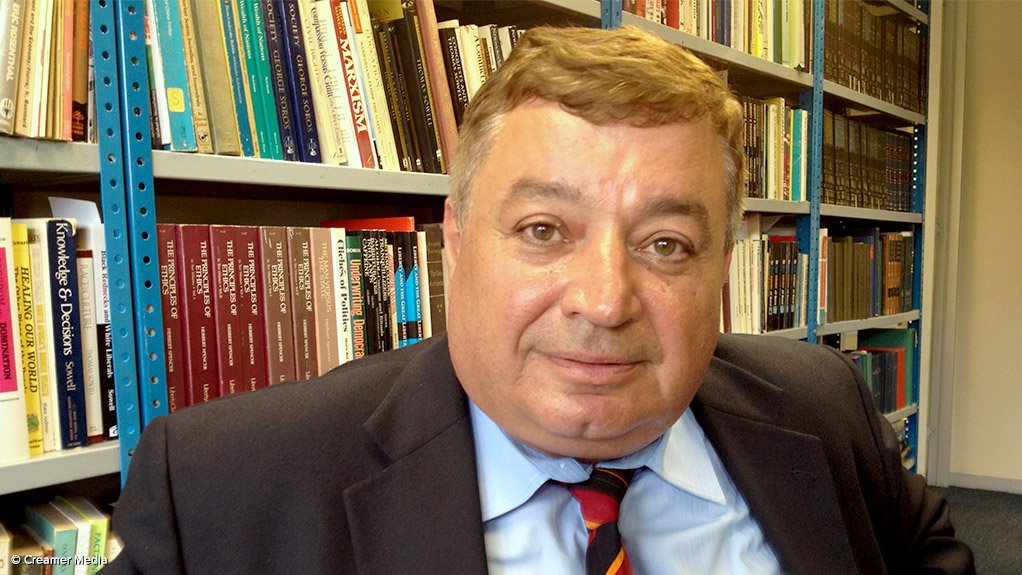
YURI MALTSEV Labour laws that make it difficult to dismiss employees and high minimum wages often make job creation a risky exercise for companies
Photo by Nicholas Boyd



The rigidity of the labour market, partly owing to high minimum wages and prescriptive labour laws, is excluding the youth and low-skilled workers from the economy, driving unemployment, says US free market economist and Carthage College economics professor Yuri Maltsev.
High minimum wages cause companies not to risk employing inexperienced people, preferring those who have work experience, as labour laws make it difficult to dismiss employees, often making job creation a risky exercise for companies, he explains.
“If we have lower minimum wages, more people will be employed because more companies will be able to afford more employees. Currently, these potential employees are not employed at all and are hostages to State grants, without any chance of working their way out of poverty.
“The law is saying to people who are below the productivity minimum, at which com- panies benefit from the costs of their services and which is influenced by minimum wages, that they are not allowed to work, despite many of them not having a job.”
Higher minimum wages generally exclude new entrants, such as school-leavers, as well as low-skilled people, from entering the labour market.
Prominent US economist and George Mason University economics professor Walter Williams, who came from an impoverished background, has noted that the low minimum wages in Philadelphia enabled him to get a job and earn money, subsequently enabling him to enter university and improve his skills and value.
Minimum wages restrict human freedom, as they exclude sections, specifically the least-skilled sections, of the economy from gaining employment, reinforcing poverty and State dependence, says Maltsev.
Minimum-wage laws are intended to defend workers against exploitation. However, without legislation, market forces, which are the collective effects of individual choices on the value of goods and services, would lead to a minimum-wage level below which people would not work, as it is unrewarding.
“Freedom is the ultimate defence against exploitation. If companies are free to decide the wages that they offer and people are free to work for the wages that they themselves deem fair, then an equilibrium will be reached, as people will move between different sources of employment and companies will adjust wages, which, in turn, will stimulate employment.”
Wages are not assigned randomly. They are determined through the marginal product of labour that people receive for functions performed in companies that generate value. People producing below the value of the minimum wage are, thus, excluded from the economy, he adds.
“Exclusion of people from the economy may not be the intention of minimum-wage laws, but this is exactly the effect that they have,” says Maltsev.
While unions may argue that minimum wages are necessary, their arguments are in defence of their own vested interests as employed people, which sacrifices the chances of new entrants entering the labour market owing to fear of a reduction in the wages of all workers. This rigidity also makes companies less competitive and sustainable, retarding growth, he concludes.
Article Enquiry
Email Article
Save Article
Feedback
To advertise email advertising@creamermedia.co.za or click here
Research Reports

Projects


Latest Multimedia
Latest News

Showroom

Sulzer South Africa, established in 1922, partners with critical industries like power, oil & gas, water, mining, and chemicals to boost...
VISIT SHOWROOM
The Aluminium Federation of South Africa (AFSA), is the voice of the South African aluminium industry.
VISIT SHOWROOM
Announcements
What's On
Subscribe to improve your user experience...
Option 1 (equivalent of R125 a month):
Receive a weekly copy of Creamer Media's Engineering News & Mining Weekly magazine
(print copy for those in South Africa and e-magazine for those outside of South Africa)
Receive daily email newsletters
Access to full search results
Access archive of magazine back copies
Access to Projects in Progress
Access to ONE Research Report of your choice in PDF format
Option 2 (equivalent of R375 a month):
All benefits from Option 1
PLUS
Access to Creamer Media's Research Channel Africa for ALL Research Reports, in PDF format, on various industrial and mining sectors
including Electricity; Water; Energy Transition; Hydrogen; Roads, Rail and Ports; Coal; Gold; Platinum; Battery Metals; etc.
Already a subscriber?
Forgotten your password?
Receive weekly copy of Creamer Media's Engineering News & Mining Weekly magazine (print copy for those in South Africa and e-magazine for those outside of South Africa)
➕
Recieve daily email newsletters
➕
Access to full search results
➕
Access archive of magazine back copies
➕
Access to Projects in Progress
➕
Access to ONE Research Report of your choice in PDF format
RESEARCH CHANNEL AFRICA
R4500 (equivalent of R375 a month)
SUBSCRIBEAll benefits from Option 1
➕
Access to Creamer Media's Research Channel Africa for ALL Research Reports on various industrial and mining sectors, in PDF format, including on:
Electricity
➕
Water
➕
Energy Transition
➕
Hydrogen
➕
Roads, Rail and Ports
➕
Coal
➕
Gold
➕
Platinum
➕
Battery Metals
➕
etc.
Receive all benefits from Option 1 or Option 2 delivered to numerous people at your company
➕
Multiple User names and Passwords for simultaneous log-ins
➕
Intranet integration access to all in your organisation

