World Bank warns largest energy price surge in four years will drive inflation


Energy prices are projected to surge by 24% this year to their highest level since Russia’s invasion of Ukraine in 2022, as the war in the Middle East sends a severe shock through global commodity markets, says international finance organisation the World Bank Group in its ‘Commodity Markets Outlook’ report.
Overall commodity prices are forecast to rise by 16% this year, driven by soaring energy and fertiliser prices and record-high prices for several key metals, the World Bank says.
“The war is hitting the global economy in cumulative waves through higher energy prices, then higher food prices and then higher inflation, which will push up interest rates and make debt more expensive,” says World Bank Group chief economist and Development Economics senior VP Indermit Gill.
The shock will have serious implications for job creation and development, the World Bank’s analysis indicates.
“The poorest people, who spend the highest share of their income on food and fuels, will be hit the hardest, as will developing economies already struggling under heavy debt burdens. This is a reminder of a stark truth that war is development in reverse,” he says.
Shipping disruptions in the Strait of Hormuz, which handles about 35% of global seaborne crude oil trade, have triggered the largest oil supply shock on record, with an initial reduction in global oil supply of about 10-million barrels a day.
Brent oil prices were more than 50% higher in mid-April than they had been at the start of the year. Brent oil is forecast to average $86/bbl this year, up sharply from $69/bbl in 2025.
These forecasts assume that the most acute disruptions end in May and that shipping through the Strait of Hormuz gradually returns to pre-war levels by late 2026, the World Bank adds.
Further, fertiliser prices are projected to increase by 31% in 2026, driven by a 60% jump in urea prices. Fertiliser affordability will fall to its worst level since 2022, which will erode farmers’ incomes and threaten future crop yields.
If the conflict is more prolonged, these pressures on food supply and affordability could push up to 45-million more people into acute food insecurity this year, the UN World Food Programme’s analysis shows.
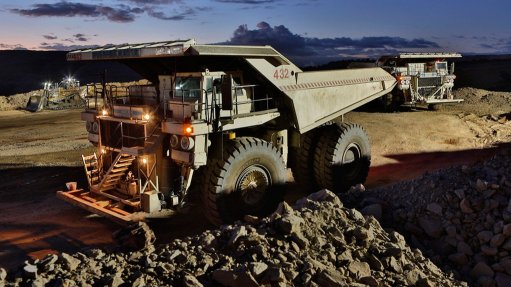
Additionally, prices for base metals, including aluminium, copper, and tin, are also expected to reach all-time highs, reflecting strong demand related to industries including data centres, electric vehicles, and renewable energy, the World Bank report shows.
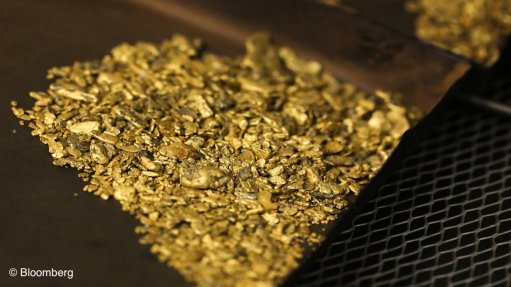
Precious metals also continue to break price and volatility records, with average prices forecast to increase 42% this year, as geopolitical uncertainty fuels demand for safe-haven assets.
Rising commodity prices caused by these shocks will increase inflation and dampen growth worldwide, the World Bank says.
In developing economies, inflation is now projected to average 5.1% this year under the baseline assumptions, which is a full percentage point higher than was expected before the war and an increase from 4.7% last year.
Growth in developing economies will also deteriorate as higher prices for essentials weigh on incomes and exports from the Middle East face sharp curbs. Developing economies are expected to grow by 3.6% this year, which is a 0.4 percentage point downward revision since January.
“Economies directly impacted by conflict will be hardest hit, and 70% of commodity importers and more than 60% of commodity exporters worldwide could see weaker growth than was projected in January,” the report notes.
“The succession of shocks over the decade has sharply reduced the fiscal space available to respond to the current historic energy supply crisis,” says World Bank deputy chief economist and Prospects Group director Ayhan Kose.
“Governments must resist the temptation of broad, untargeted fiscal support measures that could distort markets and erode fiscal buffers. Instead, they should focus on rapid, temporary support targeted to the most vulnerable households.”
Meanwhile, commodity prices could rise higher, if hostilities escalate or supply disruptions from the war last longer than projected.
Brent oil prices could average as high as $115/bbl this year in a scenario where critical oil and gas facilities suffer more damage and export volumes are slow to recover. This in turn would have ripple effects on prices for fertiliser and alternative energy sources such as biofuels.
Under this scenario, inflation in developing economies could rise to 5.8% this year, which would exceed only the 2022 levels over the past decade, it notes.
Article Enquiry
Email Article
Save Article
Feedback
To advertise email advertising@creamermedia.co.za or click here
Research Reports



Latest Multimedia

Latest News


Showroom


AirNox (Pty) Ltd is a level 1 BBBEE manufacturer of complete AdBlue® solutions for operators of SCR diesel engines and AUS40 across South Africa...
VISIT SHOWROOM


Announcements
What's On
Subscribe to improve your user experience...
Option 1 (equivalent of R125 a month):
Receive a weekly copy of Creamer Media's Engineering News & Mining Weekly magazine
(print copy for those in South Africa and e-magazine for those outside of South Africa)
Receive daily email newsletters
Access to full search results
Access archive of magazine back copies
Access to Projects in Progress
Access to ONE Research Report of your choice in PDF format
Option 2 (equivalent of R375 a month):
All benefits from Option 1
PLUS
Access to Creamer Media's Research Channel Africa for ALL Research Reports, in PDF format, on various industrial and mining sectors
including Electricity; Water; Energy Transition; Hydrogen; Roads, Rail and Ports; Coal; Gold; Platinum; Battery Metals; etc.
Already a subscriber?
Forgotten your password?
Receive weekly copy of Creamer Media's Engineering News & Mining Weekly magazine (print copy for those in South Africa and e-magazine for those outside of South Africa)
➕
Recieve daily email newsletters
➕
Access to full search results
➕
Access archive of magazine back copies
➕
Access to Projects in Progress
➕
Access to ONE Research Report of your choice in PDF format
RESEARCH CHANNEL AFRICA
R4500 (equivalent of R375 a month)
SUBSCRIBEAll benefits from Option 1
➕
Access to Creamer Media's Research Channel Africa for ALL Research Reports on various industrial and mining sectors, in PDF format, including on:
Electricity
➕
Water
➕
Energy Transition
➕
Hydrogen
➕
Roads, Rail and Ports
➕
Coal
➕
Gold
➕
Platinum
➕
Battery Metals
➕
etc.
Receive all benefits from Option 1 or Option 2 delivered to numerous people at your company
➕
Multiple User names and Passwords for simultaneous log-ins
➕
Intranet integration access to all in your organisation