What work can your business safely delegate to AI?


This article has been supplied and will be available for a limited time only on this website.
By: Paul Spagnoletti - Chief Revenue Officer of Synthesis
For the past two years, most business uses of AI have helped people produce, find, or interpret information. Chatbots answer questions, copilots draft content, coding tools suggest changes, and search systems retrieve knowledge. A person usually remains responsible for prompting the system and carrying the work forward.
Agentic AI introduces a more consequential possibility. An agent can be given an objective, determine the steps required, use approved tools and information, and take action across a workflow. It can continue working after the first response, adapt when circumstances change and call on a person when it reaches the boundary of its authority.
Leaders now need to decide what work can be delegated safely, what evidence an agent must produce and where human approval remains essential.
AI is moving into the workflow
Foundation models have improved their ability to follow complex instructions, use tools, and maintain context. Years of investment in public cloud, APIs, data platforms, and security have also created the environment agents need to interact with business systems.
AI has reached board and executive discussions, where enthusiasm encounters budgets, operating targets, and customer expectations. Leaders want lower costs, quicker responses, stronger productivity, and better decisions. An agent earns its place when it contributes to those outcomes without creating a larger risk elsewhere.
I see this as an operating-model change with implications far beyond the technology implementation. It requires organisations to align strategy, process design, governance, architecture, operations, and organisational readiness around how agents will be introduced, measured, and controlled.
Start with the work
The best candidates tend to have high process volumes, digitally accessible information, repeatable decisions, defined outcomes, and clear governance. Claims processing, loan origination, customer operations, and compliance reviews all contain work that an agent could gather, check, route, or complete within agreed limits.
The unit of change should usually be a process or a meaningful part of one. A banking agent might collect documents, verify whether required information is present, prepare a case for review and update the relevant system. A person still decides any application that falls outside policy or carries material risk.
This gives the organisation something concrete to measure through turnaround time, error rates, cost per transaction, customer outcomes, and the number of cases requiring intervention.
Poor processes remain poor processes
Organisations encountered the same lesson through workflow software, business process management, and robotic process automation. Automating a badly designed process rarely improves it. Agentic AI can cope with more variation than rigid automation, but it still depends on coherent rules, reliable information, and clear decision rights.
Before introducing an agent, the organisation should understand how the work moves, where delays arise, which exceptions are legitimate, and who owns the outcome. An agent connected to confused processes and fragmented data may simply produce inconsistent results more quickly.
Onboard agents with defined authority
I find it useful to think about onboarding an agent with the same discipline applied to a new employee. The organisation must define its identity, responsibilities, required knowledge, system access, operating policies, escalation routes, and performance expectations.
The analogy has limits because an agent does not possess human judgement or accountability. Responsibility remains with the organisation and the people who approve its use. Permissions, logging, monitoring, and the ability to interrupt an action are therefore essential.
OpenAI’s practical guide to building agents describes an agent through the model, its tools, and the instructions governing its behaviour. It also recommends human intervention for higher-risk actions and situations in which the system repeatedly fails to reach an acceptable outcome.
Autonomy should be earned
The most reliable adoption path is gradual. Organisations can establish governance, security, model management, and evaluation before giving agents access to consequential systems. Early deployments can support employees inside existing workflows, where recommendations remain visible and easy to review.
Once performance has been demonstrated, agents can take responsibility for more of a defined process. Collaboration between specialised agents may follow when a workflow genuinely requires capabilities across sales, finance, risk, or operations. Additional agents introduce coordination, monitoring, and more potential points of failure, so the complexity must justify itself.
The earliest returns are likely to come from work that is already digital and measurable. Software engineering, knowledge retrieval, document processing, and customer operations can provide useful evidence because the baseline is visible. Cross-functional workflows require deeper integration and a higher standard of governance.
People remain responsible
Agentic AI changes where human attention creates the most value. People will continue to set objectives, approve consequential decisions, manage unusual cases, improve processes, and take responsibility for customer and regulatory outcomes.
Over the next five years, agents may coordinate more work across systems and functions, reducing friction created by departmental handovers. Employees will increasingly supervise digital workflows while concentrating on judgement, innovation, relationships, and complex decisions.
The businesses that benefit most will define responsibilities clearly, measure performance honestly, and expand autonomy only when the evidence supports it. Agentic AI can take on substantial work, provided the organisation remains clear about who ultimately answers for the result.
Article Enquiry
Email Article
Save Article
Feedback
To advertise email advertising@creamermedia.co.za or click here


Projects




Latest News


Showroom
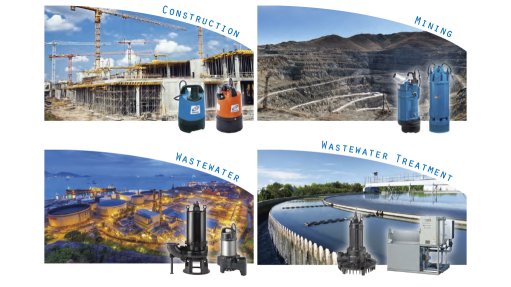
Tsurumi Pumps Africa is a specialist supplier of Japanese-engineered submersible pumping solutions, serving customers across the African continent.
VISIT SHOWROOM
As one of South Africa's leading manufacturers, Bell Equipment distributes and exports its wide range of heavy equipment globally to mining,...
VISIT SHOWROOM



Announcements
What's On
Subscribe to improve your user experience...
Option 1 (equivalent of R125 a month):
Receive a weekly copy of Creamer Media's Engineering News & Mining Weekly magazine
(print copy for those in South Africa and e-magazine for those outside of South Africa)
Receive daily email newsletters
Access to full search results
Access archive of magazine back copies
Access to Projects in Progress
Access to ONE Research Report of your choice in PDF format
Option 2 (equivalent of R375 a month):
All benefits from Option 1
PLUS
Access to Creamer Media's Research Channel Africa for ALL Research Reports, in PDF format, on various industrial and mining sectors
including Electricity; Water; Energy Transition; Hydrogen; Roads, Rail and Ports; Coal; Gold; Platinum; Battery Metals; etc.
Already a subscriber?
Forgotten your password?
Receive weekly copy of Creamer Media's Engineering News & Mining Weekly magazine (print copy for those in South Africa and e-magazine for those outside of South Africa)
➕
Recieve daily email newsletters
➕
Access to full search results
➕
Access archive of magazine back copies
➕
Access to Projects in Progress
➕
Access to ONE Research Report of your choice in PDF format
RESEARCH CHANNEL AFRICA
R4500 (equivalent of R375 a month)
SUBSCRIBEAll benefits from Option 1
➕
Access to Creamer Media's Research Channel Africa for ALL Research Reports on various industrial and mining sectors, in PDF format, including on:
Electricity
➕
Water
➕
Energy Transition
➕
Hydrogen
➕
Roads, Rail and Ports
➕
Coal
➕
Gold
➕
Platinum
➕
Battery Metals
➕
etc.
Receive all benefits from Option 1 or Option 2 delivered to numerous people at your company
➕
Multiple User names and Passwords for simultaneous log-ins
➕
Intranet integration access to all in your organisation