



Use of ruthenium in fuel cells likely to turn down as green hydrogen trend turns up – Heraeus

Heraeus Precious Metals executive VP Philipp Walter interviewed by Mining Weekly’s Martin Creamer. Video: Darlene Creamer.



The use of ruthenium in fuel cells is poised to decline in line with the growing trend towards the generation of green hydrogen.
“We believe that the use of ruthenium in fuel cells will come down, as the trend to green hydrogen will bring with it purer feeds with less carbon monoxide impurities, which basically means you no longer need the ruthenium to prevent the activity loss on the anode side,” Heraeus Precious Metals executive VP for new business development and innovation Philipp Walter told Engineering News & Mining Weekly in a Zoom interview.
The increasing purity of hydrogen generated by electrolysis, rather than by the steam methane reforming of petrochemically derived hydrogen, reduces the need for ruthenium-based catalysts.
But the importance of ruthenium might ascend if development under way enables it to substitute rhodium and iridium – as well as play additional roles in the semiconductor field.
From a supply point of view, ruthenium is in balance, and its price is well below the sky-high levels of rhodium and iridium, meaning that there could be future demand for ruthenium as a suitable replacement for its fellow platinum group metals (PGMs) in, for example, emission catalysts.
Ruthenium is one part of a bimetallic catalyst system in fuel cells, with the other metal being platinum. The role of the ruthenium is to oxidise the carbon monoxide and, by doing so, remove the carbon monoxide from the surface of the platinum to prevent surface clogging, which lowers the activity of platinum-based electrocatalysts in fuel cells. Ruthenium fulfils this activity-enhancing role in both methanol and hydrogen fuel cells.
“You’re talking here about 0.03 g to about 0.07 g of ruthenium per kilowatt,” said Walter, in commenting on the volumes of the metal that are required to do the job.
On the outlook for the ruthenium price, Walter said: “It’s, of course, always a question of crystal ball gazing but in general the price of ruthenium has increased lately, following the overall trend of price hikes, but to a lesser extent and driven mainly by speculation.”
On the product line that is the biggest consumer of ruthenium, he added: “The main application is in hard disk drives and hard disk drive producers are the biggest consumers of ruthenium at this point in time.”
On the manner in which ruthenium would likely substitute PGMs in short supply, he said that, in the case of the metal’s potential substitution of rhodium and iridium, it was envisaged that ruthenium would likely do this “together with other formulation components, other metals”.
Engineering News & Mining Weekly: So, just as platinum is substituting high-priced palladium, is ruthenium in line to do the same for supply-constrained rhodium and iridium?
Walter: Investigations into this are ongoing. If you look at rhodium and iridium and their skyrocketing prices, it will be advantageous if ruthenium, together with other components, can help, in certain applications, to minimise the use of rhodium and iridium. That’s an ongoing development, I would say.
Engineering News & Mining Weekly: Is this likely in the short term, or is there still a long way to go?
Walter: Personally, I believe there’s still some way to go.
Meanwhile, Engineering News & Mining Weekly can report that platinum and ruthenium are used in fuel cells for the same fundamental reasons as they are in the automotive and chemicals industries – they are excellent catalysts that make chemical reactions take place at higher speed, at lower temperature and at higher rates of conversion than would otherwise be the case, and, as Heraeus Precious Metals states on its website, they are robust under a fuel cell’s harsh operating conditions.
Platinum and ruthenium are both part of the family of PGMs hosted and mined overwhelmingly in South Africa, and the metals are justifiably receiving increasing global attention as a result of the positive role that they can play in the fast-moving hydrogen economy, as well as in fighting climate change – the world’s most pressing current problem.
Article Enquiry
Email Article
Save Article
Feedback
To advertise email advertising@creamermedia.co.za or click here
Research Reports

Projects


Latest Multimedia


Latest News


Showroom

Sweet-Orr, established in 1871, is a global leader in superior protective workwear, known for quality, innovation, and performance.
VISIT SHOWROOM
From batteries for boats and jet skis, to batteries for cars and quad bikes, SABAT Batteries has positioned itself as the lifestyle battery of...
VISIT SHOWROOM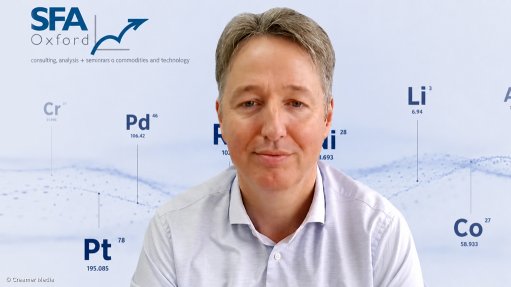

Press Office
Announcements
What's On
Subscribe to improve your user experience...
Option 1 (equivalent of R125 a month):
Receive a weekly copy of Creamer Media's Engineering News & Mining Weekly magazine
(print copy for those in South Africa and e-magazine for those outside of South Africa)
Receive daily email newsletters
Access to full search results
Access archive of magazine back copies
Access to Projects in Progress
Access to ONE Research Report of your choice in PDF format
Option 2 (equivalent of R375 a month):
All benefits from Option 1
PLUS
Access to Creamer Media's Research Channel Africa for ALL Research Reports, in PDF format, on various industrial and mining sectors
including Electricity; Water; Energy Transition; Hydrogen; Roads, Rail and Ports; Coal; Gold; Platinum; Battery Metals; etc.
Already a subscriber?
Forgotten your password?
Receive weekly copy of Creamer Media's Engineering News & Mining Weekly magazine (print copy for those in South Africa and e-magazine for those outside of South Africa)
➕
Recieve daily email newsletters
➕
Access to full search results
➕
Access archive of magazine back copies
➕
Access to Projects in Progress
➕
Access to ONE Research Report of your choice in PDF format
RESEARCH CHANNEL AFRICA
R4500 (equivalent of R375 a month)
SUBSCRIBEAll benefits from Option 1
➕
Access to Creamer Media's Research Channel Africa for ALL Research Reports on various industrial and mining sectors, in PDF format, including on:
Electricity
➕
Water
➕
Energy Transition
➕
Hydrogen
➕
Roads, Rail and Ports
➕
Coal
➕
Gold
➕
Platinum
➕
Battery Metals
➕
etc.
Receive all benefits from Option 1 or Option 2 delivered to numerous people at your company
➕
Multiple User names and Passwords for simultaneous log-ins
➕
Intranet integration access to all in your organisation

