



Tongaat profit takes dive as sugar market battles water crisis


JSE-listed Tongaat Hulett’s strong performance for the half-year ended September 30 in land conversion activities and its starch operation has been more than offset as a consequence of the struggling sugar sector.
CEO Peter Staude said last week that the agriculture and agroprocessing business’s sugar production in 2015/16 had been heavily impacted on by the drought in KwaZulu-Natal, while lower water and dam levels for irrigation had an impact in Mozambique, Zimbabwe and Swaziland.
The drought had already had an impact, particularly in South Africa. In Zimbabwe, Mozambique and Swaziland, the quantum of irrigation was being reduced as a mitigation measure against potential poor rainfall in the coming months. “That’s all you can do during these circumstances,” he emphasised, noting that electricity availability had, at times, impacted on irrigation.
“Where you have rain-fed sugar, there is not much you can do. But, even in the rain-fed areas, there are smaller farm dams and sizable dams that can be built up over time. This is a good time to get [these initiatives] going.”
In Zimbabwe and Mozambique, Tongaat used water from dams that were already in place.
Tongaat Hulett’s sugar production for the 2015/16 season was expected to be between 1.005-million tons and 1.093-million tons, down from1 314 000 t in 2014/15, with South Africa at between 310 000 t and 325 000 t, compared with 541 000 t in 2014/15.
Production levels in 2016/17 would largely depend on the extent of rainfall over the next seven months.
“These are difficult conditions for the sugar industry. Within those difficult conditions, I am pleased with the land conversion and starch operation and I am also pleased that we have reduced our cost basis substantially,” Staude commented.
In its results for the six months, Tongaat reported revenue of R7.6-billion and operating profit of R1.4-billion, 5.7% and 9.9% respectively, below last year’s comparative period.
Revenue for the 2014 period was R8.073-billion, while operating profit stood at R1.510-billion. Operating cash flow also took a knock, falling 5% to R2.292-billion from the 2014 period’s R2.413-billion. Headline earnings of R673-million equated to a decline of 12.9% from the R773-million of the previous comparative period. An interim dividend of 170c a share was declared, on a par with that of the 2014 six-month period.
Staude explained that land conversion and development activities generated operating profit of R576-million from the sale of 65 developable hectares, an improvement on the R435-million generated from 49 developable hectares in the previous comparable period.
Sales in this period came from industrial and office space in Cornubia, the start of Node 1 for high-end residential development at Sibaya, Umhlanga Ridge Town Centre, Kindlewood, Izinga and Bridge City.
The profit for every developable hectare averaged R8.9-million in the half-year, ranging from R4-million to over R38-million per developable hectare, in line with the expectations previously communicated by Tongaat.
The starch and glucose operation increased its operating profit to R281-million from the R264-million reported in the 2014 period. “Sales volumes of prime products reflected a 1% reduction in the half-year, with gains in the coffee/creamer sector and a slight increase in exports being offset by reductions in the confectionery, prepared foods, canning and paper-making sectors. Maize costs were competitive and there were ongoing improvements in operating efficiencies, coproduct recoveries and cost control,” outlined Staude.
The starch and glucose operation was well positioned strategically and focused on growing its sales volume, with an enhanced product mix and customer growth prospects in Africa.
Staude explained that there was quite a big market available for coffee creamers that Tongaat could explore as it expanded its capacity for the production of the product. The growth in demand for starch and glucose products was on the back of increasing demand for processed foods as the middle class grew in Africa, where only South Africa and Egypt were producing coffee creamers.
“This is underpinned by improving [the] use of its available capacity and the efficiency of its operations. The R135-million expansion project for the coffee/creamer sector is currently in its commissioning phase,” Staude highlights.
For the second half of this year, 85% of maize requirements have been priced, with margins slightly below the same time last year. However, the current prevailing dry weather conditions have resulted in planting delays for the forthcoming maize season.
Rain was required during the next three to six months to allow the crop to be planted and established. “The margins earned on approximately 55% of the starch operation’s sales volumes for the next financial year will be influenced by the extent to which local maize prices trade closer to import parity levels.”
Meanwhile, the revenue of the company’s various sugar operations for the six months was R5-billion, a 14% drop on the previous half-year. Profit before the impact of cane valuations was R1.13-billion, compared with R1.45-billion in the first half of last year.
A reduction in sugar production was being driven by poor growing conditions, particularly
in South Africa. In addition to lower volumes, export revenues were also being impacted on by a lower international sugar price, with regional deficit markets and European Union (EU) exports linked to that price.
Export prices earned in the EU had reduced by some $0.05c/lb, in line with the reduction in the world price, compared with the first half of last year, with a revenue impact of some R200-million in Zimbabwe and Mozambique.
“Cost reduction initiatives continue across all operations. There are multiple currency dynamics, with positive and negative effects, compared with the same period last year. The negative cane valuation impact of R570-million at the half-year is to be expected with the harvesting that has taken place and is consistent overall with the movement seen last year,” Staude notes.
Operating profit after cane valuations, from all the sugar operations, was R562-million, compared with the R864-million in the first half of last year.
The South African sugar operations, including the agriculture, milling, refining and various downstream activities, had seen a reduction in operating profit to R154-million from the R259-million achieved in the 2014 period.
“Production volumes are substantially below last year’s as a result of the drought in KwaZulu-Natal – including the Darnall mill not being opened this season – and export sales volumes have consequently reduced by 88%, compared with the same period last year,” Staude advised.
The overall reduction in volumes had been partly offset, however, by focused cost reductions and improved local market pricing, with a reduced impact of imports into the local market.
Staude pointed out that the sustainable cost reductions achieved over the past two years equated to about R950-million in real terms, while having to absorb input price increases provided a good base for the next steps in the concerted cost reduction process in the sugar operations. “That’s not a small reduction.”
An overall reduction in goods, services, transport, marketing, salaries and wage costs in real terms was expected this year, he added.
Value-added activities, including speciality sugars, branding, packing and distribution in Botswana, Namibia and South Africa, as well as Tongaat’s specialist animal feeds business, Voermol, continued to make a significant contribution.
The Tambankulu Estate, in Swaziland, recorded an operating profit of R32-million, down from 2014’s R35-million for the comparable period, which continued to reflect the impact of lower sugar cane prices.
In Mozambique, sugar operating profit reduced to R142-million, compared with the previous comparable six months’ R226-million, owing to lower export sales prices and sales volumes in the half-year.
“The lower sales volumes are as a result of lower production levels at this stage in the season. The effect of lower export revenues, including the reduction in export prices into the EU, was partially offset by increased local market revenues,” said Staude.
Tongaat’s Zimbabwe sugar operations were also hit by a lower operating profit of R234-million for the half-year, compared with the R344-million reported in the same period last year.
“Domestic market sales volume levels have been maintained despite the challenging local economic conditions. “This was more than offset by lower export volumes, due to the timing of shipments between the first and second halves of the year, and lower export prices into the EU. “The strength of the US dollar is exerting pressure, particularly in respect of US dollar-based costs (such as wages and salaries) and euro-based revenues. “The movement in the exchange rate has benefited the conversion of the US dollar earnings into rands on consolidation.”
Article Enquiry
Email Article
Save Article
Feedback
To advertise email advertising@creamermedia.co.za or click here
Research Reports

Projects

Latest Multimedia


Showroom
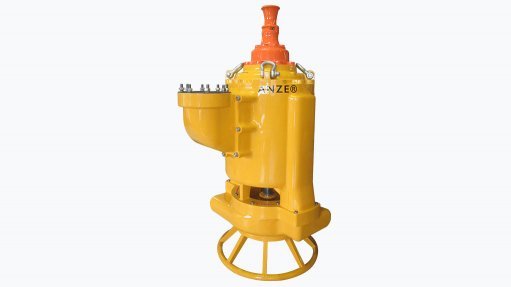
Goodwin Submersible Pumps Africa is sole distributors for Goodwin electrically driven, submersible, abrasion resistance slurry pumps.
VISIT SHOWROOM
Stewarts & Lloyds is a leading steel, tube, and engineering product supplier in South Africa.
VISIT SHOWROOM
Announcements
What's On
Subscribe to improve your user experience...
Option 1 (equivalent of R125 a month):
Receive a weekly copy of Creamer Media's Engineering News & Mining Weekly magazine
(print copy for those in South Africa and e-magazine for those outside of South Africa)
Receive daily email newsletters
Access to full search results
Access archive of magazine back copies
Access to Projects in Progress
Access to ONE Research Report of your choice in PDF format
Option 2 (equivalent of R375 a month):
All benefits from Option 1
PLUS
Access to Creamer Media's Research Channel Africa for ALL Research Reports, in PDF format, on various industrial and mining sectors
including Electricity; Water; Energy Transition; Hydrogen; Roads, Rail and Ports; Coal; Gold; Platinum; Battery Metals; etc.
Already a subscriber?
Forgotten your password?
Receive weekly copy of Creamer Media's Engineering News & Mining Weekly magazine (print copy for those in South Africa and e-magazine for those outside of South Africa)
➕
Recieve daily email newsletters
➕
Access to full search results
➕
Access archive of magazine back copies
➕
Access to Projects in Progress
➕
Access to ONE Research Report of your choice in PDF format
RESEARCH CHANNEL AFRICA
R4500 (equivalent of R375 a month)
SUBSCRIBEAll benefits from Option 1
➕
Access to Creamer Media's Research Channel Africa for ALL Research Reports on various industrial and mining sectors, in PDF format, including on:
Electricity
➕
Water
➕
Energy Transition
➕
Hydrogen
➕
Roads, Rail and Ports
➕
Coal
➕
Gold
➕
Platinum
➕
Battery Metals
➕
etc.
Receive all benefits from Option 1 or Option 2 delivered to numerous people at your company
➕
Multiple User names and Passwords for simultaneous log-ins
➕
Intranet integration access to all in your organisation

